



Culled—Proshare
3/8/2016/ARM Research
Focus shifts today towards developments on the domestic policy review in ARM’s core strategy document – the “Nigeria Strategy Report H2 2016”; looking at the socio-political landscape over the last six months and the outlook for the rest of 2016
We continue with our series of excerpts from our core strategy document – The Nigeria Strategy Report, but direct our focus towards progress of policy reforms in the energy scetor over H1 2016 and outline our view on policy trajectory for the rest of 2016.
The reforms of the Nigerian oil and gas sector continued apace in H1 2016 with the NNPC recording some level of progress in about 8 of the 20 fixes initiated by the Minister of State for Petroleum at the tail end of 2015. Almost all the gains were recorded in the downstream segment and at corporate level with only little success on the upstream front. In the downstream space, the corporation made headway in subsidy and the implementation of the Direct Sale Direct Purchase (DSDP) agreement while it was able to cut operational directorates and top management to 4 and 8 from 83 and 122, respectively. NNPC went beyond its earlier commitments of streamlining the administration of the subsidy regime by completely eliminating it via a 67% hike in PMS price to N145/litre.
Beyond the improvement in product supply, after nearly 8 months of severe shortage, the removal of PMS subsidy should translate into annual savings of about N793 billion for the Federal Government by our estimates. The corporation also made savings on its Offshore Processing Agreement since it commenced the Direct Sale Direct Purchases in March 2016, whereby the NNPC eliminates all the cost elements of middle men and directly controls the sale and purchases of crude oil transaction with its partners. Since March 2016, nearly half of crude oil processed offshore for local consumption has been via this agreement, with a potential to save the NNPC nearly $1billion annually. Against this backdrop – Corporate restructuring and downstream initiatives—the NNPC reported profit in May 2016 for the first time in 15 years (N273.74 million).
NNPC records success in downstream sector reforms…
The reforms of the Nigerian oil and gas sector continued apace in H1 2016 with the NNPC recording some level of progress in about 8 of the 20 fixes initiated by the Minister of State for Petroleum at the tail end of 2015. Almost all the gains were recorded in the downstream segment and at corporate level with only little success on the upstream front. In the downstream space, the corporation made headway in subsidy and the implementation of the Direct Sale Direct Purchase (DSDP) agreement while it was able to cut operational directorates and top management to 4 and 8 from 83 and 122, respectively. NNPC went beyond its earlier commitments of streamlining the administration of the subsidy regime by completely eliminating it via a 67% hike in PMS price to N145/litre. Beyond the improvement in product supply, after nearly 8 months of severe shortage, the removal of PMS subsidy should translate into annual savings of about N793 billion for the Federal Government by our estimates.
The corporation also made savings on its Offshore Processing Agreement since it commenced the Direct Sale Direct Purchases in March 2016, whereby the NNPC eliminates all the cost elements of middle men and directly controls the sale and purchases of crude oil transaction with its partners. Since March 2016, nearly half of crude oil processed offshore for local consumption has been via this agreement, with a potential to save the NNPC nearly $1billion annually. Against this backdrop – Corporate restructuring and downstream initiatives— the NNPC reported profit in May 2016 for the first time in 15years (N273.74 million).
Figure 1: NNPC’s monthly profit (N billion)

…but sub-par refinery output and political jostling leave sector issues unresolved
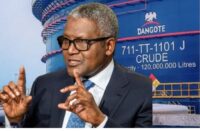
Nonetheless some other chokepoints remain intact with the refining segment continuing to remain a drag on performance. Despite numerous efforts to revamp the existing refineries average capacity utilization remains printed at an abysmal 11.4% over H1 2016— well below the 20% trend mean of the last five years. The persistent underperformance, despite official pronouncements about reform initiatives, hints at deep lying issues around poor maintenance, operational failures, sabotage of crude oil pipelines feeding the refineries etc. Though the NNPC continues to avoid mention of privatization due to concerns about political resistance, we think the conclusion of the 650kpbd Dangote Refinery, with ability to meet national consumption, should allow discussions to proceed on sale of the refineries.

On the regulatory front, the story of slowing reform momentum is also in play as shortly after it successfully passed the second reading, the Senate indefinitely suspended further reading on the Petroleum Industry Bill (PIB) now christened Petroleum Industry Governance Bill (PIGB). The decision stemmed from opposition from Southern states who disagreed over the exclusion of 10% royalty for host oil communities tagged Petroleum Host Community Fund (PHCF) which was drafted in the botched bill but removed in the new version to win the heart of IOCs who were against the high emphasis on local content. Ironically, the inclusion of the PHCF in the old PIB lay at the heart opposition from Northern senators who wanted to increase the size of oil revenues accruing to the Federation account.
Thus, an inability to reach a consensus with both camps threatening to veto further reading of the PIGB over the inclusion or exclusion of the PHCF has dampened initial optimism regarding early passage of the two bills. While the currently low oil price has put off investment decisions on oil fields, lack of progress on the legal framework for investment in the oil industry should continue to deter IOC investments in Nigeria.
New tariff regime (MYTO – 2015) takes centre stage
After several failed attempts, the NERC hiked electricity tariffs ~45% on average in February 2016 with the introduction of the Multi Year Tariff Order (MYTO) 2015 to replace MYTO 2012. In addition to the price hike, the new price regime also abolishes the controversial fixed tariff charge of between N650 and N1,382.
Explaining the rationale for the increase, NERC noted that the prior pricing regime ignored key costs faced by Discos and therefore made it difficult for them to operate profitably. Specifically, the commission noted that though other variables in the electricity tariff pricing model—including inflation, exchange rate and gas prices—were on average ~23% lower than assumed, exclusion of start-up costs, but crucially, Aggregate Technical Commercial Collection (ATCC) losses underpinned the increase. On the losses, Discos reportedly experienced losses of up to 20% of energy sent out, amounting to N215 billion as at last MYTO due to weak distribution network, old and obsolete transformers, breakers and other distribution equipments in the distribution network.
Though the upward tariff review went into effect in February, the labour unions took the issue to court which resulted in a ruling that suspended the increment.
Whilst the NERC appealed and obtained a stay of execution on February hike, delays in the administration of justice could see uncertainty around the electricity pricing—linger well into 2017. In the interim, the electricity pricing regime is set to get even more uncertain in the coming months following significant spike in other variables in the pricing model—inflation and exchange rate. Incorporating these changes suggest that the Discos will, in no time, request further upward review of the electricity tariff.

Gas shortages cripple power generation
Aside the hike in electricity prices, challenges across the power sector value chain persisted in the period, particularly with power generation, which buckled under the weight of gas supply disruptions. Despite attaining an all-time high of 5070MW of power generated in February, power generation subsequently reclined following renewed attacks on gas pipelines in the Niger Delta. Given the high share of gas in national energy production (~80%) the pipeline vandalization which drove a 27% decrease in gas supply (January to April 2016) underpinned a corresponding decrease (24%) in power generation to 2,466MW over the period. In addition to the costs of repair (N120 million), the electricity outages triggered factory downtime across the manufacturing sector and resulted in increased substitution with more expensive energy sources. Following the unabated pace of attacks on gas pipelines running overland from the Niger Delta, Dangote group commenced preparations on a N500 billion subsea gas pipeline which will take off in 2018. The gas pipeline which would start in Bonny Rivers and through Olokola and Lekki before linking up with the West African Gas pipeline should help reduce the risk of gas pipeline vandalism to power distribution on completion. On its part, the FG is seeking to diversify power away from gas fired-plants towards, alternatives like Hydro power and solar plants.
On the hydro front, the FG commenced work to increase capacity utilisation of the Shiroro hydro plant, which currently runs at 50% of its available 600MW capacity, by upgrading and repairing existing infrastructures. On the other hand, the Ministry of Power, through the Nigerian Bulk Electricity Trading (NBET), signed 12 PPA agreements for 14 solar power plants which would collectively add 975-1150MW to the electricity grid. Though both investments are set to be private sector driven, we remain skeptical on timely consummation given challenges around collection of energy charge by the Discos. According to the Minister of Power, due to low remittances by the Discos, the bulk trader owes Gencos over N140 billion. Thus the difficulty in collection should temper private sector optimism about increased investment across the power value chain.


