


By Peter OBIORA InvestAdvocate
Lagos (INVESTADVOCATE)- First dual listed Nigerian oil and gas upstream firm, Seplat Petroleum Development Company Plc on Wednesday said its return to full year profitability for the period ended December 31, 2017 was driven by gas advantage.
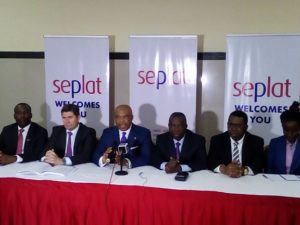
Coming on the heels of a post annual general meeting (AGM) press conference, Ambrosie Bryant Chukwueloka (ABC) Orjiako, chairman of the company in his comment on the company’s return to profitability attributed it to the contribution of gas.
“I am pleased to report that in 2017, we made good progress as we reviewed our vision, mission and strategy towards refocusing the company on our key priorities: to de-risk futrure cash flows through diversification of oil export routes; invest in and scale up our domestic gas business; maintained a liquidity buffer while continuing to reduce debt; keep tight financial control with discretion in spending; and position Seplat with a stabilised platform for sustainable growth even in a harsh operating environment….Our strategy to diversify and grow our sources of income through the expansion of our gas business continues to gain momentum,” Orjiako said.
On his part, Austin Avuru, chief executive officer (CEO) of Seplat said gas business brought in record revenues of $124 million for the company which is over 27 percent of it’s total revenues.
Seplat said gas revenue grew seven-fold from $18 million in 2013 to a record $124 million in 2017.
A review of the first dual listed Nigerian oil and gas upstream firm’s 2017 audited report shows that pretax profit for the period was N13.45 billion compared to a loss of N47.42 billion recorded a year ago.
Similarly, Seplat reported a post-tax profit of N81.11 billion compared to a loss of N45.38 billion posted in full year 2016; indicating a growth of 260 percent.
Revenue of the company increased 78 percent to N138.28 billion from N63 billion reported the same period of 2016, Seplat said in a filing with the Nigerian Stock Exchange (NSE).
The company says although global oil prices remained volatile in 2017, with Brent starting the year around the $55 per barrel level and trading down to a low of around $45 per barrel mid-year before recovering steadily thereafter to exit 2017 at $67 per barrel level, average daily productions rose considerably with the company’s average working interest production now standing at 36,923 boepd representing an overall increase of 43 percent year-on-year.
Avuru reiterated that gas was a key revenue driver underlying Seplat’s gas domestication strategy and demonstrating the robustness of gas as a key source of growth and diversification, as well as delivering a much-needed reliable supply of gas to the Nigerian power sector.
Seplat early in 2017 completed and commissioned the phase two expansion of its Oben gas processing hub, which added a further 225 MMscfd of processing capacity to take total capacity at Oben plant to 465 MMscfd. Together with 60 MMscfd capacity at the Sapele plant, Seplat now operates 525 MMscfd of gross gas processing capacity.
According to the company, following repeated disruptions to the TransForcads export route, Seplat is now focused on providing multiple export routes to mitigate downtime and revenue loss. In 2017, Seplat successfully completed repairs and upgrades on two jetties at the Warri refinery that will enable sustained exports of 30,000 bopd (gross) up from 15,000 bopd.
Seplat says by the third quarter (Q3) of 2018, it hopes to complete the Amukpe to Escravos alternate export pipeline which will guarantee an export route for 160,000 bopd. This provides a third export option for liquids production at OMLs 4, 38 and 41 which accounts for 90 percent of Seplat’s total liquids production mix.

