




Culled—Proshare
June 9, 2020
by CSL Research
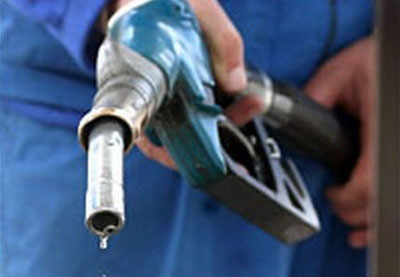 Last week, the Petroleum Products Pricing Regulatory Agency (PPPRA) released a circular titled “Market Based Pricing Regime for Premium Motor Spirit”. In this circular, the agency stated the existing price cap per litre of PMS has been officially removed and a market based pricing regime for PMS will take effect.
However, the PPPRA has since released another circular to debunk the widely circulating news and also providing guidance on its current stance. We recall that following the crash in oil prices in March & April due to weakening global demand and price war between two of OPEC’s biggest producers, the President instructed the PPPRA to revise downward the retail price of PMS. Consequently, PMS retail price has since been adjusted lower three times. The first adjustment was in March when retail petrol price was adjusted to N125.o/litre, then to N123.50/litre in April before the PPPRA in a circular established a price band of N121.50 – N123.50/litre at the start of June. In the latest circular, PPPRA highlighted explicitly that the agency will continue to monitor market trends and whatever price is fixed would be the guiding retail price for PMS across the country.
The deregulation of the downstream oil sector remains an important free market reform required to ease pressure on government finances as well as boost profitability of the operators in the downstream sector. Most listed Nigerian downstream players have seen margins pressured over the years with the price of their biggest revenue source (sale of petrol) remaining largely fixed. This has forced them to explore other areas to invest while many other companies have either been acquired or liquidated. This has limited investment in the sector.
As such, the Nigerian National Petroleum Corporation (NNPC) in its bid to prevent petrol scarcity, was bearing the brunt of higher FX-related costs and increasing crude oil price by selling at a loss to independent marketers in the country. Consequently, the FG has continued to bear the cost in form of subsidy payments which has been estimated at c.N800bn per annum in recent years of low oil prices (US$50 – US$70/bbl.). These payments or under-recoveries as reported by NNPC has also contributed to weak government spending on infrastructure and social welfare programs. The dip in crude oil prices recently however has allowed Petroleum marketers to begin to import petrol profitably and appears to have erased the subsidy. We note however that any significant increase in crude prices will necessarily involve an increase in petrol prices.
On the other hand, we note that deregulation of the oil sector remains a politically sensitive discourse. The current government has been reluctant to eradicate the fuel subsidy which would have involved declaring another round of petrol pump price hike considering the tight squeeze in consumer purchasing power more so that the highest increase done in 2015 was implemented under this administration. Deregulating the downstream sector which would many times involve raising the pump price of petrol is always a challenge in a country where the subsidy on petrol prices is seen as a source of social security and in many cases is resisted by the populace. Nonetheless, we believe deregulation remains a vital reform.

