




September 8, 2020-United Capital Report
In a class of its own
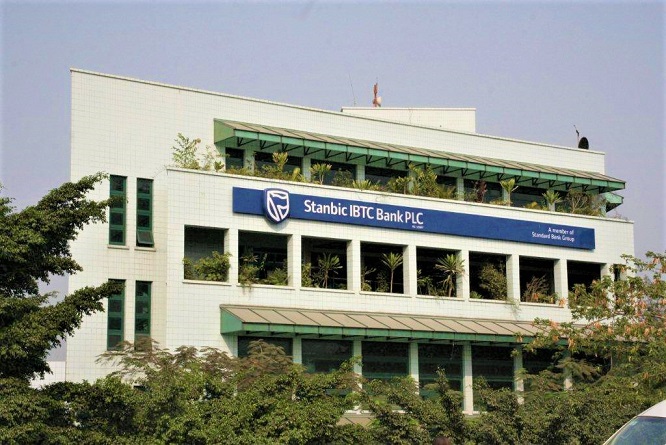
Earlier, Stanbic IBTC Holding Plc (“STANBIC” or “The Group”) released its Audited H1 -2020 financial result, showing a 7.8%y/y expansion in Gross Earnings (GE) to N126.6bn. Notably, the Bank reported a decent top-line growth despite pressure on economic activities amid coronavirus pandemic. Interest income, however, fell 9.3%y/y to N55.1bn due to hesitant asset yields. More interestingly, PBT and PAT, sustained strong uptrend, surging 17.4%y/y and 24.7%y/y to N52.4bn and N45.2bn, respectively. We review the H1 earnings and adjust our expectations for FY-2020 below.
Earnings supported by 94.6% growth in trading income
STANBIC’s GE growth was mainly driven by Non-interest income which grew by 27.2% to N69.8bn. Specifically, trading income nearly doubled buoyed by financial market volatility in the H1-2020, growing 94.6% y/y to N34.3bn while fees and commission revenue remained mostly stable at N36.6bn. Clearly, STANBIC’s strong presence in the Asset management, Pensions and Capital market space, came in very handy amid volatility in the yield and currency FX market environment. Interestingly, this was driven purely by fixed income and FX trade while equity based activities came in at N2.0mn loss. For fees, Asset management fees accounted for 62.0% of fee & commission income, up 12.4%y/y to N22.7bn. In line with developments in the macro space, interest expense fell 18.1% amid a repricing of deposits. Expectedly, cost of funds improved from 4.1% to 2.8%. However, a faster decline in Asset yield (from 12.6% to 10.4%) almost offset gains from deposit repricing. Overall, the lower cost of funds was not sufficient in cushioning the impact of the lower asset yield. As such, net interest margin declined to 3.2% from 4.9% in the previous year.
Notably, impairment charges rose sharply to N6.4bn (vs N0.6bn writeback in the prior year). This is unsurprising given the weak macro environment. In the same vain, cost of risk, (COR) came in at 2.2% for the period. On the other hand, Cost-to-Income ratio slowed to 45.2% (vs. 53.2% in H1-2019). This was supported by a slight decrease in OPEX line (due to cost savings during the nation-wide lockdown) which printed N48.5bn (down 3.1% y/y). Piggybacking on cost savings and faster non-interest income growth, PBT and PBT surged 17.4% and 24.7% to N52.4bn and 45.2bn, respectively. However, after-tax ROE and ROA declined slightly to 28.3% and 3.8% (vs. 28.5% and 4.2%) respectively, explained by a stronger equity base and over a 60% growth in total asset.
Total assets surge 61.1% with sterilized cash with the CBN at 100%+
The balance sheet of STANBIC holds interesting highlights from the financial period. Notably, total asset grew by 61.1% to over N3.0tn, interestingly, this was driven by a surge in Cash & Cash Equivalent, Deposits and Trading Liabilities. With uncertainties in the horizon, total loan and advances was expanded by 8.3% compared to 37.5% jump in total deposits. Thus, cash accounts for 36.5% of total asset with N820.8bn sterilized by the CBN as cash reserves. According to management, effective CRR of the bank exceeded 100% as at June-2020. Clearly, this speaks to the pressure on asset yields despite a Current & Saving Account (CASA) deposits of 80.4%. Unsurprisingly, NPL ratio also tracked higher to 4.9%, from 3.8% in FY-2019. The increase in NPL stems from reclassification of two major loans, in the books of the corporate and investment banking business. The sectors involved are Oil and Gas downstream as well as construction and real estate sector. Regardless, CAR remains strong at 23.0%, higher than regulatory minimum.
Segment analysis: PBB drags other businesses
Analysing the business segments, the result for the Personal and Business Banking (PBB) or retail banking, which accounted for 16.4% of Group revenue, was rather disappointing, the segment declared loss after tax of N3.2bn in H1-2020 and a cost to income ratio of over 100%. In terms of asset quality, the business segment has the highest level of Non-performing loans at 7.7%, higher than the regulatory minimum. On the other hand, the Wealth Business (consisting of Asset management, Pensions, Trusteeship, and Insurance) remains impressive, contributing 20.2% to revenue and 35.2% to the total PBT of the group. Non-interest income grew by 12% on account of a 9% growth in AUM despite a reduction in retirement savings account (RSA) management fees. Also, cost to income ratio moderated to 27.8% vs 30.6% in the corresponding period. Finally, The Corporate & investment banking segment (CIB), consisting of global market, corporate and investment banking, was the best performer. Net interest income and non-interest income grew by 12.1% and 61.8% respectively. Profit before tax grew by 34.9% to N36.9bn, contributing over 70% to PBT. Commendably, deposit grew by 43.3%, made up of substantial amount of low-cost deposits as CASA ratio increased from 39% in H1-2019 to 62% in H1-2020. The sour spot however is the jump in NPL and impairment charges attributable to the more challenging environment induced by COVID-19, as stated earlier.
Outlook : STANBIC Super App to improve customer experience
Looking ahead, we highlight STANBIC’S recently launched Super App, as a key item to watch in H2-2020. The Super App is designed to be a One-Stop-Shop for STANBIC’s wide range of offerings, including Banking, Investing, Pensions, Trading and Insurance. We are of the view that the innovation around the mobile App is a strategic move by the Group aggressively digitize its core service offerings and improve customer experience. Furthermore, we maintain our position that the diversified nature of the Group in Capital market, Pensions, Banking and lately Insurance, places STANBIC in a class of its own! As such, we estimate performance to sustain the H1-2020 momentum. This will be driven by the Wealth and CIB divisions. On a Year on Year basis, Trading income is expected to come in well above 2019 levels amid FX and bond market volatilities even as Fee income from the Asset management business continue to absorb pressure on interest income as asset yields weakens. Yet, we expect interest expense to further improve, supported by the CBN’s recent adjustment of savings deposit rate which is positive for STANBIC’s 80% CASA deposits. Thus, NIM may see some improvement. While short term outlook for the PBB business is gloomy, except a drastic action is taken to rationalise segment OPEX, we do not see a major cause for concern due to the overwhelming contribution of the CIB and Wealth businesses. In all, our ROAE expectation for ROE comes in at 23.2% for FY-2020. STANBIC’s P/B and P/E ratio of 1.2x and 5.9x, compared to the 3-year historical average of 1.9x and 5.8x, respectively. Also, the bank has maintained a strong dividend payment history in the past three years. In light of the foregoing as well as adjustment in risk free rate, we adjust out TP from N43.8 to N41.2, an 11% upside from the current price. Against this background, we maintain our BUY rating for the ticker
Click here to read full PDF copy of report

