


April 3, 2021
By Estine Okolo
ABSTRACT
The emergence of social media platforms has contributedto making the world a global village.Social media as a means of communication has raised and thrownup legal issues relating to its administrationand usegenerally.The issues consist of information management, privacy, liability of users and possible litigation there on.Further, suchpost could raise issues like libel, defamation and other several legal violations which may be intended or not necessarily deliberate.
Attempts at legislative interventionstocontrol happenings in the social media has also come with diverse commentaries, with some in support and others against it. Social media growth has also increase the spate of trademarks, copyrights and trade secret infringements. Apart from the protection and monitoring against infringement of such rights, the legal duty imposed on the administrator of a social media group is a sacred one. Aside the responsibilityofaccounting for the post of members of a social media group, the bucks stops on the deskof the groupadministrator.
However, most administrators are oblivious of this fact and the duty imposed on them by law. In recent times, administrators and members of social media groups have being made to face the consequences ofinformation disseminated withoutverification or confirmation of its authenticity. Certain post has the consequences of causing untold damages, not only to individuals, but to the image of corporatebodies, communities and humanity at large. There are no better times, for individuals to exercise restraint with information they disseminate on social media, without proper verification than the times we are in,for as they oftensay, ignorance of the law is not an excuse.
This piece examines the role of members of social media groups, theadministrator, and the likely legal implications of activities in a social media group chat. The consequences of unfounded post could be prosecution or civilclaims which comes with attendant financial cost and physical inconveniences. There is need, not only to scrutinize and weigh what we receive as post,but also to be careful on what and how we re-broad cast the post received, in order not to incur criminal liability or civil claims for damages.
What is Social Media?
Social Media has been defined as acomputer based technology that facilitate the sharing of ideas,thought and information through the building of virtual networks and communities.[1]
Social Media means networked information services, designed to support in-depth social interaction, communityformation, collaborative opportunities and collaborative works.[2]
Social Media is the terms often used, to refer to new forms of media that involves interactive participation.[3] It is clear from the definitions above, and several others, social media is digitally powered. The use of social media is unique and different from other conventional means of communication. The proper functioning of social media is an amalgam of severalconcerns, like use of email, messages,documents,photographs,images, texter, blogs and several others.
Over the years, several social media groups have emerged and it appears the world have not seen the last of them. They take different forms, like social networking sites, social review sites, image sharing sites , video hosting sites, community blogs, discussion sites, sharing economic networks just to mention a few.
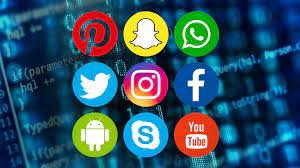
Apparently , the drive to interact is one of the commonest feature of social media[4] and over the years several social media has emerged,withFacebook, WhatsApp, We Chat,Tumbur, Instagram,Twitter,Google, Q, Baidu, YouTube, Tieba,,Skype, Viberline, and Linkedln, representing the most popular amongst several others .[5] The impactsof social media groups are of mixed type, positive and negative.
The platforms have their individual strengths depending on what they seek to achieve.
For example,LinkedIn serves as the ideal platform to link up with professionals, searchfor and hire candidates seeking employment or those aspiring to change their jobs to a better or well-paying ones.[6] As for face book, it offers opportunity to meet and connect with friends. It is its flexibility that endears it to the users and more particularly to the youths.
The role of a Social Media Administrator
ASocial Media Group Administrator is a person responsible for the administration of the activities of the group. He ensures that members comply with the rules andregulations guiding the existence of such a group. He is responsible for ensuring that machinery are put in place to limit claims ,processing loss control and several other functions connected to the image of the group. He monitors and try to regulate contents and post by members with a view to ensuring that there is no deviation from the goals of the group. Other powersembedded in the group administrator ,includes the right to add members to the group, create and revoke the group link, remove group members , add or remove group admin, restrict information that go out of the group , reply to enquiries from customers, clients and fans. The powers of an administrator must be exercised fairly and in accordance with known decorum and courtesy. He is also expected to create and publicizethe activities of the group. As a matter of necessity, he may need to be connected to the social media page all the time.
As for a company or an organization, the social media administrator is responsible for creating and executing the campaigns to promote the brand of the company or organization,depending on the particular one. He may need to answer questions, reply to enquiries and attend to complaints. He must also be abreast of the current social media trends, create catchy contents to impress the customers. He is also expected to avoid contents that would impart negatively on the brand of the company.The social media administrator is a sort of a gateway to the company.[7] The output of the administrator can help boost the image of the company or mar it. The Administrator should be a good strategist, a communicator and one who is able to assess and interpret the trends about the company in the social media fornecessary positive adjustments.
The role of members of asocial media group.
Do members have a role to play in a social media group? How a post does from a member affects the integrity of the specific socialmedia group? These questions like numerous others, not expressly stated here are begging for answers. A whole lots of possibilities may arise through theusage of group chat by members.It could be related to the infringement of the rightsof users by the media, infringement of the right of one user by another or a third party[8]. Also an infringement could be voluntary or non-voluntary, deliberate ornon-deliberate.
Posts, picturesand videos that could infringe on the rights of others should be avoided. In the first instance, members are personally liable for any negative post that infringes on the rights of other persons.
Some companies and organizations are making it a practise to have a social media policy for theirmembers. Safeguardsmust be put in place to ensure that the organization vets, scrutinize and edit contents proposed for posting in their social media handles. This is because, every post emanating from a social media group or organizationis a reflection of the totality of what the organization stands for.And a negative opinion formed in respect of any posts, might cost twice or more of theexpenses to be able to stop or control.
Though, every member is an independent personality, membership of a social media group is astrong unifying factor connecting them.Posting of unauthorized contents and pornographic materials should be avoided.Again, commitment of members to the values and mission of a specific social media groupgoes a long way in the growth and impact of the group on members.
Legal Implications
The emergence of social media, brought with it a new vista of legal regime which is growing and developing by the day. The laws are applied internationally or in some cases nationally and legal issues emanating herein are difficult to categorize into a strict compact legal heading or branch of law. They involves contractual issues and disputes resulting from social media use, access to information through unlawful means, access to unlawful information, and use of information about an individual to his or her detriment.Chances of subjecting anindividual, whoinfringes on the right orprivacy of someone else tointernet without his approval and chances of criminal prosecution and a host of others are aspect of the legal implication of social media use.
The importance of social mediause made the National Communication Commission to come up with a Technical Framework for the Use of Social Media in Nigeria.
In the forward by the Executive Chairman, he stated that even though ,social media has become an inevitable force, because of its ease, it has with it, likely negative impact likeliability for libel, privacy violations, impairment to reputation, destruction of infrastructure, espionage, sabotage and other cyber-criminaleffects. The Technical Framework for the use of Social Media in Nigeria, is an attempt by the organization to promote good quality and safe cyberspace. On the negative side, social media have served as an avenue forpromoting hate speeches, racial hate and withthe resultant growths in crime rate. The production of the framework is commendable, because it has being serving and will continue to serve as a guide to various agencies, businesses, individuals and the likes ,on the proper use of the social media for the benefit of mankind in general.
The framework went further to provide guide to social media users with thewordings which seems to be an advise, thus;-
- restraint from false statement or jokes of any nature
- avoid disclosure of unauthorized contents intentionally or unintentionally leakage of information of sensitive nature to avoid legal obligation
- avoid infringement upon other users copyright or trademarks
- avoid spreading rumour or unconfirmed report or fake news that can cause risk to the public.
It is very important that social media users get themselves acquainted with the relevant and existing laws on social media operations. Some of the law are the Cybercrime Act 2015, the Freedom of Information Act 2011and a couple of others which are indirectly related to the use of social media. Attempts made to introduce a bill to regulate the use of social media in Nigeria, met with stiff opposition by those who felt it is a means to restrict the freedom of expression of the populace. The proponent of the bill, has argued that there is an urgent need for a specific and definite legal regime to guide against the effect of wrongful use of social media, others are of the view, that it is an indirect way of limiting the masses freedom of expression. However, the effect of negative use of social media has continued to stare us in the face andmost times, leaving in its trail serious devastating effects on the populace.
More worrisome is the fact that mischief makers deliberately and consciously upload andrebroadcast false information to promote tribal,ethnic or racial violence which in most cases results in destruction of properties and killings.
Cybercrimes has brought to fore the need to protect sensitive information and data .Everyorganization that values its information must aspire to do same. There must be conscious effort to comply with the laws, regulations and guide relating to the operation of social media within an organization.
Social Media use has instigated the need to receive complaint and attend to themsatisfactorily. One must not forget the likely claim for damages that may result from any form of defamation arising from anynegative posts or rebroadcast. On the other hand, criminal liability could take the form of sedition and incitement, criminal defamation of character, attempt conspiracy, aiding and abetment of crime, promotion of genocide or crime against humanity, racist or xenophobic post and comments, cyberstalking, cyber bullying and several others.[9]
The proprietary of service of court process through the use of social media is one of the legal issuesthat has arising dueto social media use. At the early stage of the emergence of social media, it was not clear whether the service of court process through the means would be acceptable. However, technology is also about humans and their adaptability to it. Technology without its beneficial effect on humans would simply be meaningless. It is therefore not surprising that the court recently held that service of court process as a substituted means in social media is valid.[10] Also in another decided case seen as acknowledging the fact that even the court need to move with the tide of technology, the court held thus;
Although the law does not talk of computer and computer printout, it is not
oblivious to or ignorant of modern business world and the technological
advancement of modern age[11]
Credence to move with the tide of technological innovation and developments are contained in several decided cases. In another recently decided case,[12] the court further gave credence tothe fact that it is not adverse to moving with the pace of technology thus;
At this age of information technology, it will be too hardy for any litigant to insist on
being served with a hard copy of a hearing notice, once a notice is sent to a telephone
number, supplied by the litigant, it is sufficient.
In the same vein,a coupleof State High Courts have made provisions recognizing the use of social media as a means of service. These provisions are contained in the High Court of Lagos (Civil Procedure)Rules, The High Court of the Federal Capital Territory(Civil procedures) Rules, Abuja, the Court of Appeal Rules 2016 and the Supreme Court of Nigeria Rules. Specifically Rule 3, paragraph 3 of the Supreme Court (Criminal Appeal Practice Direction2013 states as follows;
To ensure speedy dispensation of justice,electronic mail, email and other electronic
means may be employed by the court in order to inform the counsel of urgent court and
case event provided that such notification shall be given at least forty eight hours before
the schedule court date.
Other issues that could arise includes, intruding and collection of personal information of users illegally and the fate of the account of a deceased social media user. Questions bothering on it are whether it should it be deleted out rightly or removed, blocked, allowed to be hacked or allowed to be used by proxy? There are tendencies that such account could serve as a tool for the propagation of nefarious activities. Again, the manner an account of a deceased social media user should be administered is a sensitive one, requiring legal intervention. Should the next of kin take it over? Should such social media page be administered in line with the inheritance law of the deceased? Are there universally recognized legal documentation for how to deal with the social media account of deceased person? These are questions begging for answers.
We live in an era where criminals use the social media accounts of unsuspecting members of the public to defraud others .It will be a great deception to believe that accounts of deceased social media user will be spared, especially if the deceased person is a social figure. Social Media accounts of the living arevulnerable and sometimes hacked to promote criminal activities, talk less of that of deceased persons. No doubt, to allow the social media account of a deceased person to continue to exist, will help keep the memories of the activities of that person before death alive.However, whether the vulnerability of that account can be guaranteedis another issue entirely. The attraction to social media is its simplicity, independence and lack of enforcement of strict control and it is doubtful whether the situation can continue for a long time, considering the several legal implications.
Conclusion
The innovations associated with the emergence of the social media, are very much with us and are evolving every day. Same can also be said of the associated legal implications. That there are consequences for the use of social media is not just a truism, buta situation that is glaring around us. There is a moral and legal burdens on every social media user, to do soin compliance with the international best practices. There must be respect for the rights of others andcompliance with the relevant laws.On the long run, we will be grateful for social media, coming the way of humanity at the time it came.
* LLB (BL) LLM (Ibadan) Email;estineokolo@yahoo.com 08032892218
[1]www.investopedia.com retrieved on the 21 Jan.2021
[2] Hunsinger & Senft (2014),Social Media, A Critical Introduction (2017) 2nd edition published by Sage
[3] Manning J(2014) Social Media Definition and Classes, Encyclopedia of Social Media Politics (pp1158-1162)
[4]Thomas Aichner, Mathias Gunfelder, Oswm Maurr and Deri Jegen , Cyberpschology, Behaviour and Social networking published on line on the 13th Oct 2020 and retrieve on 16th March 2021
[5]Twenty Five Years of Social Media; A Review of Social Media Application and Definitions from 1994-2019
[6] Jamie, Social Networking Sites you need to know about in 2021. Make a websitehub.com/social media site. Retrieve on 21st Jan 2021.
[7]Laura Woods , Job Description of Social Media Administrator. Career trend. Accessed on the 21st Jan 2021
[8]Marcin Kisiak & Rauno Korhonen. Legal Issues concerning Internet Social Media with special reference to Privacy-Introduction to Legal Informatic- retrieved on 14th Dec 2012
[9]Armstrong Idachebe . The Right of Privacy,Libel and Slander, Sedition and Defamation in Journalism accessed on 1st Feb.2021
[10]Muhammed Awali Danlami Esq v Governor of Tarraba State & 24 others, a decision of the High Court of Taraba State
[11]Trade Bank Plc v Chani(2003) NWLR, (Pt 836) 158 at 216-217
[12]CM&ES Ltd v Pazan Services Ltd (2020) 1NWLR(Pt 1704)at page 70
Estine Okolo is a Nigerian based Attorney and can be reached on this email; estineokolo@yahoo.com

