



September 10, 2021/CSL Research
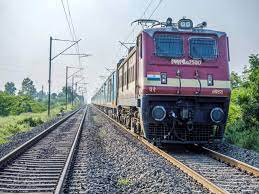
The huge rail infrastructural deficit in Nigeria over the last 30 years has been of concern, as over–reliance on road haulage has also led to faster dilapidation of roads, while the truck movement of cargoes is a major factor behind the very high cost of cargo clearance from Nigeria’s ports. The topography of the country supports an efficient and sustainable rail infrastructure; yet since the decline and obsolescence of the rail infrastructure built during the colonial era, the Nigerian Railway Corporation (NRC) has been largely moribund and ineffective, existing mainly as a property leasing agency in respect of the landed property owned by the corporation.
That said, the intensified effort of the government seems to be changing the narrative, supported by recent investments in the rail line, such as the Abuja Light Rail, Abuja – Kaduna, Lagos – Ibadan, Ibadan – Kano. The impact of these recent investments and the gradual recovery of the economy from the covid induced recession last year must have supported the strong performance witnessed in the sector in Q2–2021. Specifically, the rail transport sector grew by 53.3% y/y, the highest on record, as cargo and passenger volume increased by 392.4% y/y and 442.4% y/y.
Despite the recent improvement in the sector, funding remains a major bottleneck, as many rail projects are suffering a delay in completion due to a lack of funds. In our view, the government needs to revisit the Public–Private Partnership (PPP) model. We expect the InfraCo fund to provide a viable midpoint between public funding and private finance for major infrastructure projects in Nigeria, including future rail projects.


