




January 4, 2022/Coronation Research
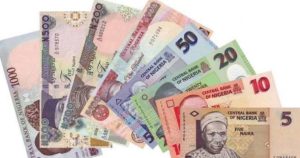
In the last two editions of the Nigeria Weekly Update we described our process for managing our Model Equity Portfolio. As well as stock selection, and the occasional stroke of good luck, it was important that we took some of our notional positions out of the equity market when market interest rates were rising (and the equity market was falling) and put them back when they stabilized. The ability to hold cash in important.
FX
Last week, the exchange rate at the Investors and Exporters Window (I&E Window) weakened by 4.60% to close at N435.00/US$1, a record low. Year on year, the Naira has weakened by 5.69%. Elsewhere, the continued interventions of the Central Bank of Nigeria in the FX markets brought about a further, albeit modest, decline in its foreign exchange (FX) reserves by 0.12% on the week to US$40.53bn – the lowest level since 18 October 2021. However, the level of FX reserves remains high in historical terms (up 14.57% or US$5.15bn y/y), and therefore the position of the CBN looks strong. As a result, as liquidity rises in the official FX markets, it seems possible that stability will be maintained in the I&E and NAFEX rates in the near term.
Bonds & T-bills
Last week, activity in the Federal Government of Nigeria (FGN) bond secondary market was mixed but with a bullish tilt. As a result, the average benchmark yield for bonds fell by a marginal 1bp to 11.55%. Notably, the yield on the 3-year (-1bp to 10.55%) bond tightened while the yields on the 7-year (7.59%) and 10-year (12.60%) bonds were flat. We maintain our expectation that a future rise in bond yields is unlikely to be sharp as the monetary authorities appear content with 2021’s economic and monetary outcomes and are likely concerned with the government’s cost of servicing debt.
Similarly, trading in the Treasury Bill (T-Bill) secondary market was mixed with a bullish bias, as the average benchmark yield for T-bills fell by a marginal 1bp to 4.43%. The yield on the 328-day T-bill was flat at 5.24%. At the T-bill primary auction, the Debt Management Office (DMO) rolled over N52.77bn (US$121.30m) worth of bills across all tenors. The stop rate on the 364-day bill declined by 10bps to 4.90%, while the stop rates on the 91-day (2.49%) and 182-day (3.45%) bills were unchanged. Although stronger than the last auction, demand was weak compared with prior auctions in 2021. For context, the auction recorded a total subscription of N82.26bn, implying a bid-to-offer ratio of 1.65x (versus an average of 3.93x at prior auctions in 2021). Elsewhere, the average yield for OMO bills rose by 6bps to 5.50%; the yield on the 277-day OMO bill declined by 1bps to 5.52%.
Oil
Last week, the price of Brent rose by 2.15%, its second successive weekly gain, to US$77.78/bbl on expectations that fuel demand will hold up despite soaring Omicron coronavirus infections and that Organisation of the Petroleum Exporting Countries and its allies (OPEC+) would continue to increase production only incrementally. As a result, Brent ended the year 50.15% higher y/y – its highest annual gain since 2016 – and traded at an average of US$70.98/bbl in 2021, 64.25% higher than the average of US$43.22/bbl in 2020, spurred by the global economic recovery from the COVID-19 pandemic slump and producer restraint, even as infections reached record highs worldwide. Elsewhere, OPEC+ is expected to meet today and will likely ratify a 400,000 bbl/d increase for February, in line with its declared schedule. We reiterate our expectation that the price of Brent oil is likely to remain well above the US$60.00/bbl mark during the first half of this year.
Equities
The NGX All-Share Index was up 1.07% last week to close at 42,716.44 points, the highest level in a month. Consequently, the index ended the year 6.07% higher than it started. Nestle Nigeria +11.58%, Unilever Nigeria +8.61%, MTN Nigeria +5.35%, Nigerian Breweries +4.17% and Access Bank +2.76% closed positive last week, while BUA Cement – 10.00%, MRS Oil Nigeria -9.85%, Oando -5.96%, FBN Holdings -5.39% and Ardova -2.99% closed negative. Across the NGX sub-indices, the NGX Consumer Goods +6.24% led the gainers, followed by the NGX Banking +2.61%, NGX Pension +2.51%, NGX Insurance +1.88% and NGX 30 +1.28% indices. Conversely, the NGX Industrials -3.91% and the NGX Oil & Gas -1.09% indices were the losers for the week.
The Importance of Cash
In the last two editions of the Nigeria Weekly Update we described how we ran the Model Equity Portfolio during 2021. We outperformed the NGX Exchange All-Share Index by 328 basis points (bps) by year-end and we attribute this to three things. First, we avoided making an excessive commitment to the equity market when we believed it was shaky, taking some of our notional equity positions off the table. Second, we made some successful stock selections, including Okomu Oil Palm, Presco and Custodian Investments (not that we could find sufficient liquidity in Custodian Investments, even in a small notional portfolio like this). Third, we had the good fortune to hold a neutral weight in FBN Holdings ahead of its extraordinary rally which was caused by a struggle for control over its board.

Going back to our first point, what caused us to take equity positions out of the Model Equity Portfolio, particularly in the first part of the year? We were convinced that market interest rates would rise in the first half of the year, expecting 1- year T-bill rates to rise to 10.00%. This, we believed, would attract money into deposit accounts and away from the equity market. We had some success with this call, taking our notional cash position up to 30.7% by late March as the equity market fell.
We then believed we had done enough, and deployed some of the notional cash back into equities. However, we still expected market interest rates to rise further and so did not make a full commitment to the market. This time our interest rate call did not work out: market interest rates peaked in mid-May and began to trend down. Observing this, we were undecided until late August when we decided to commit to the market again, with our notional cash position falling.
We consider ourselves quite fortunate to have used the option of holding cash, for two reasons. First, it is genuinely difficult to call the direction of the market overall, and we were quite surprised to get it at least partly right, especially in a year when the equity market traded in quite a narrow range. Second, we know that most professional fund managers are not able to hold so much cash because rules simply prohibit it (no such rules apply to individual portfolios).
This is not to say that we endorse using stop-loss limits: far from it. The problem with stop-loss limits is that they are usually numerical and unrelated to the fundamental drivers of the market. They do not give any guidance as to when to get back into the market.
Going in to 2022, we observe that market interest rates are quite stable, with a tendency to moderate rather that rise. At the same time some stocks show the potential for good earnings growth. So we are likely to keep our notional cash allocation low for a while yet.
Model Equity Portfolio
In the last week of the year the Model Equity Portfolio rose by 0.86% compared with a rise in the NGX Exchange AllShare Index (NGX-ASI) of 1.12%, therefore underperforming it by 26 basis points. During 2021 it gained 9.36% against a gain in the NGX-ASI of 6.07%, outperforming it by 328bps

The problem last week was our slightly underweight notional position in Nestle Nigeria (a 4.8% position versus an index weight of 5.1%) which rallied – to look at the share price chart, it really was a spike – by 10.0%, and this left us trailing. We were also slightly overweight in BUA Cement (10.3% versus a 9.1% index weight) which lost 10.0% over the week, so that we lost more than necessary here.
Going forward into the 2022 we are guided by our recent Nigerian telecom sector report ‘Delivering a Digital Future’, 30 December, in which we recommend a Buy for MTN Nigeria with target price of N266.17/share and a Sell for Airtel Africa with a target price of N793.84/share. Over the coming week we will create notional overweight and underweight positions accordingly.

