




December 13, 2022/United Capital Research
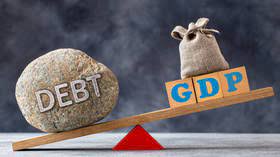
Due to persistent legacy problems, such as oil theft and pipeline vandalism, which have fundamentally limited the expansion of the nation’s oil production output and therefore oil earnings, Nigeria’s revenue problems persisted in 2022 without reprieve. In a recent presentation, the World Bank’s new lead economist for Nigeria predicted that in 2023, debt payment will consume 123.4% of the Federal Government’s (FG) revenue. This is based on the presumption that the current revenue issues won’t be resolved.
The FGN generated N4.2tn in total between January and August of 2022, which is 23.2% less than the total revenue (N5.5tn) gathered in 2021. This sum represents 63.7% of the pro rata budget goal for the year. Interestingly, the FGN had already spent 88.6% (N3.5tn) of the N4.0tn projected for debt service in 2022, or around 83.3% of all revenue earned over the same period. It’s interesting to note that this sum is 32.9% higher than the pro rata budget objective (N2.6tn) for debt servicing in the first eight months of 2022. This might be attributed to a combination of increased borrowings and higher borrowing costs.
For further context, Nigeria’s crude oil output (ex-condensates) printed at c.1.2mbpd as of Nov-2022, according to statistics taken from the Nigerian Upstream Petroleum Regulatory Commission (NUPRC), down 7.0% y/y from the c.1.3mbpd output seen in Nov-2021, showing the pressure on oil revenue generation.
Since the FG’s budget is mostly based on deficit, we expect the country’s limited access to the international capital market will eventually translate to the FG’s sustained reliance on domestic debt markets for funding its budget items. The nation’s overall public debt as of Sep-2022 was N44.1tn, with a sizeable chunk (61.1%) coming from the local debt market.
This is set to increase beyond the N50.0tn mark in 2023. Rescuing Nigeria from an impending debt crisis will require genuine fiscal reforms that would: 1) maximise revenue generation sources 2) block leakages among government MDAs 3) reduce wastages from governance costs 4) eliminate the subsidy regime. Demonstratable results from such reforms will provide a base for debt renegotiation and restructuring terms with targeted lenders.

