


December 21, 2022/CSL Research
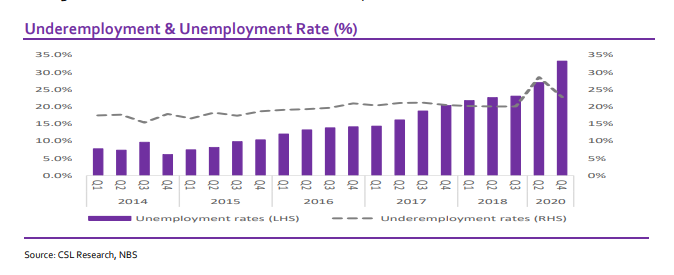
According to a World Bank report, 80 million working-age Nigerians will not have full-time jobs in 2030 if the nation doesn’t improve its employment rate. The report further stated that 23 million more Nigerians will live in extreme poverty by 2030 at current poverty rate, noting that poverty in Nigeria is mostly in-work poverty and having a job does not guarantee a way out of poverty. Unemployment is one of the most severe social problems facing Nigeria today and it has far-reaching consequences for the economy and national security. The country’s unemployment rate is said to be about 33%, which means that about one in four Nigerians is unemployed. The country has continued to contend with slow growth with GDP per capita dropping from US$2,280 in 2010 to US$2,097 in 2020, and the number of Nigerians living below the poverty line rising from 68 million to about 80 million.
The high rate of unemployment could be attributed to several factors. Firstly, Nigeria has a large population with over 200 million people, making it the most populous country in Africa. Nigeria’s population growth has been almost at par with GDP growth, implying low productivity. Secondly, the novel COVID-19 presented its own challenges as Nigerian companies executed major salary cuts and layoffs of employees. Other factors that have contributed to the elevated unemployment numbers include the lack of quality education and training, corruption and red tape in the Nigerian government and the high cost of running businesses which makes it difficult for businesses to thrive. Lastly, the prevalent insecurity and FX crisis in Nigeria has made it difficult to attract foreign investments into the country.
The unemployment crisis in Nigeria has contributed to the high crime rate in the country as citizens do anything to make ends meet and the current macroeconomic situation of the country presents a negative outlook for unemployment rates in the near term. In our view, there is a need for the government to prioritize implementing policies that would help create jobs and reduce poverty. Additionally, the government must promote social economic programs to improve the informal sector and create a conducive atmosphere for doing business in the country, which will, apart from encouraging new start-ups, also attract Foreign Direct Investments (FDIs) into the country.