



June 9, 2023/CSL Research
The National Bureau of Statistics (NBS), in its National Multidimensional Poverty Index report released in November 2022 revealed that 133 million Nigerians were multi-dimensionally poor, with no access to health, education, employment, and security. The Multidimensional Poverty Index (MPI), is a measure of acute poverty using a range of indicators such as education, nutrition, child mortality, etc.
The NBS report also revealed Sokoto, Bayelsa, Gombe, Jigawa, and Plateau as the top five poorest states in 2022, noting that 65% of poor Nigerians (86 million) were in the North, while 35% (nearly 47 million) were in the South. The disparity between North and South was evident in both incidence and intensity of multidimensional poverty.
The economic recession witnessed in 2015-17 had a major impact on Nigerian households, eroding their purchasing power and driving joblessness nationwide. Although the exit from recession in Q2 2017 was expected to translate into improved consumer spending, a sluggish pace of recovery amid the faster population growth left consumers still financially stifled. Still stuttering from the hit of that recession, the onset of the global pandemic worsened the situation and drove the country into another recession in Q3 2020.
The pressure on disposable income was further exacerbated by the impact of unprecedented hikes in petrol, electricity, and food prices, leading to an astronomical increase in the cost of living in the face of muted growth in disposable income. To put this in context, many Nigerians in the past eight years have been pushed below the poverty and can hardly put food on their tables.
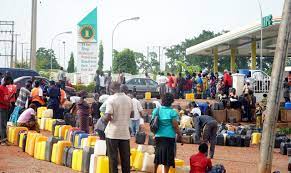
Immediate reactions trailed the announcement of the removal of fuel subsidies by President Bola Ahmed Tinubu’s administration as marketers and operators began to hoard fuel with the anticipation of an increase in pump prices creating artificial scarcity. Currently, marketers and operators have already carried out an instant increase in petrol pump prices, with prices averaging N550 per litre based on our checks.
The NNPC has however noted that the company has enough products to supply the country for the next 30 days and would be monitoring its supply and distribution networks around the country to prevent petrol scarcity. We estimate inflation could reach as high as 25.8% in June with an average N550/litre price of petrol.
Though we agree that current economic realities necessitate the removal of fuel subsidies, nonetheless, the removal of subsidies without provision of adequate palliatives to cushion the effect of the shock on the poorest Nigerians will likely be the last straw that will break the camel’s back.
We retain the view we have held since the beginning of the year that the elimination of the subsidies needs to be gradual with sufficient and well targeted palliatives (not N5,000 monthly given to the poor) put in place to ameliorate the expected shocks. Moreover, revenue can be freed from reducing governance costs and wastes in the civil service to provide the needed palliatives.

