




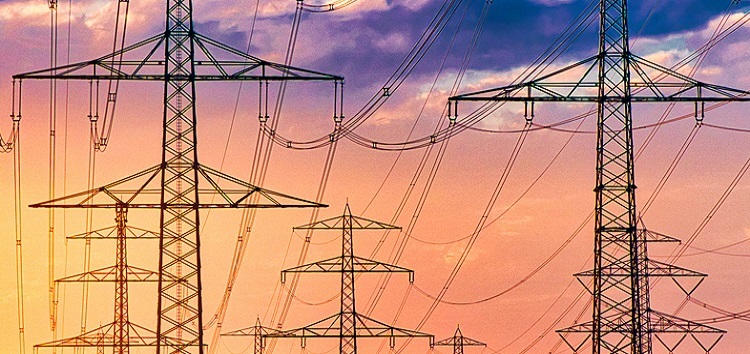
Concept for electricity generation, rising electricity prices, environmental issues, climate change. Image Credit: EBRD
June 13, 2023/CSL Research
Based on news reports on Saturday, President Bola Ahmed Tinubu has signed the 2023 Electricity Act into law. The new law authorizes states, companies, and individuals to generate, transmit and distribute electricity. The new electricity law repeals the Electric Power Sector Reform Act (EPSRA) which was signed by President Olusegun Obasanjo in 2005. The EPSRA (2005) provided the legal, regulatory and governance frameworks underpinning the Nigerian Electricity Supply Industry (NESI) with the central objective of establishing a long-term electricity market structure in Nigeria in which multiple operators provide services on a competitive basis to the broadest range of customers. Under such a regime, competitive market forces would be the best determinant of the appropriate and sustainable levels of prices charged by various carriers for their services.
The new Act signed by the President consolidates all legislations dealing with the electricity supply industry to provide an ideal framework to guide the post-privatization phase of the Nigerian Electricity Supply Industry and encourage private sector investments in the industry. It also provides a framework for the improvement of access to electricity in rural, unserved, underserved, peri-urban and urban areas through the use of conventional sources and renewable energy off-grid and mini-grid solutions.A new report from International Energy Agency (IEA) and the International Renewable Energy Agency (IRENA) notes that as of 2021, Sub-Saharan Africa made up the largest (80%) region in the world without electricity, of which Nigeria tops the list with 86 million (42%) of its population still without electricity.
In our view, the success of the new law in increasing access to electricity depends largely on the ability of state governments to develop their own electricity laws and make significant investments in the electricity supply industry, a project which states like Lagos, Edo and a few other states have already embarked on. Investments by states in the electricity market can increase supply and create competition. In the long run, we believe that while the Nigerian electricity supply market could become an open-traded market as planned, the market could likely end up with a two-tier structure. One would have customers relying on power from the national grid and the other with customers in an IPP/embedded generator framework. What the former lacks in reliability would be off-set by lower tariffs than those of the IPP/embedded framework. The IPP/embedded framework would exhibit high reliability of service in exchange for higher tariffs than the grid-connected system.

