

August 1, 2023/Afrinvest
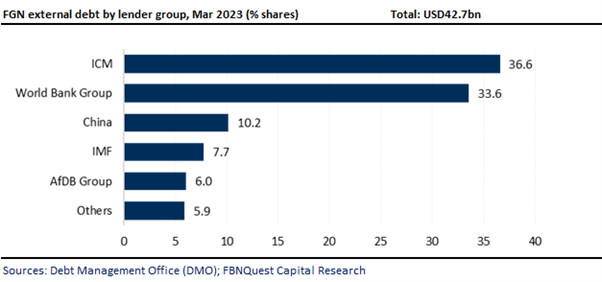
According to data from the Debt Management Office (DMO), Nigeria’s total external debt stock increased by USD977m relative to the prior quarter to USD42.7bn in Q1 ’23. The rise was mostly driven by an increase of USD397m in debt obligations to the World Bank, a USD383m rise in promissory notes, and smaller amounts owed to the IMF and some bilateral lenders. The naira had not been floated as at the end of Q1 ’23. Therefore, the DMO converted the external debt stock to Naira at an exchange rate of NGN460.4/USD, resulting in a value of NGN19.6trn. This translates to approximately 9.8% of the 2022 GDP in standardised terms .
The debt stock also includes external borrowings of state governments. While data for their external debt stock was unavailable for Q1, it amounted to USD4.5bn as of Q4 ’22. We do not anticipate a material adjustment to this figure.
The total debt owed to multilateral lenders increased by USD424m q/q, mostly due to the USD397m rise in debt obligations due to the World Bank.
Regardless, the share of multilateral debt was relatively stable at 48.4% vs. 48.5% as at Q4 ’22 mostly due to an almost corresponding rise in the obligations due to holders of promissory notes and other smaller groups.
The World Bank has approved two loans to Nigeria since President Bola Tinubu assumed office on May 29, 2023. These include a USD750m additional financing support for the power sector and a USD500m loan to enhance funding for the Nigeria for Women Programme.
Although the FG’s borrowing plan under the 2023 budget implies additional foreign loans of NGN1.8trn, commercial borrowings, namely Eurobonds have remained relatively unchanged at USD15.6bn.
The FG has not been able to tap the market this year largely because of the high-interest rate environment.
While the US Federal Reserve and other major central banks might be approaching the conclusion of their rate hike cycle, we do not anticipate rate cuts this year.
Consequently, we see limited scope for the FG to raise debt from the international debt market this year.