
October 3, 2023/CSL Research
According to the selected food price watch report by the Nigerian Bureau of Statistics (NBS), food prices have continued to grow significantly. The selected food items include staples such as rice(1kg), beans(1kg), bread (500g), tomatoes, beef, wheat (2kg), garri (1kg) and palm oil (1 bottle). According to the report, the highest food price increases were recorded in the average price of 1kg of beef boneless at N2,799.51, a 30.75% y/y rise in price compared with N2,141.18 reported in August 2022. The average price of 1kg of rice local sold loose increased by 62.68%y/y to N738.74 in August 2023 from N454.10 in August 2022.
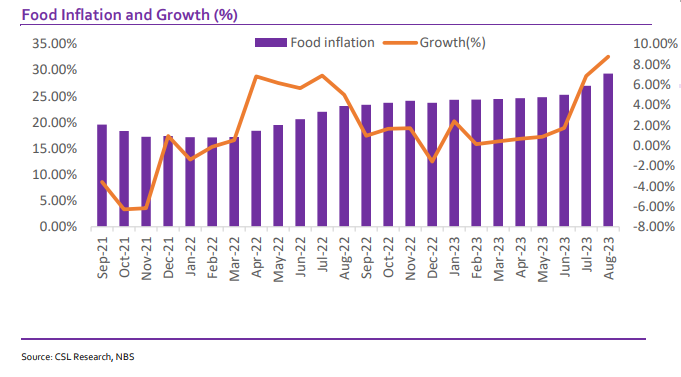
Food inflation (up to 29.34% in August) remains a key driver of headline inflation which grew to 25.8% in August from 24.08% in July. Nigeria’s persistent food crisis stems from various factors, including insecurity in food-producing regions, inadequate storage infrastructure, poor policies, adverse weather conditions, and global events such as the ongoing Russia[1]Ukraine war which has created food supply shocks. In addition, the currency swap policy of the Central Bank of Nigeria (CBN) in Q1 resulted in many farmers missing the opportunity to buy inputs and plants, which is now leading to low harvests in Q3. The removal of the fuel subsidy further compounded the situation, triggering an increase in the cost of transporting food products which in turn has resulted in an increase in food prices.
We note that to achieve a moderation in food prices, the government must ramp up production of agricultural produce to increase supply. Also, the pertinent problem of security must be addressed decisively so farmers can feel safe enough to go to their farms. On 13 July, President Tinubu declared a state of emergency on food insecurity to tackle the increase in food prices. He also directed that all matters pertaining to food & water availability and affordability be included under the purview of the National Security Council.