



November 3, 2023/Moody’s Investors Service
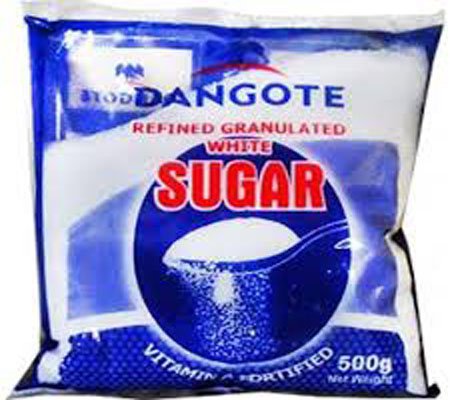
Moody’s Investors Service has assigned a first-time Caa1 corporate family rating (CFR), and Baa3.ng national scale rating (NSR) corporate family rating to Dangote Sugar Refinery Plc (DSR or the company), the largest Sub-Saharan African sugar producer and refiner based in Nigeria. The outlook is stable.
Ratings Rationale
Dangote Sugar Refinery Plc’s Caa1 corporate family rating and Baa3.ng national scale rating reflect the company’s operational exposure to Nigeria’s macroeconomic, political, legal, fiscal and regulatory environment with all its operations, cash flows and assets located in Nigeria. The rating is constrained by the Government of Nigeria’s foreign currency ceiling rating but reflects the company’s strong credit profile and positive sugar industry fundamentals. The rating also takes into consideration the strong, larger and more diversified parent and main shareholder, Dangote Industries Limited.
DSR’s ratings factor in the company’s robust financial profile, which factors (1) low Moody’s adjusted leverage measured by Moody’s adjusted debt/EBITDA below 1.5x in 2024 and 2025 including debt raised to fund the Backward Integration Plan (BIP) projects and excluding letters of credit, (2) adequate operating margins around 20% on average for the last five years, (3) adequate Moody’s adjusted interest coverage measured as Moody’s adjusted EBITA/Interest expense maintained above 5x including debt raised to fund the BIP projects, (4) the positive industry fundamentals supported by government regulation and Nigeria’s demographic and societal trends, and (5) DSR’s market positioning as Nigeria’s largest manufacturer and seller of refined sugar.
Conversely, the rating reflects DSR’s (1) exposure to Nigeria, a country that has high social, political, economic and regulatory risks, (2) comparable scale of sugar refining production with the largest sugar refineries in the USA and Europe, as the largest Sub-Saharan African sugar producer and refiner, (3) exposure to commodity price risk volatility through raw material imports of sugar due to foreign currency exchange risks already captured in Nigeria’s foreign currency ceiling, (4) high reliance on letters of credit of NGN338 billion as of 30 June 2023 (around 3x the Moody’s adjusted EBITDA of NGN98 billion for the last 12 months to June 2023), which are interest bearing and used for hard currency working capital financing, and (5) a degree of execution risks as the company embarks in its BIP projects, with a particular focus in the Nasarawa State greenfield project, although the Dangote Group has experience and expertise in BIP project execution.
Nigeria is a net sugar importer country resulting in FX outflows through purchases of raw material which represents a burden to the Federal Government’s weakening finances. To reduce FX outflows from the sugar industry, the Government of Nigeria has implemented the Nigerian Sugar Master Plan (NSMP). The NSMP aims to create a self-sufficient sugar industry to produce refined sugar from locally grown sugar cane in Nigeria and reduce its reliance on raw material imports through investments in Backward Integration Plan (BIP) projects by existing raw sugar importers. DSR has committed to invest in the success of the NSMP through the enhancement of its existing refinery operations in Numan as well as developing a new greenfield site at Nasarawa. As a result, DSR’s growth and performance over the next decade is largely tied to the implementation and success of the BIP projects. Nevertheless, DSR’s raw material concentration in one country will be a constraint for the company, especially with the volatility in agriculture commodities prices and event risks.
Moody’s anticipates the June 2023 large Naira depreciation to have negative credit implications in the 12 months. As a raw material importer for its Apapa refinery, DSR’s costs of sugar imports in Naira will increase following the Naira weakening. DSR has reported that the USD to Naira exchange weakened to 756 Naira per USD as at 30 June 2023 compared to 461 Naira per USD as at 31 December 2022. As a result of higher import costs and a lag to pass through the increasing cost base, Moody’s anticipates margins pressures during the second half of 2023. However, in historical periods of currency weakening or increasing import raw sugar prices the company has been able to pass through increasing raw material costs to its customers over time and Moody’s expects that adjusted operating profit margins will reverse towards 15%-20% in the next 12-18 months.
ESG Considerations
Sugar growing and processing companies are exposed to physical climate risks, high water management risk as well as natural capital risks. As a result, DSR has a highly negative exposure to environmental risks, in line with other agricultural & protein producers. This reflects a direct reliance on agricultural inputs, which are exposed to relevant event risks including unexpected weather variability and occurrence of plagues. Moody’s considers DSR’s carbon transition risk to be low to neutral since the company will benefit from global biofuel demand and use of production by-products to generate energy (bagasse).
DSR’s credit exposure to social risk is because of the reliance on commodities and farming activities. Health and safety, human capital, and responsible production all present a moderate risk similar to other peers in the industry. Nevertheless, the company benefits from the African and Nigerian demographic and societal trends that support strong sugar industry fundamentals backed by the Nigerian population growth and sugar’s social importance.
Governance factors included within our assessment of the ratings include the company’s majority ownership by Dangote Industries Limited (67% equity stake) and Aliko Dangote (5%) and a track record of dividend distributions. That said, DSR has maintained a prudent approach to leverage and has a good track record of maintaining minimum levels of liquidity.
Liquidity Profile
Moody’s considers DSR’s liquidity profile to be adequate, underpinned by a large cash balance of NGN158 billion as of 30 June 2023 and strong operating cash flows of NGN73 billion for the last 12 months to June 2023. Available internal sources are sufficient to cover all basic liquidity needs, including sizeable dividends and maintenance capital spendings, within next 12-18 months.
However the company will rely on external liquidity to finance its capital intensive BIP projects. Although currently there are no available committed bank facilities, Moody’s understands that DSR will raise all necessary funds for the BIP projects in time, taking into account its low leverage and a leading market position. The company has already received commitments from financial institutions in Africa to support its BIP projects.
Moody’s also recognizes that DSR has a limited track record of accessing the local funding market however its low leverage, strategic corporate status in Nigeria and the strength of its main shareholder represent an advantage.
Rating Outlook
The stable outlook is in line with the stable outlook of the Government of Nigeria reflecting DSR’s close credit links to the Government of Nigeria and operational exposure to the country’s political, legal, fiscal and regulatory environment.
Factors That Could Lead to an Upgrade or Downgrade of the Ratings
The ratings of DSR could be upgraded if Nigeria’s foreign-currency country ceiling is raised. This would also require no material deterioration in the company’s operating and financial performance, market positions and liquidity.
The ratings of DSR could be downgraded in case of a further downgrade of Nigeria’s sovereign rating and a lowering of the foreign-currency country ceiling. In addition, downward rating pressure could arise if there are signs of a deterioration in liquidity or if government imposed measures were to have an adverse impact on DSR’s credit quality.

