



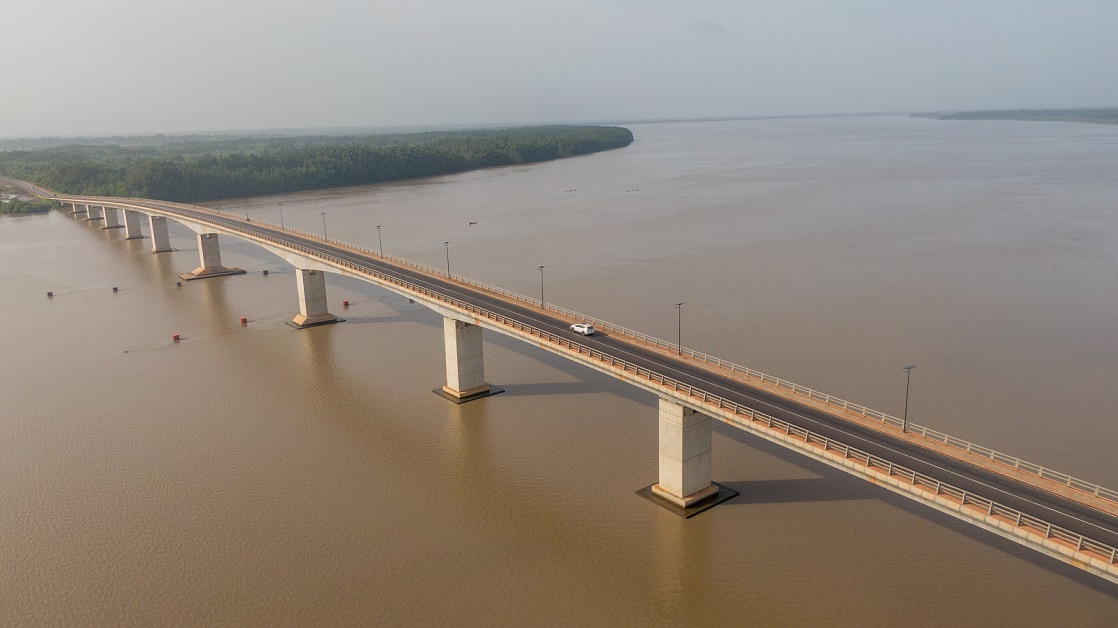
(Source: AfDB)
November 15, 2023/CSL Research
Based on a Business Day report, President Bola Tinubu, in Mecca, Saudi Arabia, advanced negotiations for a multi-billion-dollar infrastructure finance facility from the Islamic Development Bank (IDB) to fund a multi-sectoral portfolio of infrastructure projects across the federal and sub-national levels in Nigeria. The negotiation was the outcome of substantive investment discussions between President Tinubu and the Vice-President (Country Programmes) of the Islamic Development Bank, Mansur Muhtar.
Nigeria’s growing infrastructure deficit remains a major concern among economic experts and stakeholders as poor infrastructure is one of the biggest impediments to smooth business operations and capital inflow into the country. The paucity of investment in physical and social infrastructure over the years has continued to limit the growth potential of Africa’s largest economy, restricting its ability to exploit its vast amount of natural and human resources towards achieving a broad based, sustainable and inclusive growth. According to estimates from the Nigerian Investment Promotion Commission (NIPC), Nigeria needs over c. US$2.8trn in infrastructure investment over the next 30 years. Nigeria’s infrastructure stock is also estimated at c.30% of GDP, far below the 70% international benchmark set by the World Bank.
In 2021, the Federal Government approved the establishment of a Public Private Partnership styled Infrastructure company named Infra-Co with an initial seed capital of N1tn expected to grow to N15tn in assets and capital over time. The proposed establishment was planned to attract private sector participation in the nation’s quest to bridge its infrastructure deficit. The appointed fund managers were Chapel Hill Denham, Triple A (consortium comprising Africa Plus partners, Arc Asset Management, and Afrinvest), Sanlam Infraworks and AIIM, a unit of South Africa’s Old Mutual Group while KPMG was appointed as the transaction adviser for the corporation. However, much hasn’t been heard recently about the progress of the partnership.
The power, transportation, health, and education sectors are important segments of the economy that are currently burdened with dilapidated infrastructure. Over the years, Nigeria has sustained a meagre allocation to funding infrastructure in its annual budget despite its pronounced infrastructural gap. We laud the recent moves towards infrastructure development in Nigeria, as we see it as a precursor to sustainable growth and development. In our view however, collaborating with the private sector to bridge the widening infrastructure deficit appears the only viable option given Nigeria’s current weak fiscal position and elevated borrowings. A private public partnership also minimizes bureaucracy and maximizes efficiency

