




December 14, 2023/CSL Research
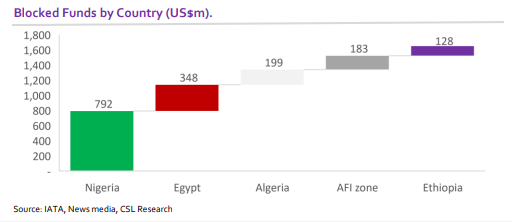
Speaking at a media briefing held last weekend, the International Air Transport Association (IATA) noted that funds trapped in Nigeria belonging to foreign airlines are estimated at US$792 million. The world airline body warned that rapidly rising levels of blocked funds are a threat to airline connectivity in the affected markets and are gradually becoming a threat to global operations.
Nigeria has been facing a severe FX crisis which has made it impossible for international carriers to repatriate accumulated funds from tickets sold in Naira. Many airlines have resorted to various methods to get the attention of the government such as stopping ticket sales and UAE’s Emirate airline recently suspended all flights to Nigeria.
The total global airline industry blocked funds have increased by 3.96% to US$2.36 billion in September 2023 from US$2.27 billion in April 2023. Of this, US$1.65billion is trapped in Africa, of which 48% (US$792m) is trapped in Nigeria.
The Central Bank of Nigeria (CBN) prohibits international airlines from issuing tickets to locals in foreign currency according to section 20(I) of the CBN Act. Nigeria has been experiencing a huge shortage of FX amidst a growing demand and it appears the CBN has not been prioritising airlines in accessing foreign exchange. This has earned Nigeria the top position on the debt list with 33.6% of the total global airlines’ blocked funds.
Late September, President Bola Ahmed Tinubu directed the CBN to create a platform for quarterly reconciliatory meetings with foreign airlines to address the backlog of trapped funds and earlier last month, plans to clear FX backlogs were rolled out, unfortunately little progress has been made. In recent years, airline operators in Nigeria have been hit by pertinent concerns.
First, was the scarcity and rising cost of aviation fuel (which accounts for c.40% of their operational costs), with the attendant impact on the cost of operations and conditions of service. Beyond the high cost of aviation fuel, the current acute shortage of FX has become a big problem for airline operators. Given the systemic importance of air travel for the conduct of trade and other economic activities and the impact of actions like this on foreign direct investments, immediate steps to ensure FX availability for the airlines must be taken.
Click here to read full PDF copy of report

