




December 19, 2023/CSL Research
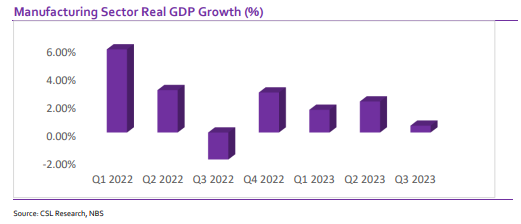
The manufacturing sector’s real GDP growth was 0.48% in Q3 2023, a 78.12% decrease compared to the 2.20% recorded in Q2 2023. The sector’s contribution to the real GDP in the third quarter of 2023 was 8.43%, a slight decline from the 8.59% recorded in the third quarter of 2022. The Manufacturing sector comprises industries in cement production, beverages, oil refining, food, tobacco, textile, rubber processing, footwear, paper, chemical and pharmaceutical production, etc. The sector grew modestly by 2.45% in 2022, reflecting the negative impact of CBN’s hawkish rendition, especially in the second half of the year. In fact, the sector contracted by 1.91% in Q3 2022, the first contraction since covid hit in 2020.
Though at a slower pace, the CBN has maintained its hawkish stance in 2023 and the fortunes of the manufacturing sector have worsened with the latest reforms of the new administration such as the fuel subsidy removal and the unification of the exchange rates at the various windows. The sector’s growth rate improved slightly to 2.2% in Q2 2023 compared with 1.61% in Q1 2023 but declined steeply in Q3 to 0.48% following the reforms. Players in the sector saw significant increases in net foreign exchange loss because of the Naira devaluation in June 2023. Manufacturers have tried to pass on the associated increase in cost of production to consumers, but this affected volumes, particularly for non-essentials due to the constrained purchasing power of consumers.
The decline in profitability has forced several manufacturing companies out of business this year, with some international companies forced to close business segments or in some cases their entire Nigerian operations. GlaxoSmithKline, Unilever (discontinued the manufacturing of its homecare and skin-cleansing brands) and Procter & Gamble, (P&G) are some of the companies that have been forced to close all or part their manufacturing operations due to the current harsh operating environment. In our view, the government needs to find ways to ameliorate the problems faced by manufacturers such as prioritizing forex intervention for companies in the sector through the official market, improving infrastructure such as power and putting an end to the multiple taxes levied on manufacturers.
Click here to read full PDF copy of report

