



December 22, 2023/CSL Research
According to recent reports, the Federal Government of Nigeria (FGN) has begun to apply incentives to attract investments to the lagging oil & gas sector. One of such incentive is to replace signature bonuses that companies owe to the government after the signing of contracts with lump sums of production.
A signature bonus is a single, non-recoverable lump sum payment by the licensee to the government after the exploration license has been granted. The government is also looking to tackle delays in licensing. The Chief Executive Officer of Nigerian Upstream Petroleum Regulatory Commission (NUPRC), Gbenga Komolafe stated that the new measures will be observed in the new bidding process about to commence.
Oil output from Nigeria has been low in recent years and the country recorded its lowest oil production volume of 1.14mbpd in September 2022. The country’s low production has been attributed to massive crude oil theft in Nigeria’s oil rich Niger Delta, ageing oil fields, poor crude oil terminal maintenance, shutdowns, and reduced investments in the upstream oil and gas sector.
The situation has led to significant revenue losses for the country. The Federal Government has sustained efforts at reinforcing pipeline surveillance and clampdown on oil theft, but results appear slow and inconsistent. Industry data showed crude oil production output rallied for 6 months from a record low in September 2022, but production declined again in April 2023 and picked up again in May 2023 but has begun to decline again.
In recent years, many oil majors have been getting rid of onshore and shallow-water assets. The Tinubu administration has pledged to increase oil output, which is currently around 1.46 million barrels a day (including condensates), to four million a day by 2030. The government also plans to upgrade infrastructure, end theft and vandalism and improve community relations.
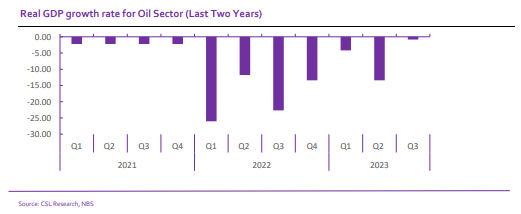
The oil sector has been in recession since 2020 and has been a drag to overall GDP growth. The NUPRC boss noted that capital inflows into the industry have dropped by about 74% in almost a decade. Attracting investments into the sector and boosting oil production will go a long way to improve the harsh macroeconomic conditions the country faces currently.
Click here to read full PDF copy of report

