
January 10, 2024/CSL Research
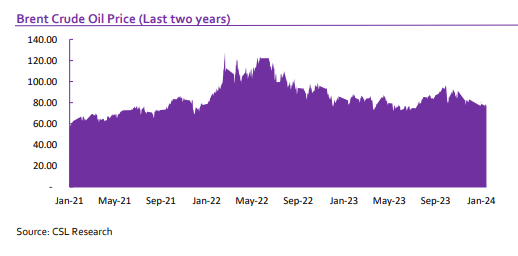
Though Brent crude closed lower at US$77.04/bbl in 2023 from US$85.91/bbl at the end of 2022, the global benchmark crude oil has been rising slowly as the Middle East tension and the war between Ukraine and Russia rages on. Brent Crude has gained 1.79% ytd to US$77.48/bbl as demand edges up amidst the ongoing supply cuts made by the Organization of the Petroleum Exporting Countries and its allies (OPEC+). With the expected economic recovery of large oil consuming countries like China, it is believed that global oil prices may close at c.US$89.40pb at the close of 2024.
Based on forecasts, global oil prices may exceed the nation’s 2024 budget crude oil price assumption of US$77.96/bbl. This will lead to higher revenue and an increase in the excess crude account. However, the level of revenue inflow will be dependent on the country’s oil production levels as insecurity and oil theft continue to limit output.
On the flip side, the rise in global crude oil price may adversely affect the pump price of fuel and lubricants following the removal of the long-standing subsidies on petrol. Prices of petroleum products are both a function of movement in crude oil prices and of exchange rate changes. The removal of the fuel subsidy by the new administration resulted in a significant increase in the price of PMS and prices fluctuated in the first few months after the removal. Many believe the relative stability seen in the past few months may imply the reintroduction of subsidy.
As global crude oil prices rise, the cost of refined petroleum products also rise in tandem. Again, the depreciation of the nation’s currency will lead to higher costs of importing petroleum products. In a liberalized market, prices will likely continue to fluctuate with movements in crude prices and the depreciation of the currency.