




August 7, 2024/CSL Research
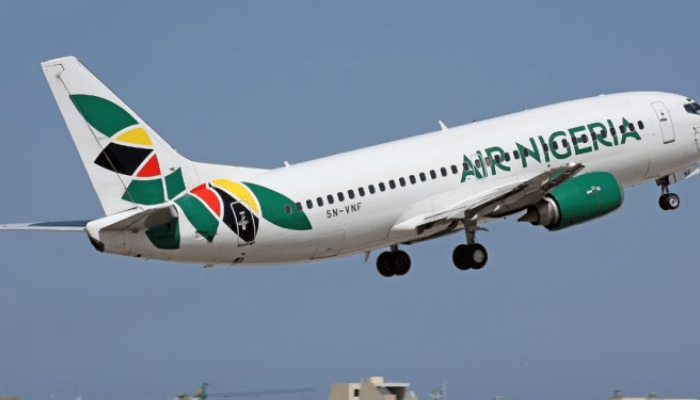
According to news reports, a Federal High Court in Lagos has nullified the sale of a 49% equity stake in Nigeria Air to Ethiopian Airlines. In his ruling, the Presiding Judge declared the stake sold to Ethiopian Airlines as null and void. He also ordered a halt to the federal government’s plans to establish the national carrier, Nigeria Air. This decision was made in favor of the plaintiffs, the registered trustees of the Airline Operators of Nigeria (AON) and five other aviation industry stakeholders.
In November 2022, the federal high court, Lagos Judicial Division, issued an order of interim injunction restraining the Federal Government from executing the proposed establishment of the national carrier – Nigeria Air. The Plaintiffs alleged that the sale of shares of the proposed airline violated the Companies and Allied Matters Act, as well as that of the Securities and Exchange Commission. Despite the restraining order, the then Minister of Aviation Hadi Sirika, insisted the airline will commence operations in May 2023 in partnership with Ethiopian Airlines.
In 2023, the Ministry of Aviation, unveiled Nigeria Air just before the end of President Buhari’s
administration. Nigeria Air faced significant controversy and legal challenges following its unveiling. The ownership structure, which allocated a 49% equity stake to Ethiopian Airlines, a 5% stake to the federal government, and 46% to a consortium of three Nigerian investors, raised concerns among stakeholders. In June 2023, the House of Representatives requested the suspension of Nigeria Air’s operations, describing the deal as “a fraud.” Subsequently, in August 2023, Festus Keyamo, the Minister of Aviation, announced the suspension of the national carrier project until further notice.
Nigeria Airways, once the country’s national carrier and at one time the only airline in the nation, ceased operations in 2003 due to poor corporate governance and mismanagement, leading to a financial crisis. After a prolonged period without a functioning national carrier, the government sought to encourage private sector participation in the aviation sector.
This led to a joint venture between the Virgin Group and local investors in 2004, resulting in the creation of Virgin Nigeria Airways, which replaced the defunct Nigeria Airways. Despite several rebrandings—from Virgin Nigeria to Nigerian Eagle Airlines, and finally to Air Nigeria—the partnership ultimately failed due to persistent government interference, leading to the airline’s collapse in 2012.
The aviation sector was one of the sectors worst hit by the pandemic. The sector recorded -36.98% in 2020 from a GDP growth of 13.17% in 2019. The sector showed reasonable recovery post the pandemic with a growth rate of 26.23% in 2022. Recently however, the performance of the sector has waned, with 2023 growth rate down to 7.38% and Q1 2024 GDP growth rate at a negative 9.48%.
In our view, establishing a national carrier to facilitate the faster flow of goods and services across the continent is a positive step with significant economic benefits if managed properly. However, given the country’s extremely tight fiscal position, it may not be the most effective use of scarce resources at this time. Rather efforts should be put in place to support the activities of existing airlines inorder to boost them productivity of the sector.

