


November 12, 2024/FBNQuest Research
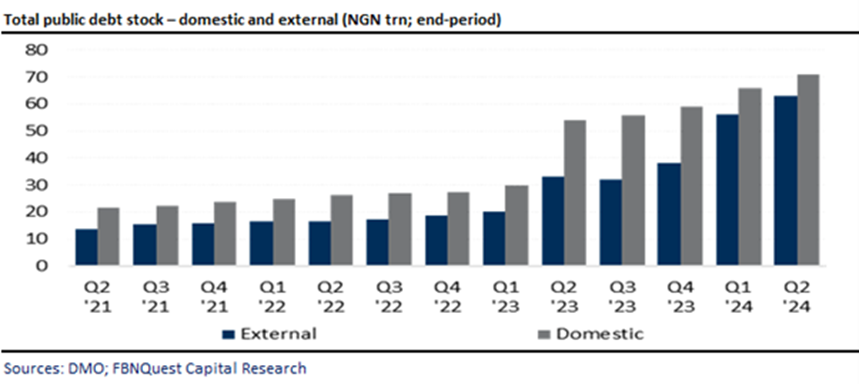
The most recent update from the Debt Management Office (DMO) on Nigeria’s debt stock shows that the nation’s debt burden increased by N12.6trn, or (+10% q/q), to N134.3trn (US$91.3bn) as at end-June 2024. Two factors contributed to the modest rise. The first is the depreciation of the naira, which added about N5.9trn to the total debt stock. For context, the exchange rate used to convert dollar-denominated debt to naira was N1,470.2/USD compared with N1,330.3/USD in Q1 2024. An additional contributing factor is fresh borrowings from the domestic market.
- Concerning composition, the domestic and external debt components constitute about 53% and 47% of the gross public debt, respectively.
- The total debt stock implies a debt-to-(2023) GDP ratio of 58% in Q2, higher than the 53% recorded in the previous quarter and breaching the DMO’s self-imposed public debt ceiling of 40%, as outlined in the agency’s Medium-Term Debt Management Strategy.
- Although the current public debt-to-GDP ratio is slightly below the IMF’s 60% benchmark for emerging market countries, the nation’s weak revenue profile and FX volatility risks could further escalate debt levels.
- That said, the sustainability of public debt remains a significant concern due to a rising debt profile, which could lead to elevated debt-service costs and further weaken the nation’s fiscal position.
- For instance, debt service costs surged by 69% y/y to NGN6.0trn in H1 ‘24, consuming about half (50%) of FG’s aggregate expenditure, highlighting the significant burden of debt obligations on the government’s finances.
- The debt service cost implies a debt-service-to-revenue ratio of 162%, up from the 128% reported in H1 2023, indicating the considerable portion of government revenue set aside to meet debt commitments.
- Analysts anticipate an improvement in the nation’s fiscal purse due to exchange rate gains and ongoing efforts by the FG to increase non-oil revenue.
- However, analysts expect to see a rise in Nigeria’s debt burden due to extensive government spending and higher naira costs resulting from the Naira devaluation.