




November 18, 2024/United Capital Research
Global Economies: Markets Broadly Underperformed
US markets commenced the week from the previous week’s rally, but later consolidated, with the S&P 500 pulling back 2.10% w/w, testing its 20-day moving average. President-elect Trump’s cabinet nominations have prompted investors to reconsider the potential policy impacts on global trade and financial markets, as some controversial picks raise the possibility of Senate resistance. Meanwhile, the nomination of RFK Jr. as HHS Secretary for instance weighed heavily on pharmaceutical and biotech stocks, particularly vaccine makers. Thus, the Healthcare sector was down by 5.50% w/w, and down by 3.40% since election day, the biggest sectoral loser since the election.
Meanwhile, US economic data showed a resilient labour market; however, inflation concerns remain, with headline CPI ticking up by 2.60% y/y vs 2.40% y/y in Sept-2024. Core inflation pressures came from shelter costs and used cars. The Fed’s tone was generally hawkish, acknowledging the challenge of balancing growth and inflation. While officials held off on a December rate decision, the November jobs report will be key in determining the future policy path.
In Europe, most major indices closed modestly lower. Stoxx Europe was down by 0.70% w/w, CAC 40 down by 0.90% w/w, and the FTSE 100 fell by 0.10% w/w. The increasing interest rate differential between the US and Europe, along with the potential impact of US tariffs on the region’s economic growth weighed on the Euro, which has fallen seven in eight days since President-elect Trump’s victory, falling as low as €1.05/$, its lowest in 12 months.
In another update, the Chinese market weakness continued last week, driven by trade concerns following the nomination of Marco Rubio and Mike Waltz to Trump’s cabinet. The Hang Seng and the Shanghai Composite fell 2.20% w/w and 6.30% w/w, respectively. Investor sentiment has dampened due to a lack of new stimulus measures. However, the government could potentially be holding back additional stimulus in anticipation of US trade policy shifts.
In Japan, the Nikkei 225 fell by 2.20% w/w, pressured by stronger-than-expected inflation data, which fueled speculation of a BOJ rate hike. The week also saw the Yen weaken 1.10% w/w, briefly falling as low as ¥155.0/$, also raising concerns of BOJ intervention. On a sectoral level, exporters were the primary underperformers due to weak earnings and trade concerns. Financial stocks remained resilient.
In commodity markets, the US Dollar strength and China’s economic growth concerns weighed on futures prices. Oil prices pulled back 3.80% w/w to $71.04/bbl., down 5.4% since election day. However, they are holding above the recent low of $70.00/bbl.
This week, US politics will remain the focal point. The global economic calendar is light, with global inflation data and S&P global flash PMIs as the highlights. There will be more commentary from Central Bankers, such as the ECB’s Christine Lagarde on Monday. Also, The G20 Leader’s Summit will begin on Monday. However, in the US, earnings will be in focus on Tuesday and Wednesday with crucial technology and retail earnings releases from WMT, TGT, LOW, TJX and NVDA
Macroeconomic Highlights
Nigeria’s annual inflation quickened for the second straight month. According to the National Bureau of Statistics (NBS), the Consumer’s Price Index increased to 33.88% in October from 32.70% reported in Sept-2024. Similarly, the month-on-month inflation rate for Oct-2024 went up to 2.64%, from 2.52% recorded in Sept-2024. Notably, the increase was driven by high petrol prices and reduced food supply resulting from logistics and transportation costs.
The Federal Executive Council (FEC), on Thursday, approved a proposed budget of N47.90trn for the 2025 fiscal year. This represents a 35.00% increase in the 2024 total budget, which stood at N35.5 trillion. The 2025 budget is an indication that the federal government plans to run an expansionary budget to lift millions of Nigerians out of poverty.
According to the Minister of budget and economic planning, Atiku Bagudu, the proposed 2025 budget is part of FG’s Medium-Term Expenditures Framework (MTEF) for 2025 to 2027 and in line with the Fiscal Responsibility Act (FRA) of 2007. Additionally, he disclosed that the MTEF will be submitted to the National Assembly within the next few days as required by the 2007 FRA.
Additionally, subject to approval by the National Assembly, Nigeria is set to access the International Capital Markets (ICM) for some combination of the Eurobond ($1.70bn) and SUKUK financing ($500.00mn). This is in line with FG’s external borrowing programme. According to Wale Edun, “the country’s ability to access the ICM is a sign of the acceptance and the support for the macroeconomic programme of Mr. President and indeed his entire administration”.
Nigeria’s economic reform agenda has received support from Saudi Arabia’s Crown Prince Mohammed bin Salman. This statement was released by Bayo Onanuga, the President’s Special Adviser on Information and Strategy, further indicating that discussions centred on a proposed $5.00bn bilateral trade facility between the two nations.
The FEC has approved the creation of a N250.00bn real estate investment fund, which aims to tackle Nigeria’s 22 million housing deficit and provide long-term, affordable mortgage financing for Nigerians. According to Wale Edun, “the concept is long-term. Investors will have the opportunity to earn market rates of interest and returns on investment, blended with seed funding of N150 billion.”
Nigeria has entered into a $1.20bn agreement with Chinese state-owned engineering firm, CNCEC, to revive a critical gas processing plant linked to the country’s aluminium production. The deal will see CNCEC resuscitate the 135 million standard cubic feet per day gas processing plant at the smelter, which has the capacity to produce 300,000 tons of aluminium annually.
Last week, Nigeria and India, reaffirmed their commitment to a robust strategic partnership, pledging to strengthen ties in key areas, including economic development, defence, healthcare and food security, to actualise $14.00bn investment in Nigeria by indian investors. This news follows the conclusion of the Indian Prime Minister Narendra Modi’s state visit to Nigeria at the invitation of President Bola Tinubu.
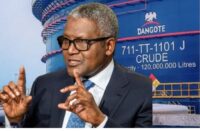
The Nigerian National Petroleum Company Gas Marketing Limited (NGML), a subsidiary of the Nigerian National Petroleum Company (NNPC) Limited, has executed a Gas Sale and Purchase Agreement (GSPA) with Dangote Petroleum Refinery and Petrochemicals FZE. The agreement, signed by Justin Ezeala the Managing Director, NGML, and the President/CEO of the Dangote Group, Aliko Dangote outlines the supply of natural gas for power generation and feedstock at the Dangote Refinery, in Ibeju-Lekki, Lagos State.
The Independent Petroleum Marketers Association of Nigeria (IPMAN) has secured an agreement with Dangote Refinery to lift products (PMS, AGO, and DPK) directly for distribution to depots and retail outlets. The partnership would ensure a steady, affordable supply of PMS products nationwide.
The Nigerian National Petroleum Company (NNPC) Limited has rejected a recent report suggesting it has halted the importation of refined petroleum products and is exclusively sourcing from local refineries like the Dangote Petroleum Refinery. NNPC called the report a “misrepresentation and misinterpretation of fact.” Femi Soneye, NNPC’s chief corporate communications officer, clarified that NNPC’s priority is to source products from domestic refineries when economically viable, but this does not imply an obligation to buy exclusively from any specific refinery or to cease fuel imports entirely.
According to the International Energy Agency (IEA), global oil supply will exceed demand in 2025 even if OPEC+ cuts remain in place. This is as rising production from the United States and other outside producers is projected to outpace the sluggish demand for oil. The prospect of a more than 1 million barrels per day (bpd) excess supply (equal to over 1% of world output) is a headwind for OPEC+, which comprises the Organization of the Petroleum Exporting Countries and allies such as Russia – in its plan to start raising output.
Notably, oil demand growth has been weaker than expected this year in large part because of China. After driving rises in oil consumption for years, economic challenges and a shift towards electric vehicles are tempering oil growth prospects in the world’s second-largest consumer.
However, China’s imports from Nigeria increased by 36.10% y/y between Jan – Sept as bilateral trade between the two countries reached $15.10bn within the period. The acting Consul-General of China, Mr. Jin Mingyu highlighted that the growth of China-Nigeria trade relies mainly on collaboration. In 2023, bilateral trade between China and Nigeria reached $22.56bn, with Nigeria ranking as China’s third-largest trading partner in Africa.
African Export-Import Bank (Afreximbank) has approved a $200 million Corporate Finance Facility in favour of BUA Industries Limited (BIL) to support its expansion plans. BIL is a Nigerian conglomerate with diversified business interest spanning across, sugar and cement manufacturing, flour milling, oil milling, port logistics, real estate development, oil and gas, and shipping. The first tranche of $150 million was disbursed on 16-Oct-2024.
This week, we expect the National Bureau of Statistics (NBS) to release Nigeria’s Refined Petroleum Products Oct-2024 Price Watch Reports. These reports will provide insights to the specific rate of change in the prices of refined petroleum products for the month of Oct-2024.
Domestic Equities: The Bulls Prevailed…NGX-ASI Up by 0.50% w/w
Last week, the domestic equities market closed on a positive note, as bullish sentiments drove gains for three (3) out of five (5) trading days. A notable performer was banking stock UBA, which saw a significant gain of (+7.90% w/w), playing a key role in raising the main index higher. Bargain-hunting activities improved with the market’s breadth climbing to 0.8x implying that 39 stocks appreciated while 46 declined, up from 0.7x the week before. Overall, Investor optimism toward riskier assets remained resilient, though bargain-hunting activities have noticeably tapered. This narrowing of market breadth suggests that while enthusiasm for higher-risk assets persist, investor selectivity is rising, with a keener focus on quality and potential returns. As a result, the benchmark NGX-ASI improved by 50bps to close at 97,236.19 points, bringing the YTD return to a steady 30.69% and lowering market capitalization to N59.22tn. In terms of trading, market activity declined with the volume and value of stocks traded declining by 77.02% and 48.65% to print at 296.39mn units and N7.76bn.
On a sectorial level, performance was bullish as three (3) out of the five (5) sectors under our coverage closed in the green territory. The Insurance sector (+2.84% w/w) led the gainers owing to gains in MANSARD (+7.63% w/w) and SUNUASSU (+32.04% w/w). Following was the Banking sector (+2.32% w/w) on the back of share price appreciation in UBA (+7.90%) and ZENITHBA (+3.10%). The Consumer Goods sector (+0.60% w/w) followed on the back of buy interests in FLOURMIL (+22.89% w/w) and UNILEVER (+2.08% w/w). On the other side of the coin, the Oil and Gas sector (-0.29% w/w) led the laggards on the back of share price depreciation in CONOIL (-0.04% w/w). Following was the Industrial Goods sector (-0.20% w/w) following losses in BUACEMEN (-2.35% w/w) and CUTIX (-0.81% w/w).
On corporate action, MTN Nigeria Communications Plc has announced the completion of it’s series 11 & 12 commercial paper issuance raising N75,183,895,000.00.
Looking forward, the equities market is expected to retain its buy interest as investors cherry-pick undervalued stocks. However, given the high interest rates in the fixed income and money markets, we expect some bearish undertone to persist in the equities market as fixed income biased investors take advantage of the high yields in the fixed income space. Nevertheless, the Bulls will remain incentivized to persist in bargain hunting, given the tremendous mid-long-term opportunities in the equities market. Fund managers and businesses may entertain mid-long-term (≥3 months) investment objectives, cherry-picking only sound equities with strong fundamentals and ongoing/pending corporate actions. This strategy will maximise market opportunities, thereby optimising portfolio returns.
Money Market: System Liquidity Improved
Last week, the financial system opened with a deficit balance of N525.49bn. During the week, system liquidity was bolstered following inflows from coupon payments to the tune of N143.13bn. As a result, the financial system closed the week with a surplus balance of N396.75bn. Despite the improvement in liquidity level, the average Open Repo Rate (OPR) and Overnight Rate (OVN) rose by 155bps and 159bps w/w to settle at 30.53% and 31.11%, respectively.
In the secondary NT-bills market, we observed bearish sentiments across the curve as investors remain weary about interest rate direction. As a result, the average yield on NT-bills rose by 19bps w/w to close at 24.15% (previously, 23.96%). Similarly, the average yield on OMO bills climbed by 5bps to settle at 26.38% (previously, 26.33%).
This week, we expect the Central Bank of Nigeria to conduct an NT-bill auction, rolling over a total of N610.80bn worth of bills across the 91-day, 182-day, and 365-day bills. At the auction, we expect investors’ demand to be strong, majorly skewed towards the “365-day bill, ” as seen in previous auctions. Meanwhile, we expect the system liquidity to improve following inflows from FAAC payment (c.N600.00bn), coupon payments (N17.87bn), and OMO maturities (N6.38bn). Nevertheless, this liquidity will be short-lived on the back of the expected primary market sales. Lastly, we do not rule out the possibility of the Central Bank conducting an OMO auction to mop up excess liquidity in the financial system.
Bond Market: Bearish Sentiments Dominate the Market
The secondary bonds market was relatively bearish, as investors maintained a cautious approach towards the market. Thus, the average bond yield climbed by 2bps to close at 19.43% (previously 19.41%). Meanwhile, activities were muted in the corporate bonds market, as the average yield on corporate bonds remained unchanged.
In the Nigerian secondary Eurobonds market, we observed sell-offs as investors remained worrisome about the nation’s fiscal health. Thus, the average yields in the market increased by 35bps w/w to settle at 9.66% (previously 9.31%).
Looking forward, we expect the Debt Management Office (DMO) to conduct the Nov-2024 bond auction with an offer size of N120.0bn across the reopened 2029 and 2031 papers. At the auction, we anticipate that investors’ demand will be strong. Meanwhile, we expect a total of $42.64mn worth of coupon payments in the Eurobonds market. This may propel some buy interests in the market as investors look to reinvest their funds. Nevertheless, we believe that investors will continue to maintain a cautious approach to the Nigerian Eurobonds market.
Currency Market: Naira Appreciated at the NAFEM Window
Last week, the Naira appreciated by 1.59% w/w at the Nigerian Autonomous Foreign Exchange Market (NAFEM) to close at N1,652.25/$, from its previous close of N1,678.87/$. At the parallel market, the Naira depreciated by 0.29% w/w to settle at N1745.00/$, from its previous close of N1740.0/$. Meanwhile, activities in the NAFEM window decreased, as average FX turnover fell by 34.10% w/w to settle at $313.05mn (previously, $475.03mn). Lastly, Nigeria’s external reserves rose by 45bps to settle at $40.26bn (previously, $40.08bn).
This week, we expect continued pressure on the Naira across all market segments in the short-medium-term, given that Dollar earnings remain weak amid rising demand. The recent upward trend in the nation’s reserves increases the likelihood for a possible intervention to support the currency toward the 2025 budget projection of N1,400/$. Also, the anticipated $2.2bn external borrowing from Eurobonds and SUKUK will provide extra buffer for the Naira’s stability and strength in the short-mid-term. In the long-run, the stability and consistent growth of the country’s crude oil output will play a key role in the Naira’s appreciation.

