





(Credit: IMF Photo/Oliver Bunic)
November 18, 2024/IMFBlog
By Henning Ahnert, Francien Berry, Darja Milic, and Jorrit Zwijnenburg
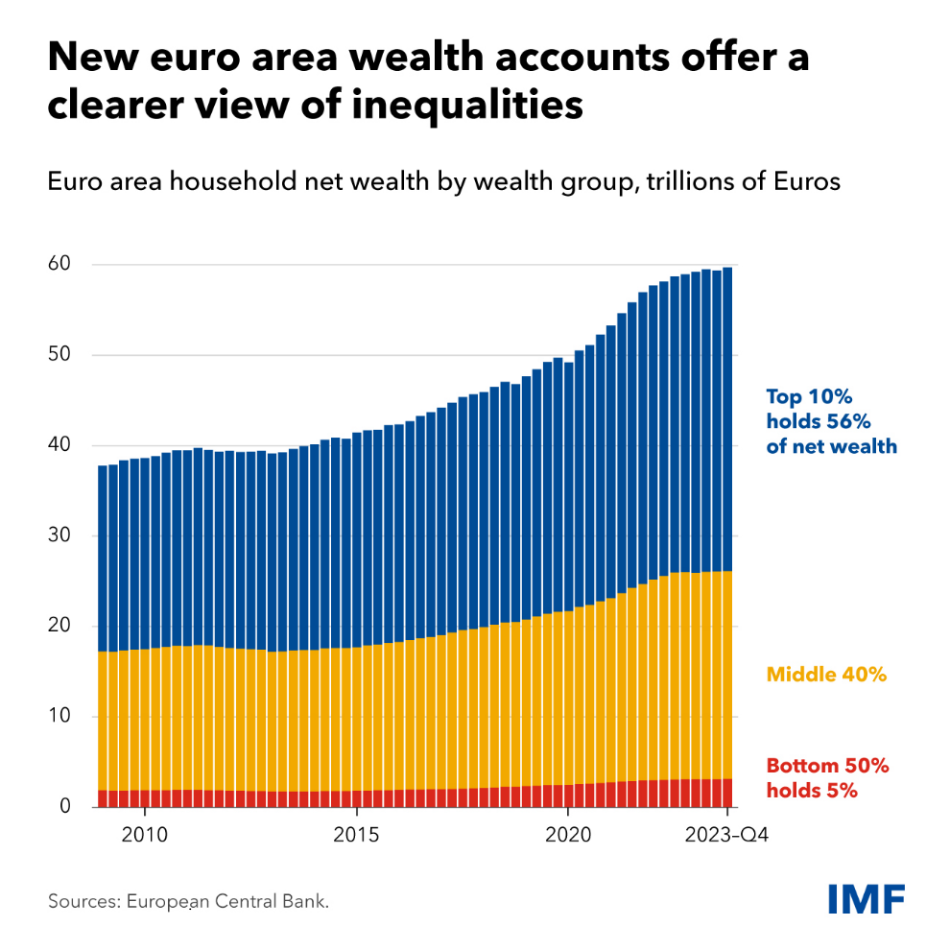 |
These Distributional Wealth Accounts far surpass the scope of standard distribution data. They are crucial because they detail not only who owns what—from real estate to savings—but they also align these figures with the broader economic metrics of an entire country. This integration provides more timely estimates and allows for a deeper understanding of how wealth distribution interacts with overall economic health.
Moreover, maintaining consistency across different countries enables more meaningful comparisons and informed policymaking. Essentially, these accounts provide policymakers with a clearer, richer picture of economic trends, helping to tailor policies that address inequality and promote economic fairness.
The G20’s recommendation will broaden this kind of analysis beyond Europe. Thirty-three countries, including 13 in the G20, have joined a new expert group convened by the Organisation for Economic Co-operation and Development to collaborate and develop internationally harmonized wealth distribution estimates. These would complement existing data on income, consumption, and saving, providing a unique and consistent picture of economic inequality across countries.
Harnessing household distributional data helps policymakers foster economic growth that benefits all, and better understand how their policies affect people. And that in turn lays the groundwork for crafting more equitable policies in the future.
—This blog is by Francien Berry and Darja Milic, economists in the IMF Statistics Department, Henning Ahnert, the European Central Bank’s head of financial accounts and fiscal statistics, and Jorrit Zwijnenburg, the acting head of national accounts at the OECD.

