




December 4, 2024/CSL Research
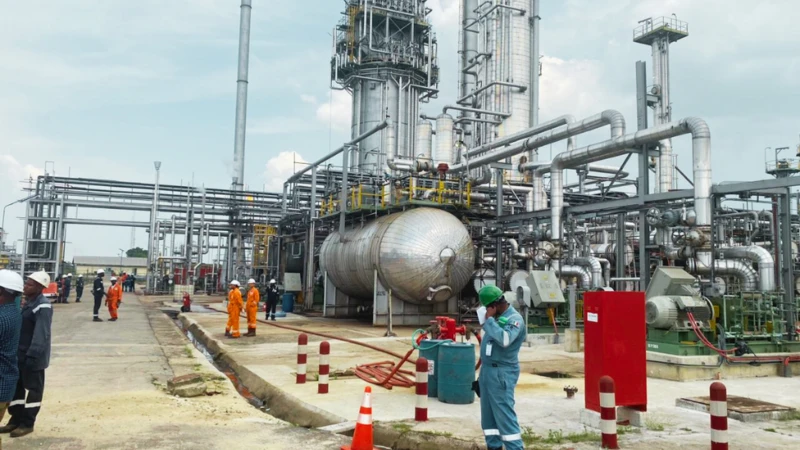
The Petroleum and Natural Gas Senior Staff Association of Nigeria (PENGASSAN) has confirmed that the Port Harcourt refinery is operational, with a production capacity of 60,000 barrels per day. The refinery is currently producing refined petroleum products such as diesel, kerosene, and naphtha, according to PENGASSAN National President Festus Osifo. Osifo clarified that while the refinery is functional, additional maintenance is required to achieve full operational capacity. Although naphtha is being blended with other materials to produce petrol, the unit responsible for producing reformate—a critical component in petrol refining—is still under construction. He emphasized the positive economic impact of the refinery’s operation, including job creation and economic growth. However, Osifo cautioned that these developments would not lower the cost of petroleum products due to the depreciation of the
Naira.
The recently refurbished Port Harcourt refinery in Nigeria has faced several controversies, raising questions about its actual operations and broader implications. While the refinery was celebrated for resuming operations after years of dormancy, critics have accused it of being more of a “blending plant” than a fully functioning refinery. Some reports suggest that it is currently blending imported semi-finished products rather than processing crude oil locally.
The Nigerian National Petroleum Company Limited (NNPCL) has not provided sufficient evidence to clarify whether crude oil is being refined on-site, fuelling scepticism. Many Nigerians on social media have questioned the NNPCL’s claims, pointing to a lack of tangible evidence of crude refining activities and expressing concerns about mismanagement and inefficiencies in the project.
Successive Nigerian governments have made repeated attempts to revive the country’s ailing refineries in Kaduna, Warri, and Port Harcourt, which have a combined nameplate capacity of 445,000 barrels per day (bpd). However, these efforts have yielded little to no results, with capacity utilization rates at times plummeting to 0.00%. Despite the significant resources poured into these state-owned refineries, they have consistently operated far below optimal levels. In the context of Nigeria’s current fiscal challenges, the continued expenditure on these refineries raises serious concerns. Critics argue that the funds allocated to their rehabilitation could be better utilized for more economically viable projects or critical sectors such as education and healthcare.
Even if rehabilitated, the outdated technology in these refineries may render them uncompetitive, especially when compared to the advanced infrastructure of the privately-owned Dangote Refinery. The latter employs cutting-edge technology and boasts a processing capacity of 650,000 bpd, positioning it to dominate the market with more efficient operations and competitive pricing. Operating at full capacity, the Dangote refinery can meet all of the country’s requirements for gasoline (PMS), diesel (AGO), kerosene (DPK) and aviation jet fuel (Jet A-1). This raises questions about the long-term viability of Nigeria’s state-owned refineries in a liberalized petroleum market. The debate underscores the need for a strategic re-evaluation of Nigeria’s approach to its refining sector, balancing legacy investments with modern energy infrastructure and fiscal prudence.

