


December 10, 2024/FBNQuest Research
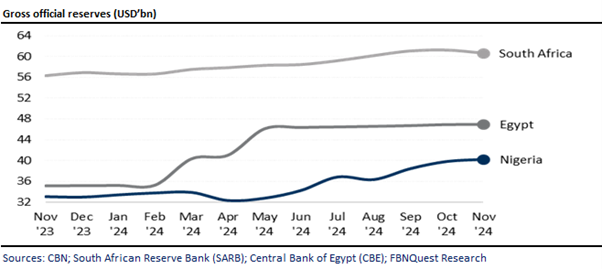
External Reserves data released by the Central Bank of Nigeria (CBN) shows that Nigeria’s gross official reserves rose by US$446.9m to US$40.2bn in November 2024. The increase implies that gross official reserves have grown by about US$7.3bn over the eleven months to Nov 2024. The chart below shows a rise in gross reserves from April 2024. The trend reflects the recovery of foreign portfolio inflows (FPIs) from the elevated interest rate environment due to the CBN’s hawkish monetary policy stance.
- Capital inflows from FPIs have continued to gather momentum. According to data from FMDQ, inflows through FPIs into the economy increased by 40% month-on-month (MoM) to over US$1.6bn in Nov 2024.
- On the other hand, capital inflows from foreign direct investment (FDIs) remained subdued, primarily due to the challenging macroeconomic environment. For instance, FDI inflows were flat m/m at US$241m in Nov 2024.
- Total reserves as of the end of 2024 covered 11.7 months of merchandise imports based on the balance of payments for the 12 months to Jun 2024 and 8.1 months when we add services.
- Compared to the other two countries we track on the continent, Egypt’s external reserves position rose slightly, by US$11 m MoM, to approximately US$47.0bn during the same period.
- Conversely, South Africa’s international liquidity position, which includes gross reserves, gold reserves, special drawing rights, and forward positions, netted off for foreign currency deposits, declined by -US$578m MoM to US$60.6bn.
- The m/m decline was due to lower gold prices, valuation adjustments, and debt service payments, which offset a foreign currency inflow of US$3.5bn.
- Looking ahead, we anticipate a steady rise in Nigeria’s gross official reserves in the near term, driven by improved capital inflows, as FPIs’ take advantage of carry trade opportunities due to the elevated interest rates.