


February 13, 2025/FBNQuest Research
Culled: Proshare
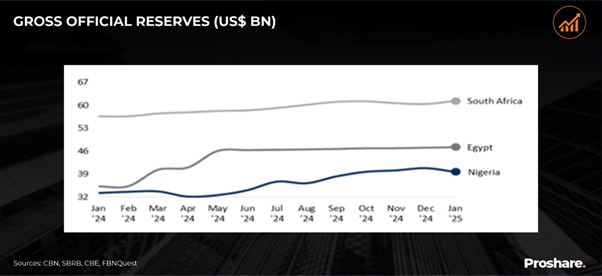
Data from the Central Bank of Nigeria (CBN) shows that Nigeria’s gross official reserves decreased by almost -US$1.2bn month-on-month (MoM) to US$39.7bn as of end-January 2025. The decrease in January is significant, as it marks the sharpest attrition in the reserves position since April 2024, when it plummeted by US$1.6bn. In addition, it brings an end to the MoM consecutive increase that began in October 2024. The nation’s gross reserves are equivalent to 9.9 months of merchandise imports and 8.2 months when we include services.
- Identifying the primary cause for the diminishing position of the nation’s reserves is quite difficult because the comments from the CBN are often delayed.
- However, we believe that the substantial dip was primarily driven by USD debt-service payments made on behalf of the FG, which typically peak in the year’s first quarter.
- Another additional factor could be the CBN’s intermittent interventions to improve market liquidity in the FX market.
- Consequently, the Naira currency gained traction, appreciating by +4.3% MoM in January to N1,474.78/US$, reflecting ample FX market liquidity.
- In contrast to Nigeria, official reserves for South Africa and Egypt, the other markets we track in Africa, increased during the review month.
- Specifically, South Africa’s international liquidity position increased by US$1.0bn MoM to US$61.3bn, primarily driven by a rise in gold prices and valuation adjustments.
- On the other hand, Egypt’s foreign exchange reserves maintained their upward trend, increasing by a smaller US$156m MoM to US$47.3bn.
- Looking ahead, analysts at FBNQuest Research expect Nigeria’s external reserves to continue hovering at US$40bn due to the repayment of external debt obligations and CBN’s strategic interventions in the FX market to ease rising demand by FX consumers.