




By Rodrigo Campos – Fri Jan 14, 2011
NEW YORK (Reuters) – The S&P 500 ended a seventh straight week of gains with a banks-led rally amid healthy volume after encouraging financial results from JPMorgan.
ÂÂÂ
Strength in financial stocks helped offset economic reports that showed soft December retail sales and consumer sentiment dented by rising gasoline prices. The market’s resilience will be tested next week when a number of banks report results.
ÂÂÂ
“On balance, with supporting prices and in spite of mixed economic data, there is expectation of a strong earnings season,” said Jim Awad, managing director at Zephyr Management in New York.
ÂÂÂ
JPMorgan Chase & Co (JPM.N) shares added 1 percent to $44.91 after reporting stronger-than-expected fourth-quarter earnings. Its stock has risen 5.9 percent in the first two weeks of the year.
However, banks’ leadership in the market may stall as the sector faces strong technical resistance. Three major indexes — the KBW bank index (.BKX), the S&P financial sector (.GSPF) and the Select Sector SPDR financial ETF (XLF.P) — approach multimonth highs reached last April.
ÂÂÂ
“If we don’t take a break before (moving above) the April highs, we’re going to be extended and overbought, so it will be a dangerous breakout,” said John Schlitz, chief U.S. market technician at Instinet in New York.
ÂÂÂ
The KBW bank index (.BKX) rose 2.3 percent to 54.70, near a strong resistance area between 57 and 59. Earnings next week from Bank of America (BAC.N), Goldman Sachs (GS.N) and Morgan Stanley (MS.N) will be key for the sector.
ÂÂÂ
“Are we close to a breakout or resistance?,” Instinet’s Schlitz said. “I’d probably caution toward the latter.”
ÂÂÂ
The Dow Jones industrial average (.DJI) added 55.48 points, or 0.47 percent, to 11,787.38. The Standard & Poor’s 500 (.SPX) rose 9.48 points, or 0.74 percent, to 1,293.24. The Nasdaq Composite (.IXIC) gained 20.01 points, or 0.73 percent, to 2,755.30.
ÂÂÂ
For the week, the Dow ended up 1 percent, the S&P 500 1.7 percent higher and the Nasdaq composite up 1.9 percent. U.S. financial markets will be closed on Monday for Martin Luther King Jr. Day.
ÂÂÂ
Schlitz said the seven weeks of gains on the S&P are a warning sign for declines, which are historically not uncommon in the second half of January. The last time the benchmark rose eight or more weeks in a row was a nine-week run between November 2003 and January 2004.
ÂÂÂ
The S&P Midcap 400 index broke its all-time closing record, rising 0.7 percent to 931.07. The index includes companies with market capitalizations of about $750 million to $3.3 billion.
ÂÂÂ
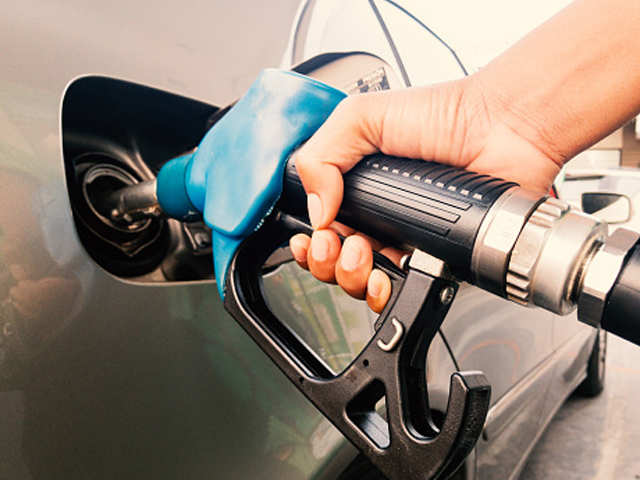
Higher gasoline prices helped push December consumer prices up at the fastest pace in a year and a half. The high gas price also weighed on consumer sentiment in early January, according to a Reuters/University of Michigan survey.
ÂÂÂ
At $3.09 a gallon, gasoline is the highest since October 2008. Consumer spending noticeably slowed in 2008 as gasoline prices spiked.
ÂÂÂ
Increasing oil prices have contributed to a rise in the S&P energy index (.GSPE), which advanced 1.2 percent to close at the highest since September 2008 in another sign of an overextended market.
ÂÂÂ
Dow component Intel Corp (INTC.O) fell 1 percent to $21.08 a day after it posted a better-than-expected quarterly profit and forecast strong revenue for the coming quarter.
ÂÂÂ
For the third consecutive quarter, shares of the chipmaker moved in the opposite direction of the S&P 500 a day after it reported earnings, casting a shadow over the chipmaker’s long-standing ability to influence the market.
ÂÂÂ
About 8.1 billion shares traded on the New York Stock Exchange, the American Stock Exchange and Nasdaq, below last year’s estimated daily average of 8.47 billion.
ÂÂÂ
Advancing stocks outnumbered declining ones on the NYSE by a ratio of about 4 to 3, while on the Nasdaq, more than seven stocks rose for every four that fell.
ÂÂÂ
Source: Reuters
ÂÂÂ

