

4/3/2018/Bloomberg
By David Malingha Doya
- Central bank wants inflation to drop further before rate cut
- Fuel prices have increased almost 30% from a year ago
Nigeria’s long-awaited interest rate-cutting cycle risks being short-lived, if it starts at all.
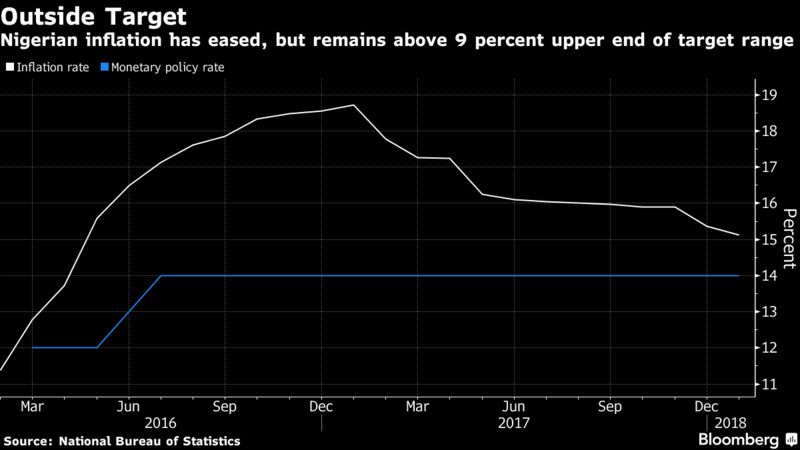
Governor Godwin Emefiele said last month the Central Bank of Nigeria may reduce its benchmark from a record-high 14 percent before July if inflation drops closer to single digits. But with fuel costs surging and government spending swelling before next year’s election, he may struggle to reach that threshold at a time when the pace of price growth is still just over 15 percent.
“With inflation remaining sticky, it is unlikely that the CBN would want to cut rates so soon,” Gaimin Nonyane, London-based economic-research head at Ecobank Transnational Inc., said by email.
Further complicating the picture is the Senate’s refusal to approve President Muhammadu Buhari’s nominees to the Monetary Policy Committee, which means the panel lacks a quorum to hold meetings to formally set rates, further delaying any hope of cuts. The MPC didn’t sit in January, and it’s not clear if the March 20 decision will be made.
“Unless fuel pricing is resolved, bouts of fuel shortages could keep prices sticky, feeding into other items,” said Razia Khan, head of macroeconomic research at Standard Chartered Bank Plc in London.
Price growth might fall further before rising again in the second half because of election spending, Statistician-General Yemi Kale said Feb. 16. Buhari hasn’t declared if he will seek re-election in the planned February 2019 vote, but attempts to appease voters may see spending increases.
Capital investments will continue as planned, and that will help the ruling All Progressives Congress win votes, Finance Minister Kemi Adeosun said in a Jan. 23 interview. There will be no fiscal indiscipline, and no inflation attributed to such spending, she said.
Lawmakers are debating Buhari’s proposal to increase spending plans this year by 16 percent to 8.6 trillion naira, with a focus on increasing investment in roads, rail and power.
The International Monetary Fund forecast gross domestic product expansion at 2.1 percent this year, strengthening the recovery in an economy that contracted for the first time in a quarter century in 2016.
“With oil prices and production outlook appearing positive and with external reserves strengthening, the CBN has greater scope to than a year ago to reduce the policy rate,” Ecobank’s Nonyane said. “However, this would depend on how fast consumer prices fall.”