



May 9, 2022/CSL Research
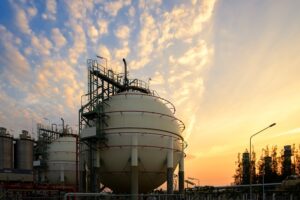
The World Bank’s Global Gas Flaring Reduction Partnership (GGFR) in its 2022 Global Gas Flaring Tracker report ranked Nigeria as the 7th largest gas flaring country globally in 2021. Based on the satellite data, about 143.4 billion cubic meters (bcm) was flared at upstream oil and gas facilities across the globe in 2021, resulting in 382.4 million tonnes of carbon dioxide (CO2) equivalent emissions with an equivalent amount of US$16.5bn being lost. Specifically for Nigeria, the oil companies in the country flared 6.6 billion cubic meters (bcm) of gas in 2021, which ultimately results in 17.7m tonnes of CO2 emitted into the atmosphere and equivalent to an amount of US$761.2m being lost. Interestingly, Nigeria has also made notable progress in gas flaring reduction, achieving a 31% reduction in flaring between 2012 and 2021 according to the World Bank report.
Gas flaring in Nigeria has been an insurmountable problem that the nation has struggled with, especially in the Niger Delta region (Rivers, Akwa Ibom, Bayelsa and Imo state) since the commercial exploration of crude oil started in the country. The country has on several occasions set a target to end gas flaring, which have all been missed with the most recent unmet deadline in the year 2020. Just in February 2021, the Minister of State for Petroleum Resources, Timipre Sylva, indicated that the government had committed to achieving a complete elimination of gas flaring by the year 2025, before the World Bank’s Zero Routine Flaring by 2030.
On economic losses, the Federal government continues to lose potential revenue from gas flaring. As the World Bank report showed, Nigeria lost potential income estimated at US$761.2m to gas flaring in 2021. Meanwhile, the agricultural ecosystem of the Niger Delta has been severely damaged. Due to increased soil temperature. Crop yield has also been affected with many lands now barren. Furthermore, water bodies are now black while the black rainfall in the area also destroys many homes. The black water bodies have destroyed fishing potential while burning bushes and lands have forced animals to desert the forests in the area.The health of citizens residing in communities prone to gas flaring has also been severely impacted. Gas flaring has been linked to cancer and lung damage alongside neurological and reproductive problems which have become prominent among pregnant women and newborns in the region.
In 2016, the Federal Government of Nigeria launched the Nigerian Gas Flare Commercialisation Programme (NGFCP) with the objective of eliminating gas flaring through technically and commercially sustainable gas utilization projects. Under the NGFCP, the Federal Government of Nigeria takes associated gas at the flare site and bids it out to third parties in a series of auctions, the first of which was issued in December 2018. Third parties will propose Projects and be selected on the basis of their technical and financial qualifications, soundness of the Project proposals, and several other criteria. The seller of the gas is the Federal Government of Nigeria (Seller), and crude oil producers supplying gas in the auctions are called Producers.

