

July 7, 2023/FBNQuest
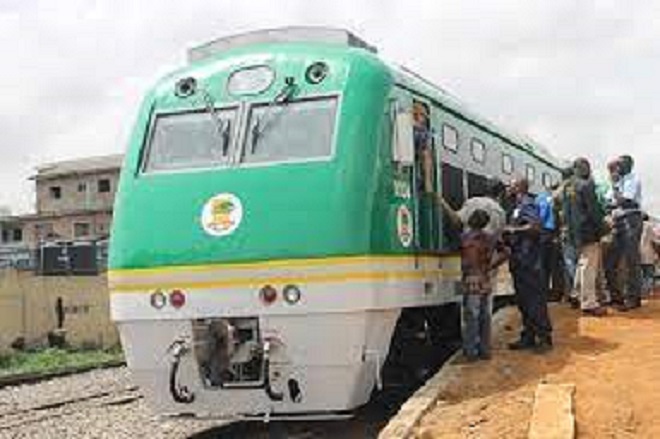
Railway travel is rapidly gaining importance as a mode of transportation in Nigeria due to its ability to ease mobility constraints and its accommodate a larger number of passengers and products compared to other modes of transportation. Its importance to economic activity led to the government’s railway modernisaton programme, which was aimed at reviving the country’s rail infrastructure. The evidence of these substantial investments can be seen in the successful rehabilitation and completion of key rail projects, such as the Abuja-Kaduna and Lagos-Ibadan railways. However, it is worth noting that the majority of these rail development initiatives were financed through infrastructure-backed loans obtained from China.
We observe a disparity between the sub-sector’s revenue growth in recent times and the level of investments made by the federal government (FG).
A combination of factors including security issues, high expenditures, and non-market reflective pricing of travel tickets have led to the continued revenue underperformance of the sector.
Following concerns around security, the FG suspended operations along the Abuja-Kaduna route in March ’22.
These challenges have resulted in weak revenue growth in recent years, creating a substantial deficit between the revenue generated by the mode of transportation and the costs spent on servicing railway debts.
- The Debt Management Office’s (DMO) report on the country’s external debt service payments shows that FG spent USD528.7m on servicing railway debts between 2017 and 2022.
The total debt incurred is for the completion of the Idu-Kaduna, Lagos-Ibadan, and Abuja light railway projects.
When converted to Naira, the total debt service payment is roughly equivalent to NGN218.7bn based on each year’s official rates.
The accumulated debt service payment comprises the principal and interest fees. More specifically, the principal cost which accounted for 58% of the total debt service payments amounted to USD307.7m (NGN128.4bn), while the interest fee which represents (48%) of debt service payments stood at USD221.0m (NGN90.3bn) during the period.
With respect to revenue, the National Bureau of Statistics (NBS) report on rail transportation data reveals that the total revenue generated by railway traffic between 2017 and 2022 totalled NGN20.8bn.
This implies a revenue shortfall of NGN197.9bn over the period.
The sector’s declining revenue trend continued in Q1 ’23. According to NBS data on railway transportation, the total revenue generated by rail traffic decreased -42% q/q and -56% y/y to NGN984m.
On the other hand, the government’s debt service costs on railway infrastructure increased slightly by 1% y/y to USD62.7m in Q1 ’23, or NGN28.2bn based on an official rate of NGN450/USD during the period.
The wide disparity between the revenue generated by the sub-sector and the rising costs of servicing railway loans raises concerns about its debt sustainability.
To enhance the sub-sector’s performance, we recommend that the authorities implement market-reflective pricing and adopt the use of technology for ticketing and revenue collection.
Additionally, the government may explore concessioning the existing railway infrastructure in order to attract private sector investments.