


January 30, 2024/CSL Research
The deadline for the Association of Licensed Telecommunications Operators of Nigeria (ALTON) to block subscribers without National Identification Numbers (NINs) and those whose NINs have not been verified has been set for 28 February 2024, according to a statement jointly signed by the Nigerian Communications Commission (NCC) and the umbrella body of the telcos, ALTON. As of September 2023, the NCC noted that about 12.3 million active SIM cards were yet to be linked with their owners’ NINs. The Federal Government commenced implementing the SIM/NIN harmonization program in December 2020 through the NCC. This program requires all telecommunications subscribers to link their NINs to SIM registration records to avoid service restrictions.
The current directive is a follow-up to the NCC’s directive of April 2022 requiring operators to restrict outgoing calls (one-way barring) for subscribers whose lines had not been linked to their NINs, and the affected subscribers were advised to verify their NINs before being reactivated. However, it was observed that despite the limited-service restriction, millions of subscribers are yet to comply. According to ALTON Chairman, Engr. Gbenga Adebayo, telcos support the NCC directive because the importance of the NIN cannot be overemphasized as it is crucial for Nigeria’s reliable and sustainable National Identity Management System. He further stated that the NIN initiative is necessary for a thriving digital economy and a safer society.
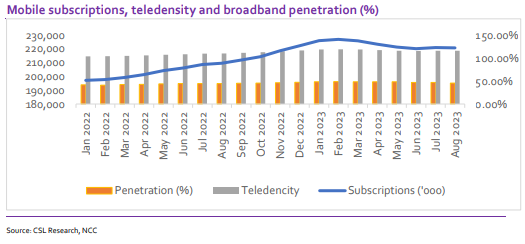
While we note that NIN-SIM linkage can help boost economic inclusion, access to government services and help address security concerns, we believe that the directive to outrightly block sims yet to be linked will have a negative impact on telco’s mobile subscribers in the short term. Nigeria’s active mobile subscriptions decreased marginally by 0.07% to 220.71 million in August 2023 compared with 220.86 million in July 2023. This indicates that the country’s mobile subscriptions decreased by 145,026 in August. This decline follows a modest uptick in July after four consecutive declines: 0.5% in June, 1% in May and April, and 0.4% in March.