


May 8, 2024/FBNQuest Research
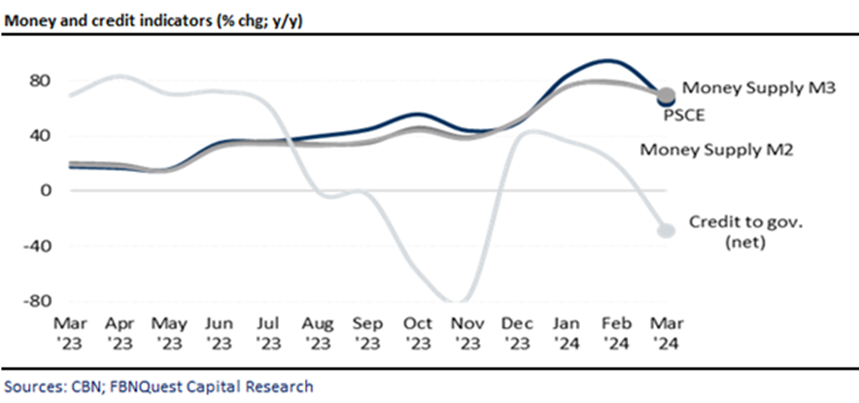
The most recent data from the Central Bank of Nigeria (CBN) shows that private sector credit extension (PSCE) increased by +66% y/y to N71.2trn at the end of March 24. This marks a deceleration compared with the growth of 94% y/y recorded in the previous month. On a m/m basis, PSCE extension declined by -12% m/m, indicating that previous policy rate hikes by the Monetary Policy Committee (MPC) are starting to be transmitted through the economy.
- Nigeria’s headline inflation has risen rapidly since Dec ’22. The latest headline reading showed an acceleration of 150bps to 33.20% y/y in March.
- In response, the CBN has steadfastly resolved to combat persistent inflationary pressures and achieve price stability. As a result, the committee raised the policy rate to 24.75%, which is the highest level in recent years.
- To further address heightened inflationary pressures, the apex bank adjusted the asymmetric corridor of the MPR to +100bps/-300bps (from +100/-700bps), raised the Cash Reserve Ratio (CRR) to 45% from 32.5%, and reduced the Loan-to-Deposit Ratio (LDR) by 15bps to 50%.
- According to the MPC’s personal statement for its March meeting, almost all committee members highlighted the adverse impact of sustained inflationary pressures and price instability on the economy’s recovery.
- Returning to the data, credit extension to the government declined significantly by -42% m/m and -29% y/y to N19.6trn in March.
- With respect to other monetary aggregates, the broad money supply (M3) and the M2 money supply expanded by 66% y/y and 69% y/y, respectively, broadly in line with March’s PSCE growth rate.
- However, on a m/m basis, their growth decelerated slightly by -3% m/m and -2% m/m, respectively, reflecting the MPC’s restrictive measures.
- Looking ahead, we expect a slowdown in banks’ credit extension to the private sector as the full impact of the MPC’s previous interest rate hikes and other tightening measures continues to permeate the economy.