


June 21, 2024/FBNQuest Research
Nigeria’s gross official reserves increased by US$858m M-o-M to US$33.6bn as of June 19, 2024, according to the latest data from the CBN. On a year-to-date (YTD) basis, the reserves also increased by US$666m. The rise in June marks a reversal from the downward trend observed over the first five months of 2024, when the reserves declined by US$322m. This implies an average monthly depletion rate of US$64.4m, primarily due to demand pressure and the CBN’s clearing of FX backlogs. The latest resurgence in the reserves can be attributed to the US$925m disbursement by the African Export-Import Bank under a US$3.3bn syndicated crude oil-backed prepayment facility backed by the Nigerian National Petroleum Company Limited.
- About US$1.5bn is reportedly spent monthly to defend the naira against other trade currencies.
- The external reserve, primarily composed of US dollars (71.5% as of Q4 2023), Chinese renminbi, IMF special drawing rights, and smaller amounts in other currencies such as the Euro, is tied up in currency swap agreements.
- Furthermore, as of the end of May 2024, the total reserves could cover just about 1.7 months of merchandise imports based on the balance of payments for the three months to Mar 2024.
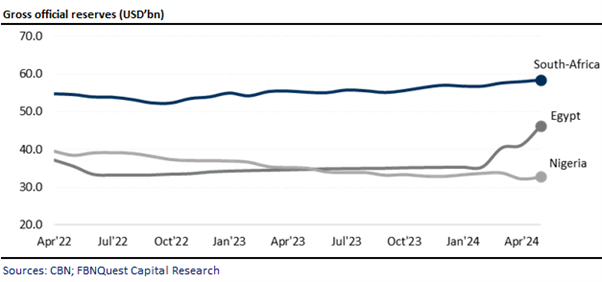
- As shown in the chart below, Nigeria’s reserve position still falls behind its peers, South Africa and Egypt, whose external reserve positions also saw M-o-M improvements.
- South Africa’s international liquidity position, which comprises its gross reserves, gold reserves, and forward positions, increased M-o-M by US$44m to US$58.3bn
- The M-o-M rise can be attributed to higher gold prices, foreign currency valuation adjustments, and asset price fluctuations.
- Similarly, Egypt’s external reserves substantially increased by US$5.1bn to US$46.1bn.
- In May 2024, Egypt received US$14bn from the United Arab Emirates (UAE) as the second instalment of the Ras El Hekma deal.
- Additionally, the UAE will convert a US$6bn deposit at the Central Bank of Egypt into Egyptian pounds under the agreement
- The outlook for Nigeria’s external reserves is cautious, with the International Monetary Fund (IMF) projecting a drop to US$24bn by the end of 2024.
- Looking ahead, we expect the government’s recent economic reforms and international engagements to result in a much-needed FX liquidity inflow to the country.