

June 25, 2026/Citi
Convened by Citi, the forum focused on practical measures to strengthen trade corridors, address
implementation challenges and unlock new opportunities for regional commerce under AfCFTA.
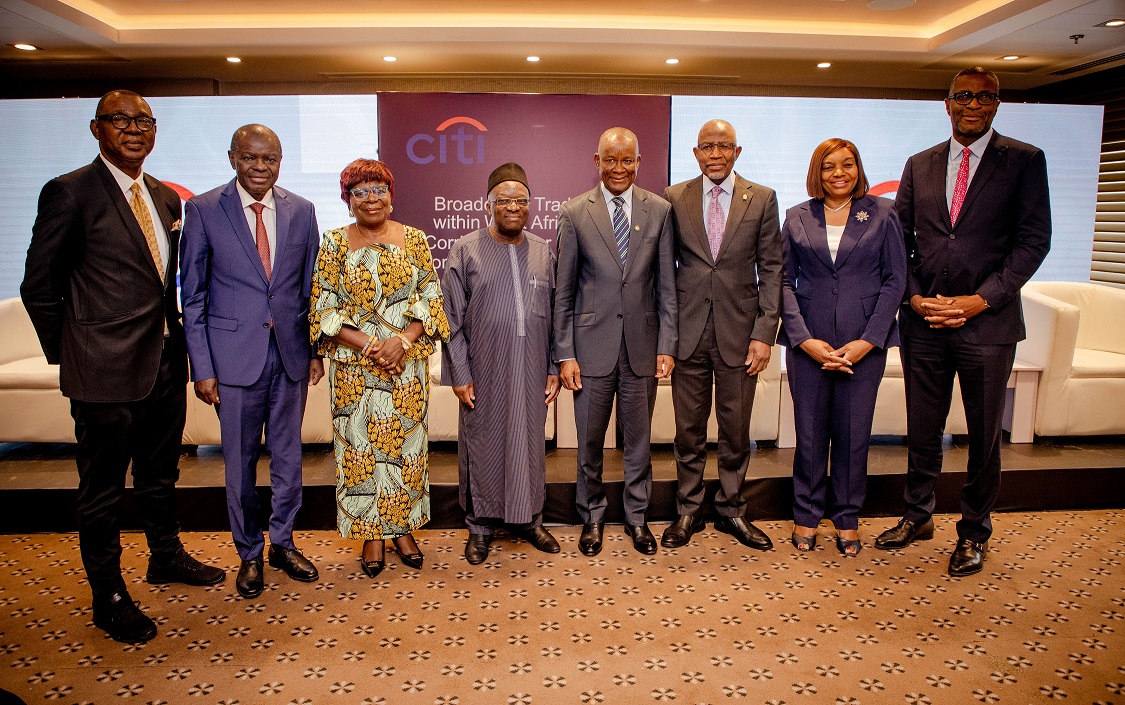
Citi today announced the successful conclusion of its high-level Business Symposium, “Broadening Trade Flows within West Africa’s Main Corridors under the African Continental Free Trade Area (AfCFTA).” The symposium brought together senior public and private sector leaders from Nigeria, Côte d’Ivoire, and Ghana to discuss enhancing intra-regional trade.
Discussions highlighted significant opportunities presented by AfCFTA for economic growth, alongside persistent barriers such as regulatory fragmentation, limited trade finance, and logistical inefficiencies.
As intra-African trade gains momentum, West Africa’s principal trade corridors are expected to play a central role in advancing AfCFTA objectives. Citi reaffirmed its commitment to supporting this transformation, leveraging its regional presence, trade finance expertise, and client network to facilitate efficient trade flows. Key speakers underscored the importance of strong financial systems, regulatory streamlining, and practical financial solutions to enable businesses to operate effectively within the AfCFTA framework.
Leadership Perspectives
The Ambassador of Côte d’Ivoire to Nigeria, His Excellency Mr. Kalilou Traoré emphasized AfCFTA’s ambition to create a single market for over 1.3 billion consumers, noting that despite progress, major obstacles such as non-tariff barriers, unharmonized standards, and insufficient infrastructure remain. Success, he stressed, hinges on close collaboration for financing trade, industrialization, and economic zones. Similarly, the Deputy High Commissioner of Ghana to Nigeria Dr. Mrs. Gladys Mansa Yawa Feddy Akyea, highlighted that AfCFTA’s true success will be measured by its ability to facilitate trade, improve connectivity, mobilize finance, and remove practical barriers, advocating for stronger collaboration to build regional value chains and transform Africa into a globally competitive integrated market.
The Deputy Governor, Financial System Stability at the Central Bank of Nigeria, Mr. Lamido Yuguda, emphasized the importance of strong financial systems in enabling regional trade: “As intra-African trade scales under AfCFTA, the efficiency of financial intermediation will play a pivotal role.
Strengthening cross-border payment systems, improving FX market functionality, and deepening access to trade finance are essential to reducing transaction costs and enabling smoother trade flows.
The Central Bank of Nigeria will continue to support initiatives that enhance financial stability while promoting greater regional integration.” Mr. Yuguda further stressed that Central Banks are enablers, not bystanders, whose core role is to build sound payment and trade systems and unlock access to finance for businesses operating across borders.
Building on these discussions, the Honourable Minister of State for Industry, Senator John Owan Enoh, addressed structural constraints: “AfCFTA presents a significant opportunity to accelerate Nigeria’s industrial growth and expand market access for our businesses. Our focus is on strengthening the competitiveness of Nigerian industries, improving the ease of doing business, and implementing policies that support export growth and regional value chains. Through sustained collaboration with the private sector, we are positioning Nigeria to play a leading role as a net exporter of manufactured goods and a driver of intra-African trade and economic integration.” The Minister urged a shift from solely trading raw materials to value-added products, highlighting that “industrial policy is the missing link” to unlock true trade value.
The Central Bank of Nigeria and the Ministry of Industry, Trade and Investment jointly called for stronger private‑sector participation, urging corporates to submit data‑driven, evidence‑backed proposals to help shape policy and reduce cross‑border trade frictions. Complementing this, Senator John Owan Enoh underscored the strategic importance of the Lagos–Abidjan corridor for industries such as cocoa, highlighting its potential to drive value addition and deepen regional value chains.
He noted that the shift from exporting raw beans to branded chocolate ultimately reflects the difference between dependency and dignity, reinforcing the need for Africa to capture greater value from its resources.
Insights from Focus Group Discussions and Recommendations
The symposium featured, panel discussions, and private sector insights, with participation from representatives of the Central Bank of Nigeria (CBN), the Federal Ministry of Industry, Trade & Investment, Ministry of Foreign Affairs and International Cooperation Côte d’Ivoire, Ministry of Trade, Industry and Handicrafts Côte d’Ivoire, Standards Organisation of Nigeria (SON), Nigerian Export Promotion Council (NEPC), Nigerian Investment Promotion Commission (NIPC), National Agency for Food and Drug Administration and Control (NAFDAC), Nigeria Customs Service (NCS), Nigerian National Petroleum Corporation (NNPC), the Nigerian Export-Import Bank (NEXIM), Nigeria Sovereign Investment Authority (NSIA), Development Bank of Nigeria, African Export-Import Bank (Afreximbank), corporates, financial institutions, SMEs, and development partners. Sessions addressed improving cross-border trade efficiency, financial solutions for intra-African commerce, and creating an enabling policy environment.
According to Nneka Enwereji MD/CEO Citibank Nigeria Limited “Nigeria plays a pivotal role in the success of the African Continental Free Trade Area (AfCFTA), presenting significant opportunities for businesses. The AfCFTA aims to facilitate the efficient cross-border movement of goods, capital, and payments. Citi is committed to providing practical financial solutions that empower our clients to expand regionally and enhance their competitiveness in new markets”.
Key Challenges Identified, Solutions and Recommendations
Focus group discussions underscored persistent challenges to intra-African trade, notably: customs bureaucracy, non-tariff barriers, fragmented standards, and insufficient infrastructure. Financial impediments included limited currency convertibility and an existing trade finance gap. Proposed solutions championed digitization (single-window clearance), harmonized standards, expanded adoption of PAPSS for local currency settlements, and enhanced infrastructure. Corporate leaders echoed these calls, stressing improved logistics, increased technology adoption, and stronger regulatory trust to foster industrialization and value addition.
Driving Practical Outcomes
AfCFTA represents a unique opportunity to create the world’s largest single market. Citi remains focused on supporting practical, scalable solutions that enable businesses to trade more efficiently across borders and fully realize the benefits of regional integration. The symposium concluded with a shared commitment from all participants to accelerate tangible solutions for boosting West African trade. Citi remains dedicated to collaborating with public and private sectors to enhance market access, strengthen trade infrastructure, and promote regional economic prosperity.