

Across Africa, average scores improved in six of the seven CGGI pillars over the past year, with the strongest gains in Helping People Rise and Financial Stewardship
October 29, 2026/Chandler Governance Group
Africa was the second best-performing region for governance progress in the 2026 Chandler Good Government Index (CGGI), with 71% of the African countries assessed in both 2025 and 2026 achieving higher overall scores. However, the continent remains the lowest-scoring region overall, highlighting the challenge of translating improvement in government capabilities into better outcomes for citizens.
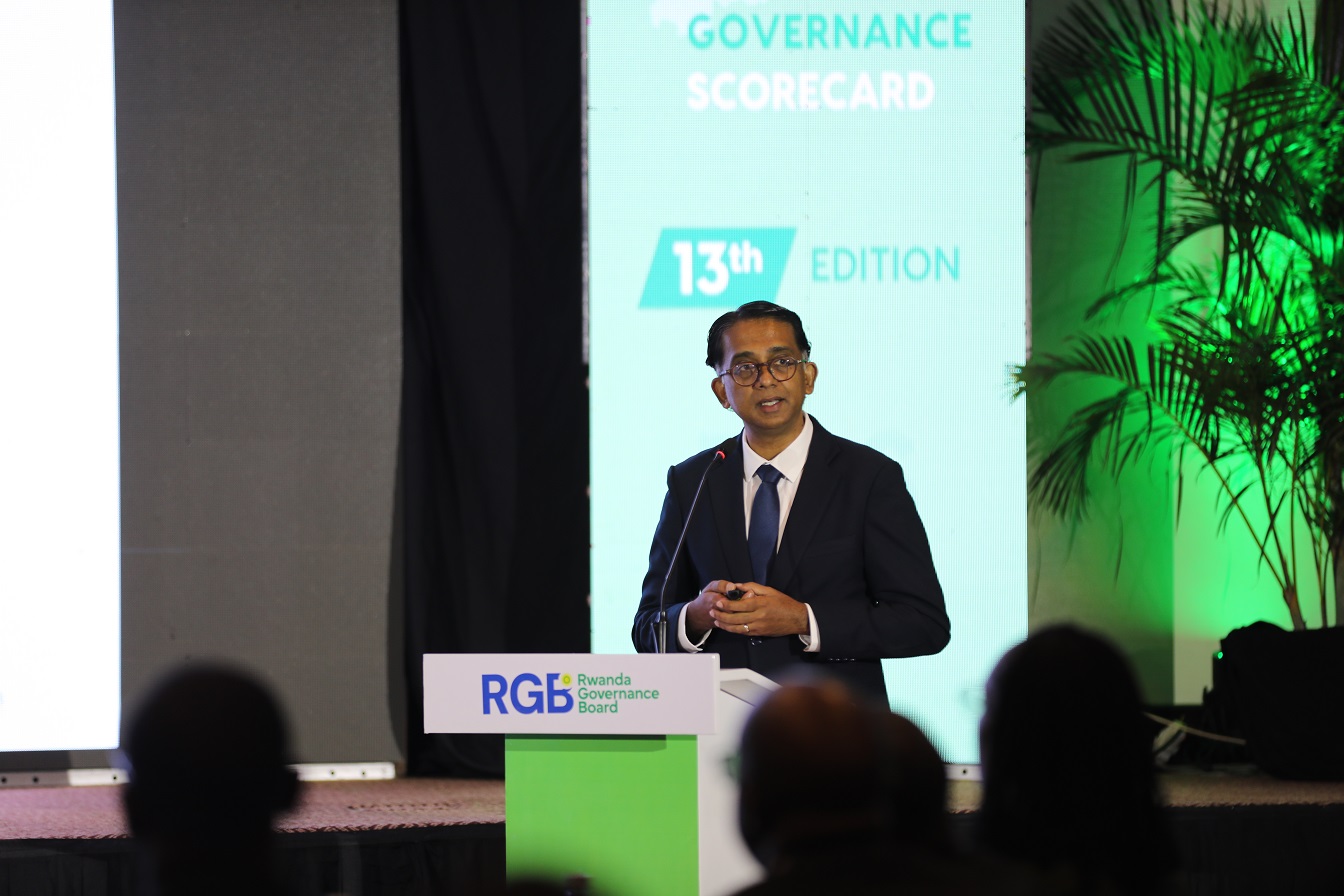
These findings were highlighted by the Chandler Governance Group (CGG) at a joint session with the Rwanda Governance Board (RGB) to launch the 13th edition of the Rwanda Governance Scorecard at the Kigali Serena Hotel on Thursday, 22 October 2026.
“This year, Africa’s strongest gains came in Financial Stewardship, followed by Helping People Rise, the CGGI’s outcomes pillar. This signals that stronger government capabilities are beginning to translate into tangible improvements in people’s lives, from access to quality education and healthcare to the public finances that fund them. The task now is to sustain that progress over the coming years,” says Dinesh Naidu, Director (Knowledge) at CGG.
Now in its sixth edition, the CGGI assesses government capabilities and effectiveness across 133 countries representing 94% of the world’s population, up from 120 countries in 2025. It measures 35 equally weighted indicators across seven pillars, providing governments with a framework to benchmark performance, identify gaps and learn from the experience of other countries.
Globally, the findings point to improving governance performance. Of the 120 countries assessed in both 2025 and 2026, 61% recorded higher scores, representing the highest annual share of countries improving since the Index launched in 2021. However, longer-term progress has been less consistent, with only 43% of the 104 countries tracked since 2021 recording an overall improvement.
Africa’s leading governments
Mauritius remains Africa’s highest-ranked country, placing 55th globally, followed by Rwanda (62nd), Botswana (70th), Morocco (79th) and Tanzania (80th). South Africa ranks sixth on the continent, in 85th place globally.
Rwanda features prominently in the discussion, ranking 11th globally for Leadership & Foresight and emerging as the highest-ranked low-income country in the Index. It ranks 61 places above where its income alone would predict. Across the Index, government capabilities track citizen outcomes more closely than national wealth does, suggesting that strengthening government capabilities matter in delivering better outcomes for citizens.
The joint session brings together the CGGI’s international benchmarks and the Rwanda Governance Scorecard’s assessment of governance in the Rwandan context, creating an opportunity to consider both global perspectives and country-specific priorities.
Progress across key governance pillars
Across Africa, average scores improved in six of the seven CGGI pillars over the past year, with the strongest gains in Helping People Rise and Financial Stewardship. These improvements point to progress in areas associated with public services, including healthcare and education, as well as the management of public finances.
Longer-term trends also highlight areas of progress. Between 2021 and 2026, nearly every African country assessed across the period improved its Data Capability score, with Morocco recording the largest gains. Ghana’s overall score improved in 2026, supported by stronger Financial Stewardship, while South Africa continues to show relative strength in Robust Laws & Policies, ranking 44th globally, and Attractive Marketplace, ranking 48th.
Despite these gains, the scale of the challenge remains clear. Africa’s regional average is still below its 2021 level, 23 of the 35 African countries in the 2026 Index rank outside the global top 100, and none is in the top 50. Seven African countries joined the Index this year: Chad, the Democratic Republic of Congo, Gambia, Guinea, Lesotho, Liberia and Togo.
“Rankings provide a useful starting point, but the broader value of the CGGI lies in helping governments understand where they are making progress and where further work is needed. Sustained improvements depend on the ability to strengthen institutions, manage resources responsibly and turn policy into meaningful outcomes for citizens,” says Naidu.
A tool for learning and improvement
The CGGI is designed as a practical diagnostic tool, helping governments identify gaps, track progress over time, and learn from peers facing similar constraints. The collaboration with the RGB brings international benchmarking together with locally grounded assessment.
“Every country faces its own governance challenges and is driven by varying priorities. Governments that are willing to take stock of the evidence and learn from peers to strengthen their institutions are well placed to achieve real improvements,” concludes Naidu.