




March 3, 2022/CSL Research
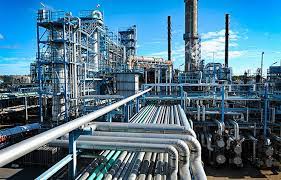
According to a Punch news report, the Nigerian National Petroleum Company Limited on Wednesday explained that one of the key reasons modular refineries in Nigeria were not producing Premium Motor Spirit was because of the regulated pump price of PMS by the government. Nigeria has a number of modular refineries in Edo, Delta, Imo and other states, while plans are on to increase the number through private sector investments. On a different note, following the conclusion of the 26th OPEC and non-OPEC Ministerial Meeting held on 2 March 2022, the committee noted that current volatility is not caused by changes in market fundamentals but by current geopolitical developments. Nigeria’s oil production quota was raised from the 1.718 mbpd target in March to 1.735mbpd in April 2022.
Brent oil price closed yesterday at US$112.93/bbl. as a worsening of the Russian Ukraine crisis continues to spark fears of a disruption to the region’s energy exports. Theoretically, the continued uptrend in crude oil prices, a major source of foreign exchange to the country, suggests FX accretion and should suggest increased revenue given the country’s oil price budget of US$62/bbl for 2022. However, the perennial issue of terminal shutdowns, vandalism and thefts continue to fuel sub-optimal oil output. Average daily oil production for the fourth quarter of 2021 was 1.50mbpd, lower than the third quarter 2021 production volume of 1.57mbpd and news reports point to still lower production in Q1 2022.
Again, increasing oil prices implies an increase in the landing cost of petrol and an increase in subsidy payments. The Federal government has earmarked a sum of N3trn for subsidy payments in 2022. If oil prices continue to rise, the figure stands to increase substantially. The NNPC boss, Mele Kyari, had in previous news reports put the comfort oil price zone for Nigeria at US$58-$60/bbl., saying that for the NNPC, anything above US$70-US$80 will create major distortions in the projections of the corporation and add more difficulties to the company. Since the refineries at Kaduna, Warri, and Port Harcourt with a capacity of 445,000 bpd have continued to operate below capacity due to many years of underinvestment and poor maintenance, Nigeria has had to import c.90% of the refined petroleum products consumed in Nigeria. This remains the case despite the continued talk of revamping these facilities.
Dangote Group’s refinery, with a planned installed capacity of 650,000 bpd, is scheduled to come on stream in Q3 2022 following delays caused by the coronavirus pandemic. It is expected to be Africa’s biggest oil refinery and the world’s biggest single-train facility upon completion. The refinery is designed to produce up to 50 million litres of gasoline and 15 million litres of diesel a day. BUA Group’s proposed 200,000bpd refinery in Akwa Ibom is also projected to be completed before 2025. The government has also been recently promoting the establishment of modular refineries. However, with talks of the modular refineries being unable to produce due to the cap on the price of petrol, it is clear that the government will need to continue to pay subsidies on refined petrol sourced from these private refineries. The only savings in view may only be freight cost, which is a small percentage of the total landing cost.

