



April 14, 2022/CSL Research
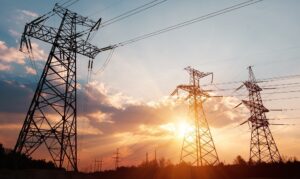
A report by BusinessDay based on a Federal Government memo highlighted the reasons behind the dismal power situation the country has been experiencing lately. On Wednesday morning, there was an electric spark from a pole that led to a mass of burning cables that fell on the expressway at Maryland, a very busy area of Lagos. From the incessant collapse of the national grid to electric sparks resulting in fire incidences, it goes without saying that Nigeria’s power infrastructure is giving way to neglect and underinvestment. Based on the memo, 2,800 megawatts (MW) of electricity was lost in March on the back of several challenges that faced the country’s biggest power plant and six others. Since the beginning of 2022, Nigeria has lost more than 3,000MW of power from a combination of gas pipeline sabotage, poor maintenance of gas pipelines, and lower water levels at hydropower plants due to the dry season.
Speaking to the frequent collapse of the national grid, there are 24 operational power plants, but many times, nine of these account for about 80 percent of generation due to their size and availability. The implication is that the (over) reliance of the grid on the energy supplied by nine power plants may pose a risk to network stability in the event of a sudden loss of any of them unless adequate proactive measures such as spinning reserves are put in place. Spinning reserves are backup energy production capacities that can be made available to the system operator (for transmission) within ten minutes of a power system failure and can operate continuously for at least two hours once brought online. It is done by increasing the power generation output of power plants already connected to the system.
Specifically, the grids are currently under the management and control of the Transmission Company of Nigeria (TCN) which remains the only segment of the power value chain that is owned by the Federal Government since the privatisation of the sector in 2013.
Since the privatisation, the power sector has recorded c.135 instances of the collapsed power grid. The management of TCN has, at various times, clamoured for spinning reserves to cushion
or perhaps forestall the occurrence of these events. TCN oversees transmission—wheeling power around the grid and installing transmission lines. One of the main reasons the FGN privatised the sector was because NEPA/PHCN had not kept up with investing in the electricity transmission infrastructure — the critical link between generating and supplying electricity to the end-user. Sadly, the NEPA/PHCN pattern of non-performance has continued till date.
On gas supply, vandalisation of oil/gas pipelines has been a perennial problem, and this is used often as the official reason for the inadequacy of gas supply to where it is needed. However, this amounts to a red herring in our view. Yes, vandalisation of pipelines for political and/or economic ends is a feature of the industry and, numerically speaking, the occurrences outstrip incidents due to infrastructure deterioration. But in terms of the degree of impact, cost of repair and financial loss, vandalism has not been a material contributor to the bottleneck between gas supply and demand over the last few years. Upstream availability of gas has never been an issue. The problem is that the gas transportation pipeline infrastructure is inadequate to get the gas to where it is needed.