



April 28, 2022/CSL Research
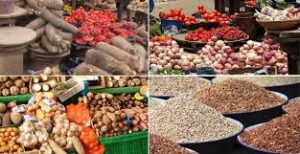
The continued rise in prices of food staples keeps pushing many households below the poverty line. According to the selected food price watch data for March 2022 released by the National Bureau of Statistics (NBS), major consumer staples showed significant increases year on year and month on month. Y/y, all prices of the 43 food items that make up the food watch basket increased considerably. Also, on a m/m basis, save for yellow Gari, all food items rose considerably. In our view, the monthly increase can be associated with the impact of elevated energy prices caused by increased diesel cost as well as fuel scarcity, having a pass-through effect on transport costs for food items. This was reflectedin the m/m increase in food inflation, which rose by 1.99% m/m. On a y/y basis, across thewidely consumed food staples, beans in the two variants surged higher; brown, sold loose (up 43.7% y/y) and white, black eye, sold loose(up 46.6% y/y). Also, Gari in its two variants, white sold loose (up 15.8% y/y) and yellow sold loose (up 15.9% y/y).
Rice in all its variants when compared to other food items has increased moderately, from agric sold loose (+12.8% y/y) to local sold loose (+12.2% y/y), medium grained (+10.2% y/y), and imported high quality sold (+11.7% y/y). It is also safe to assume that related transport and other incidental costs may have also caused the modest increase. To a great extent, the government has been relatively successful in stimulating local rice production using incentives such as subsidized loans, cheap fertilizers, free farmland, and tax rebates. Beyond the monetary interventions, we believe the possibility of developing rice plantations in most parts of the country in commercial quantity makes it less susceptible to shocks caused by insecurity when compared to some food items that can only be grown in certain regions in the country. That said, we believe the government needs to pay more attention to the rice value chain as many consumers still complain about the poor processing of local rice, which still makes consumers resort to imported rice. Moreover, a lot still needs to be done to bring down the price of local rice as it remains high, almost at par with the price of imported rice.
Since the reopening of the four major borders in December 2020, there has been no respite,as food prices have continued to rise. Now, four more borders have been reopened and to some extent may provide respite given the current economic realities from the Russia invasion to China lockdowns which pose sizable disruption to the food chain supply. Thatsaid, several factors inhibiting food production in the country still remain unaddressed, which will continue to limit the gains associated with the land border reopening. Chief amongst them is the heightened level of insecurity in the food processing regions, which not only hinders farmers from going to their farms but also causes an increase in the cost of production. Farmers complain that at every level of production, bandits are bribed to have hitch-free farming and harvesting. Beyond bribing bandits during production, bandits are bribed while transporting the produce to end consumers.
Though food prices have been on the rise globally, the factors behind the country’s increasing food prices are peculiar. Also, with the beginning of the planting season, foodprice pressures will likely resurface. Besides, the pent-up demand associated with the incoming Ramadan activities points to further increase in food prices