





February 24, 2023/CSL Research
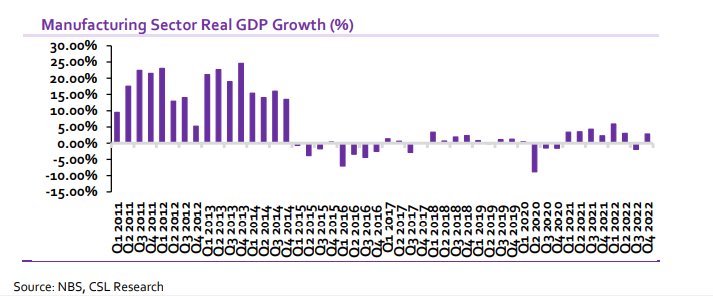
The manufacturing sector grew modestly by 2.45% in 2022, reflecting the negative impact of CBN’s hawkish rendition, especially in the second half of the year. In fact, the sector contracted by 1.91% in Q3 2022, the first contraction since covid hit in 2020. The manufacturing sector came under intense operating cost pressure as energy costs, transport costs, FX losses, and cost of funds increased drastically. Although players in the sector resorted to price increases, some manufacturers could not fully transfer the higher operating costs to the final consumers as sales volumes wobbled. The sector is comprised of thirteen activities including oil refining; cement; food, beverages, and tobacco; textile, apparel, and footwear; wood and wood products; pulp paper and paper products; chemical and pharmaceutical products; non-metallic products, plastic, and rubber products; electrical and electronic; basic metal and iron and steel; motor vehicles and assembly; and other manufacturing.
In the wake of the pandemic, manufacturing activities within the country were severely impacted as the lockdown coupled with existing structural bottlenecks forced many businesses out of operations. Several companies saw demand for their goods plummet on the back of movement restrictions and consumer behaviour turned towards the search for essential items. However, since the reopening of the economy, we believe gains from exports via open borders and increased credit supply to manufacturing businesses cut the sector some slack from the harsh effects of the pandemic.
That said, last year was a particularly difficult one for the manufacturing sector. Beyond cost pressures, the 500bps increase in the monetary policy rate increased the cost of borrowing significantly amidst severe FX shortage. Though we believe the worst is over for the sector, FX constraints, supply chain disruptions, and weak disposable income are all factors that will
continue to undermine growth in the sector. The need to boost the manufacturing sector is pertinent to achieving the country’s output projection and if structural constraints remain unaddressed, achieving self-sufficiency in local production will remain a mirage in our view.
Click here to read full PDF copy of report

