

May 18, 2023/CSL Research
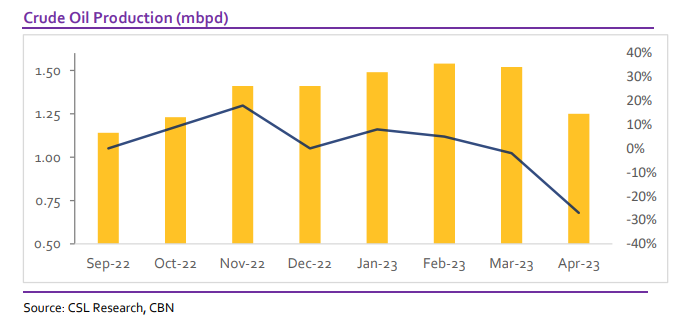
Based on data from the National Upstream Petroleum Regulatory Commission (NUPRC), Nigeria’s oil production was down month on month by 17.7% to 1.25 million barrels per day (mbpd) in April 2023 from 1.52mbpd in the preceding month of March 2023. This is the second consecutive month on month decline as the nation’s oil production declined by 2% to 1.517mbpd in March 2023 from 1.547mbpd in the month of February 2023. This decline is a significant blow to recent gains made from the renewed efforts by the federal government to tackle oil theft and pipeline vandalism in the Niger Delta.
Qua Iboe was negatively impacted in April, with production declining significantly from 4.2mbpd in March to 1.9mbpd. At the Bonny terminal, production also fell from 3.2mbpd total production in March to 2.2mbpd in April. Forcados also saw a fall from 5.7mpbd in March 2023 to 4.8mbpd last month, and production from the Escravos terminal declined to 3.8mbpd from 4.3 mbpd barrels. At the Brass terminal in Bayelsa, production increased from 666,826 to 706,429 between March and April but production reduced marginally at the Ọdụdụ terminal from 3.3 mbpd to 3.2 mbpd. Tulja-Okwuibome also saw reduced production from 1.2 million barrels to 1.1 million barrels between February and March.
The decline in production figures in April could be partially attributed to the shutting down of oil platforms and the declaration of force majeure by Exxon Mobil in Nigeria mid-last month. The decision to declare force majeure followed an industrial action by the company’s in-house workers union. Nigeria has been unable to meet its OPEC production quota for over two years, hobbling the country’s main source of foreign exchange. We note that Nigeria’s dwindling production numbers continue to pose a threat to the country’s already high budget deficit of N12.1 trillion as the country continues to produce well below the 1.69mbpd budget target for 2023.