




…Bank drives investment in infrastructure, inclusion and competitiveness across the continent
November 12, 2025
By Evans Charles INVESTADVOCATE
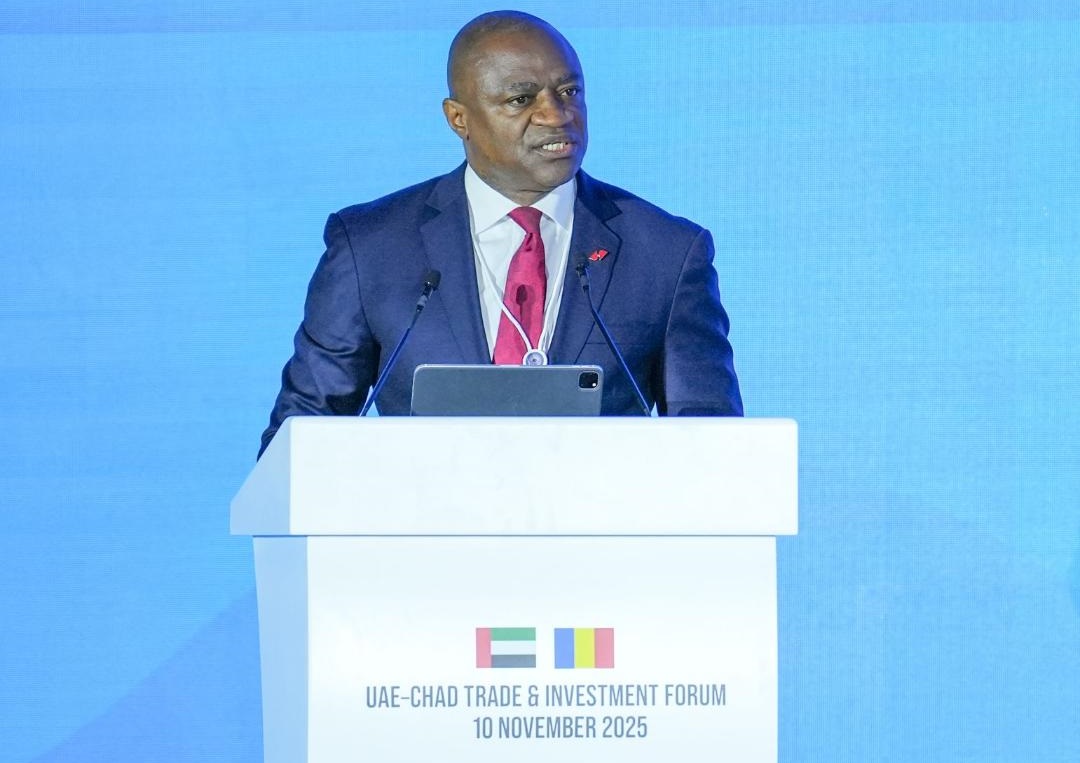
Lagos (INVESTADVOCATE)-At the UAE–Chad Trade and Investment Forum in Abu Dhabi on Monday, the United Bank for Africa (UBA) made a bold case for Africa’s self-financing future, spotlighting how the continent’s $4 trillion domestic financial assets could be mobilized to drive industrialization, energy access and inclusive growth.
Delivering the keynote address Oliver Alawuba, Group Managing Director/CEO of UBA Plc, Africa’s foremost pan-bank declared that Africa was entering an “era of execution,” where its own capital must become the engine of competitiveness. The theme of the forum, “Financing African Competitiveness – Building Bridges, Powering Progress,” provided a fitting platform for UBA’s message: Africa does not lack capital—it lacks structured vehicles to channel it effectively.
Unlocking Africa’s Domestic Wealth
According to Alawuba, data cited from the Africa Finance Corporation (AFC), the continent holds an estimated $4 trillion in domestic financial assets, including $2.5 trillion in commercial bank assets, $725 billion in foreign reserves, $455 billion in pension funds, and $320 billion in insurance assets. Yet less than 15% of these resources are invested in productive infrastructure essential for sustainable development.
“UBA’s mission is to bridge that gap—to transform dormant liquidity into engines of growth.” The bank emphasized that Africa’s growth will be financed not just by foreign capital, but by African institutional investors working in structured partnership with international financiers and development institutions”, the UBA CEO said.
Driving Competitiveness from Within
He outlined UBA’s continental footprint as evidence of this philosophy in action. “The bank has financed some of Africa’s largest infrastructure projects—$400 million for Tanzania’s Julius Nyerere Hydropower Project, $700 million in Nigeria’s power sector, and $315 million for road development in Ghana—demonstrating its ability to lead syndications and mobilize capital across markets.” he added.
“In Chad, UBA has already committed over $102 million in sovereign securities and project finance, including $49 million for domestic gas expansion, a $6.7 million wind farm in Amdjarass, and funding for road maintenance and telecom modernization. The bank described these as part of its contribution to “Tchad Connexion 2030”, a $30 billion national plan featuring 268 projects in energy, infrastructure and human development,” the UBA CEO noted.
According to Alawuba, these investments, exemplify how domestic banks can act as “architects of finance,” ensuring that African capital works for African competitiveness.
Building Partnerships that Multiply Impact
Beyond direct lending, UBA emphasized a tripartite model of collaboration to accelerate investment flows:
1. International capital and expertise from partners like the UAE, offering long-term financing and technical depth;
2. African institutional banks like UBA, bringing local insight and risk structuring;
3. Development Finance Institutions (DFIs) such as the AfDB and World Bank, providing de-risking tools and concessional support.
He further affirmed the bank’s research shows that when African institutions anchor investments, they can attract 10–20 times more international capital, creating a multiplier effect for infrastructure financing.
For Chad’s electrification and water access goals—targeting 60% energy coverage and water for 11 million people by 2030—Alawuba said it stands ready to structure public-private partnerships for solar plants, water treatment facilities, and digital payment systems to enhance transparency in tax and registry processes.
Financing Inclusion and Local Economies
The keynote also underscored UBA’s focus on grassroots economic inclusion. With branches extending to remote regions—from Beira in Mozambique to Nzerekore in Guinea and Gulu in Uganda—the UBA CEO said the Bank is ensuring that small businesses and rural entrepreneurs can access the same financial tools as large corporations.
“Our competitiveness is not built in boardrooms; it is built on the ground,” the bank noted. “From a farmer in Gulu to a refinery in Lagos, we are financing every link of Africa’s value chain,” Alawuba added.
A New Financial Era
The UBA CEO in concluding the keynote, invoked the legacy of the UAE’s founding father, Sheikh Zayed bin Sultan Al Nahyan, calling for collective effort and resource pooling to power Africa’s transformation.
“Africa’s financial sovereignty lies in mobilizing its own wealth. When domestic capital aligns with international partnerships and sound governance, Africa will not just be a destination for investment—it will be a driver of global competitiveness,” Alawuba affirmed.
With its balance sheet strength and continental reach, UBA positions itself as the bridge between Africa’s $4 trillion in untapped domestic wealth and the continent’s next wave of infrastructure-led growth.

