




May 5, 2017/Cordros Research
Click here to download full PDF Report
Global Equities Market
Proceedings were mixed across global equities, with markets seesawing across the U.S. and Asian regions while the bulls dominated activities in the euro area. This week’s performance is attributable to mixed economic data, monetary policy decision, government action, movements in oil prices, and earnings report.
The earliest boost on Wall Street was a deal among Congressional leaders to fund the government through Sept. 30 – which removed the overhang of a potential geopolitical risk – in addition to a reported slowdown in inflation figures for March (a month after hitting a five-year peak). Subsequently, investors held off on making big bets, closely monitoring the Fed meeting. The outcome of the meeting modestly stoked appetite, as the Fed, as expected, maintained status quo while calling Q1 GDP weakness “transitory”. The bears rode on (1) a decline in energy stocks, on the back of a fall in crude oil prices and (2) data showing that the productivity of American firms and their employees fell in the Q1 at the fastest rate in a year. On the other hand, encouraging job data, released today, provided some respite amid House Republicans’ step to begin rolling back Dodd-Frank reforms and Obamacare. Overall, the S&P 500 (+0.41% w/w) was sensitive to the positives while the DJIA (-0.09% w/w) succumbed to the negatives. In Europe, stocks found support from (1) a bailout deal struck between Greece and its creditors, (2) data showing continued expansion in manufacturing activity throughout the eurozone, (3) impressive earnings reports from heavyweights such as Royal Dutch Shell PLC and HSBC Holdings PLC. That said, investors expressed cautious trading ahead of (1) expected eurozone growth data, (2) the Fed meeting, (3) U.S. jobs data, and (4) French election. Overall, the FTSE 100 advanced 0.89% w/w while the Euro Stoxx 50 (+2.43% w/w) posted the biggest weekly gain within our coverage universe.
In Asia, though much of the region was shut for holidays, Japanese equities – in particular – kicked off the week with an earnings-related boost. Also, an overnight gain in the U.S., driven by strong earnings from technology companies, was broadly positive for Asian markets. In what suggested that the Fed’s decision was largely expected, Asian investors were mostly unmoved by the policy announcement. On the whole, the Japanese Nikkei 225 (+1.30% w/w) advanced; while the Chinese CSI 300 (-1.66% w/w), weighed upon by (1) slumping commodities prices in China and (1) worries that the nation’s crackdown on speculation and borrowing could hurt metals demand, closed lower than last week’s level.
Nigerian Capital Market
Equities
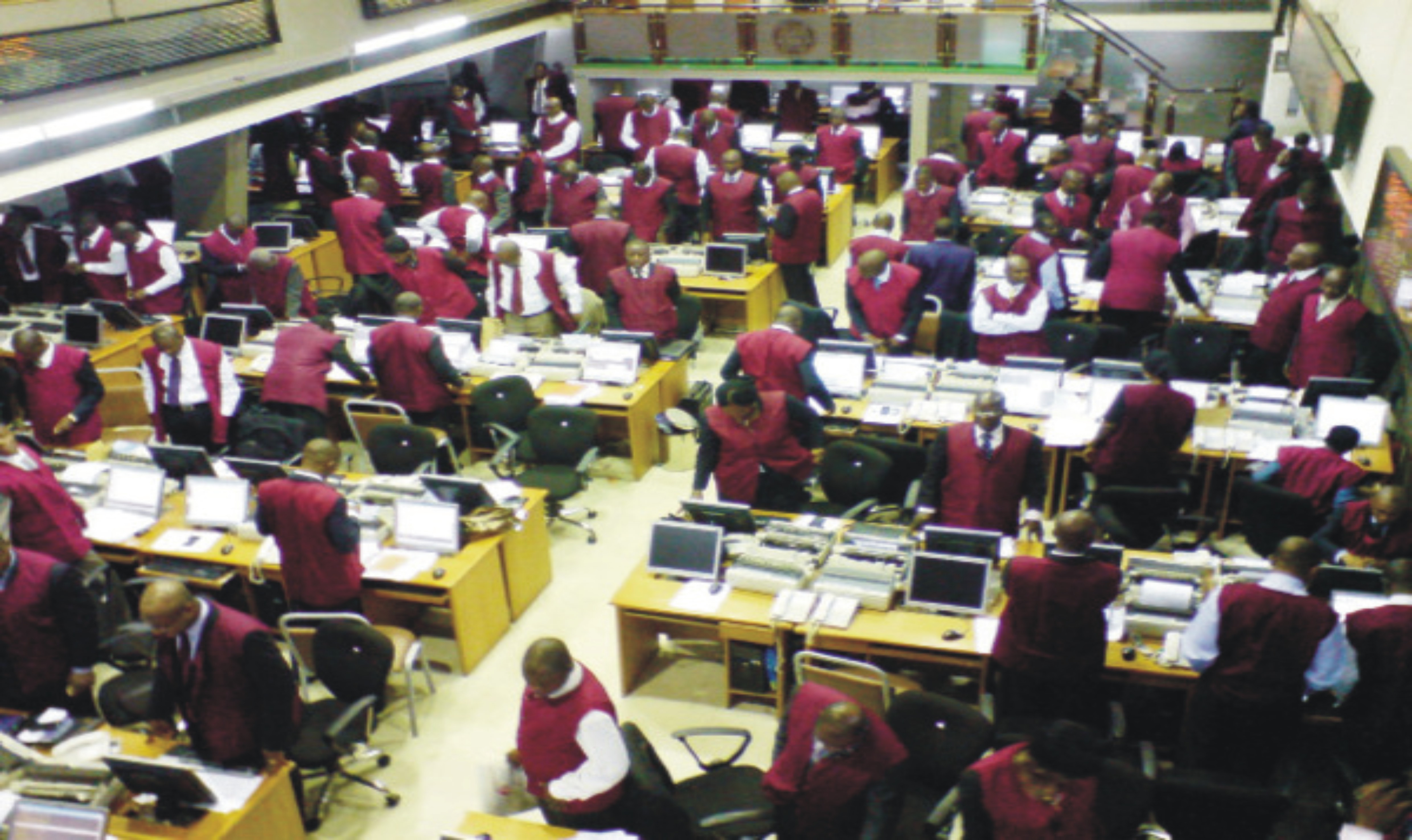
The market closed higher this week, following demand across banking and consumer goods names. The All Share Index posted gains for the second straight week, advancing by 1.85% w/w to close at 26,235.63 points. We attribute this week’s gains to the lingering impact of the more than impressive Q1 numbers posted by blue chip stocks, in particular, the tier-1 banking names. Furthermore, we sense an increased appetite for risk assets, owing to (1) data suggesting the economy is on the path to recovery, in particular, the improved PMI survey result for the month of April, and (2) more positive news surrounding FX policy, principally, the apex bank lifting the ban on currency allocation for some items classified as not valid for FOREX (see currency). Market activity was bullish this week, with the All Share Index climbing higher in all trading sessions, recording its largest gain on Tuesday (0.80%) where the index closed at 25,965.18 points. Continuing from last week, banking names remained the toast of investors, as shown by the Banking (+3.64% w/w) index which posted the largest gain for the second week running, following gains in the shares of ZENITHBANK (+8.59% w/w) and GUARANTY (+0.26% w/w). Likewise, the Oil and Gas (+2.95% w/w) index gained, while the Consumer Goods (+2.98% w/w) staged a strong come back, owing to interest in OANDO (+24.05% w/w), SEPLAT (+3.66% w/w), NESTLE (+2.47% w/w), and NB (+3.49% w/w) respectively. Conversely, the Industrial Goods (-1.09% w/w) and Insurance (-0.09%) indices shed weight, as trader’s liquidated their holdings in WAPCO (-2.59% w/w) and MANSARD (-5.73% w/w) respectively.
Market breadth was positive, with 42 gainers (37 last week) — topped by FIDSON (+43.64%w/w) — versus 14 losers (24 last week) — led by UNITYBNK (-13.79% w/w). Total volume traded fell by 13.44% w/w to 1.15 billion shares (1.33 billion last week), with ZENITHBAMK, FBNH, and OANDO accounting for 33.44% of the market volume. The value of trades also increased by 26.38% to N10.44 BILLION (previously N9.67 billion), with ZENITHBANK, GUARANTY, and OANDO accounting for 55.83% of total value.
Fixed Income and Money Market
Interbank
The overnight rate expanded by 14.50% to 19.25%, as system liquidity tightened. The overnight rate rose to as high as 53.42% this week, before declining on the last day of the week. We attribute this week’s rate movement to (1) the debit for FX sales worth USD209.44 million, (2) OMO sales, totalling N47.19 billion, and (3) net outflow from primary auction sales, worth N80 billion. Cumulatively, this overshadowed the N87.62 billion inflow from the OMO bill that matured into the system.
Treasury Bills
On Wednesday, the apex bank raised N230.61 billion (vs. planned N150.61 billion) across the 91-day (N29.14 billion vs. N45.18 billion offered), 182-day (N23.43 billion vs. N23.43 billion offered), and 364-day (N178.03 billion vs. N82.00 billion offered) bills. In line with our expectation for the auction, the stop rates on the 182-day (17.26%, previously 17.40%) and 364-day (18.81%, previously 18.98%), came in lower than the previous auction, while the stop rate on the 91-day (13.60%, previously 13.60%) was unchanged. Noteworthy, the 182 and 364-day bills were oversubscribed by N6.11 billion and N123.57 billion respectively while the 91-day was undersubscribed by N15.04 billion respectively. In the secondary market, appetite weakened as the improvement in system liquidity – which supported last week’s demand – faded amid continued withdrawals by the apex bank via aggressive OMO auctions, coupled with FX sales debits. Compared to last week’s level, average yield expanded by 6 bps to 18.20%. Selloff was most notable at the short (+51 bps) end of the curve while yield increased by 6 bps at the long segment. On the other hand, modest demand ensued at the intermediate end.
Bond
Investors were equally downbeat in the bond market, with average yield rising by 17 bps w/w to 16.83%, suggesting the impact of tight liquidity position on demand for risk free assets. Yield expanded across all ends of the curve, with the short (+49 bps) segment being the most hit, followed by the mid (+20 bps) and long (+8 bps) ends.
Foreign Exchange
The week was relatively quiet in the currency space, however, worthy of mention is that the apex bank (1) lifted the ban on currency allocation for some items classified as not valid for FOREX in the official market, allowing them to purchase such items if transaction values do not exceed $20,000 per quarter and (2) barred 14 Deposit Money Banks from participating in the SME forex window, following complaints that some of the DMBs were deliberately frustrating efforts by many SMEs to access FX from the window. In comparison to the previous week, the value of forex intervention decreased by 56% to USD350 million, with (1) the CBN attributing the reduced demand to FX glut, but on the contrary, (2) dealers said demand was constrained by the constant liquidity mopping actions of the central bank. Noticeably, DMBs only subscribed to USD209.44 million of the USD350 million. Amidst these developments, the naira — at the interbank market — declined against two of the currencies we track. The GBP/NGN (-0.01% w/w) and EUR/NGN (-4.45% w/w) weakened to N409.79 and N347.51 respectively, while the USD/NGN (+0.05% w/w) strengthened to N305.70. In the parallel market, the USD/NGN (-0.26% w/w), GBP/NGN (-3.09% w/w), and EUR/NGN (-1.69% w/w) weakened to N391, N500, and N422 respectively. Meanwhile, the USD/NGN (-0.66% w/w) weakened to N382.19 at the Investors and Exporters’ market.
OUTLOOK
Equities: Following two weeks of consecutive gains, we expect the market to close lower in the coming week, as trader’s exit short term profitable positions.
Interbank: We expect the overnight rate to rise higher in the coming week, owing to (1) debit for FX sales and (2) further OMO auctions targeted at the maturing N87.66 billion worth of OMO bills.
T-Bills: We expect demand to further reflect liquidity conditions. On liquidity, whilst we acknowledge inflows worth N87.66 billion from maturing OMO bill in the coming week, we also look for withdrawals in the form of OMO sales, debit for FX sales, and bond sales. On the balance, we expect further expansion in yield.
Bond: On Wednesday, May 10, 2017, the Debt Management Office (DMO), on behalf of the federal government, will raise N140 billion by offering N40 billion of the FGN JUL 2021 bond and N50 billion apiece of the FGN MAR 2027 and FGN APR 2037 bonds, all in re-opening. We expect stop rates – from which investors will take a cue – at the auction to reflect inflation expectation (i.e. further moderation) for the month of April.
Currency: We expect the naira to trade within its current band at the interbank space, while we foresee modest gains in the parallel market as demand pressure tapers off. With the Investors’ and Exporters’ window still at infancy, hence weak supply, we look for continued NGN weakness in this space where the apex bank promises to allow free trading.

