



July 21, 2022/CSL Research
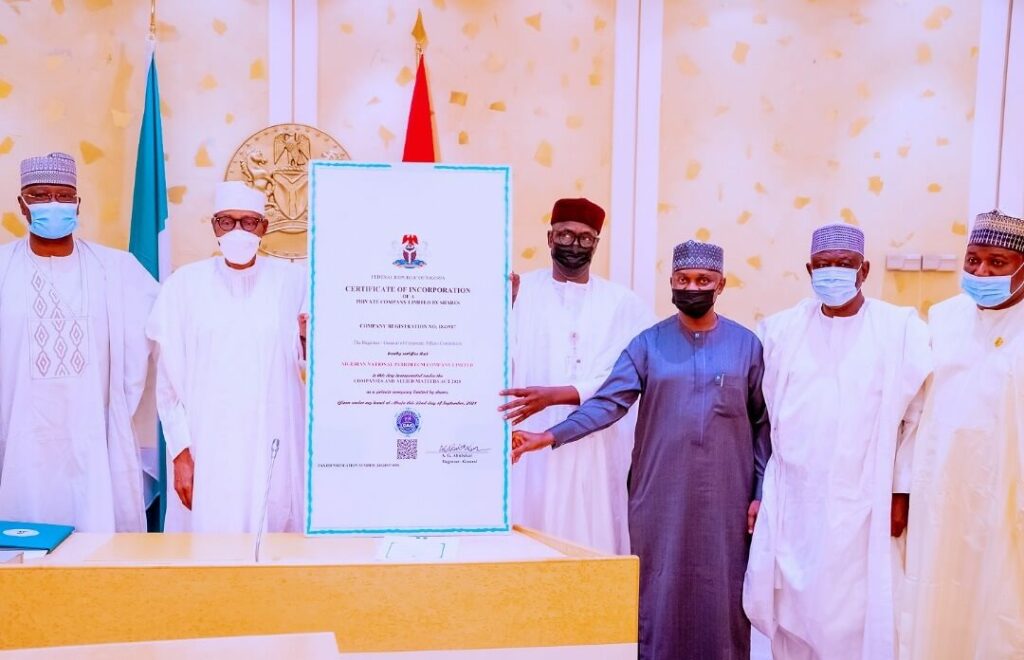
The passage of the Petroleum Industry Act (PIA) in 2021 remains a commendable feat after more than a decade long tussle since the first executive bill was sent to the National Assembly in 2008. The bill comprises five major parts, including Governance and Institutions; Administration; Host Communities Development; Petroleum Industry Framework; and Miscellaneous Provisions comprising 319 clauses and 8 schedules. One of the key recommendations of the bill is the unbundling of the Nigerian National Petroleum Corporation (NNPC)) and a revision of the funding mechanism. This has now given birth to a new entity called Nigerian National Petroleum Company Limited (NNPC Limited) in line with Section 53(1). On July 1, 2022, the Nigerian National Petroleum Company Limited (formerly Nigerian National Petroleum Corporation) legally transformed into a company whose operations and activities are regulated under the Companies and Allied Matters Act,
CAMA. NNPC Limited was unveiled by the President, Muhammadu Buhari on Tuesday, July
19, 2022.
The new entity, NNPC Limited, is currently 100% owned by the government as represented by the Ministry of Finance Incorporated and Ministry of Petroleum Incorporated but there are plans for an Initial Public Offering (IPO) in June 2023. However, Section 53 (5) of the Act stipulates that shares of the company held by the government are not transferable or mortgageable unless approved by the government and the National Economic Council.
Prominent among the key expectations from the new entity are strong corporate governance, transparency, and accountability. To this end, the management has set up a PIA transition committee with specific directives to drive the transitioning of NNPC into a full CAMA company. External consultants including McKinsey, KPMG, PWC, Wood McKenzie, etc were also appointed to support the in-house committee to define and implement the transition roadmap.
The new entity is expected to run henceforth in a profitable way and would no longer not concern itself with issues of price determination and subsidy. NNPC Limited will also nolonger make remittances into the Federation Account Allocation Committee (rather dividends will be paid to shareholders up to 80% pay-out ratio). The company is also no longer bound by institutional regulations, such as the treasury single account, public procurement, and fiscal responsibility act, and the government will no longer have control over the staffing while the company will no longer be funded by the Federal Government and Its shares and assets, including oil blocs and refineries are now held by the ministries of petroleum and finance.
Considering the success story of its Saudi Arabian counterpart, Saudi Aramco which went public in December 2019 and raised a record US$25.6bn by selling three billion shares, amounting to 1.5% of the company’s value, we are hopeful that NNPC Limited can replicate such success. We are, however, sceptical about the firm’s ability to institute and operate high corporate governance and ethical standards considering its history of corruption allegations. We are concerned that the strong perception of NNPC as a corrupt entity will be a major disincentive to prospective equity investors. Hence, we expect a total overhaul of the existing structure and efforts made at building a more investor friendly brand.

