




May 24, 2023/CSL Research
Based on a report from the Nigerian Bureau of Statistics (NBS), the retail prices of diesel and petrol increased significantly by 28.69% and 47.18% respectively in April 2023. The average retail price paid by consumers for Premium Motor Spirit (PMS) in April 2023 increased to N254.06 from N172.61 in April 2022 with the South-East recording the highest average retail price in April 2023 of N291.15, while the North-Central had the lowest price of N208.88. The average retail price of Automotive Gas Oil (AGO) or diesel paid by consumers in April 2023 was N842.25 per litre, indicating an increase of 28.69% from N654.46 per litre recorded in the corresponding month of the previous year. On a month-on-month basis, diesel increased marginally by 0.17% from N840.81 per litre reported in March 2023.
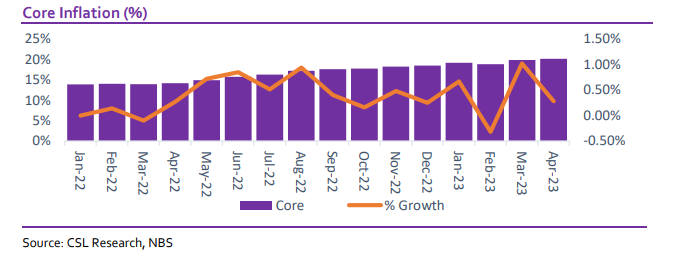
Nigeria’s rising energy costs have contributed significantly to the country’s rising inflation rate and to a rise in the operating costs borne by manufacturers in the country. Nigeria’s headline inflation rate increased to 22.22% in April 2023, with energy costs on electricity, gas, and other fuels contributing significantly. Recently, manufacturers said surging diesel prices
will force them to cut jobs, curb operations and raise prices as power, which is largely unstable normally accounts for as much as 40% of factory cost in Nigeria, according to the Manufacturers Association of Nigeria.
Despite Nigeria’s high spending on its very controversial fuel subsidies, the price of petrol remains high. Nigeria currently imports over 90% of all its liquid products due to the absence of local refining capacity. Nigeria’s hope of attaining self-sufficiency in the local domestic oil refining space might just rest largely on the operations of the newly inaugurated Dangote refinery. The 650,000 bbls/day refinery, one of the largest production capacities in the world, operating at full capacity would more than meet Nigeria’s domestic fuel requirements with excess capacity for exports. While we note that achieving self-sufficiency in local refining capacity might not reduce the cost of petrol significantly, sufficient local refining capacity would at least boost the availability of the product and bring a lasting end to the persistent issue of fuel scarcity in the country, which in turn will help stabilize the price of petrol and diesel in the country.
Click here to read full PDF copy of report

