



August 18, 2023/ S & P Global Ratings
- S&P Global Ratings revised its outlook on Nigeria to stable from negative on Aug. 4, 2023, based on reform initiatives.
- We do not rate financial institutions in Nigeria above the sovereign foreign currency sovereign ratings, due to the direct and indirect effect sovereign stress would have on banks’ operations and creditworthiness. At the same time, we assess most rated banks’ stand-alone credit profiles (SACP) higher than the sovereign’s creditworthiness because of their resilient performance through the cycle.
- We therefore revised our outlooks on all rated Nigerian banks to stable from negative and raised our long- and short-term national scale ratings on several of these banks.
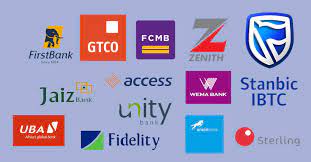
S&P Global Ratings said it revised its outlook on 12 Nigeria-based financial institutions to stable from negative. At the same time, S&P Global Ratings affirmed its global scale ratings on all 12 financial institutions and raised its national scale ratings on several of them. For full details of the rating actions, see “Ratings List” below.
The rating actions follow the outlook revision on the foreign currency rating on Nigeria (see “Nigeria Outlook Revised To Stable From Negative On Reform Initiatives; ‘B-/B’ Ratings Affirmed,” published Aug. 4, 2023, on Ratings Direct).
Our outlook revision on the sovereign to stable from negative followed a series of early reforms by President Bola Tinubu who was sworn in on May 29, 2023, including removal of fuel subsidies and securitization of the government’s large central bank funding at a lower interest rate. The combined saving of these two measures represents 2.5% of GDP and will improve fiscal metrics. We expect modest fiscal consolidation with budget deficits averaging 4.6% of GDP in 2024-2026 following a deficit of 5.9% of GDP in 2022, reflecting sizable fuel subsidies and underperforming oil revenue. We expect an improvement of oil revenue, supported by recovery of oil production and increased security of the oil and gas infrastructure. We also anticipate additional refining capacity to come on stream by year-end 2023. The large private Dangote refinery (with a capacity of 650,000 barrels per day) is scheduled to commence production in 2023 and other public refineries are being rehabilitated to increase capacity and preserve foreign currency reserves, which we estimate at $28 billion. The liberalization of the exchange rate regime will support investment in the sector in the context of the implementation of the Petroleum Investment Act.
In this context, we forecast the Nigerian economy will expand by an average of 3.5% in 2023-2026 compared with our previous estimate of 3%. The non-oil sectors should drive GDP growth, but higher inflation induced by the reforms will likely undermine domestic consumption in the short term. Still, manufacturing and segments of services such as airlines have been stressed by the continued scarcity of foreign currency. The exchange rate adjusted sharply following the announcement of the liberalization of the exchange rate regime with the currency depreciating to NGN780:US$1 from NGN460:US$1. In its fight against inflation, which averaged 18.8% in 2022, the Central Bank of Nigeria (CBN) raised its benchmark rate by another 50 basis points to 18.75% in July 2023 and maintained the minimum cash reserve requirement at 32.5% although it lowered this ratio to 10% for merchant banks. The CBN’s discretionary cash debits of banks will continue to constrain lending growth and optimization of net interest margins. Nigerian banks are largely funded by customer deposits although small banks tend to rely on wholesale funding. Real lending expansion will likely be held back by high inflation and interest rates.
The CBN’s naira and U.S. dollar liquidity management has created distortions in the banking sector, which in turn have had negative implications on banks’ cost of funding and risk-adjusted returns. That said, we expect the banking sector’s profitability will remain in line with its 2022 strong performance with return on average equity of about 16% for 2023. Banks’ balance sheets are long on the U.S. dollar, and a naira depreciation will lead to additional earnings. At the same time, a currency depreciation will result in higher risk-weighted assets and reduce capitalization for the sector. We believe banks’ regulatory capitalization is generally less at risk today than in 2016 but we do not exclude pressure on individual banks’ capitalization in the case of a prolonged weakening of the Nigerian naira.
The banking sector is exposed to short credit cycles and high credit risks amid currency depreciation and Nigeria’s high dependence on hydrocarbons, which leads to concentration and energy transition risks. The banking sector has material exposure to the oil and gas sector, averaging about 30% of total loans. Banks’ credit losses outperformed our normalized loss estimates in 2022, at about 1.5% of total loans for rated banks. We expect credit losses will inch higher and average 2% in 2023, while the nonperforming loans (NPL) ratio will deteriorate to 5.7% in 2023 (above the 5% regulatory limit), amid high inflation and interest rates.
We do not rate financial institutions in Nigeria above the foreign currency sovereign ratings, due to the direct and indirect effects that sovereign distress would have on banks’ operations. We assess most rated banks’ stand-alone credit profiles (SACPs) as higher than the sovereign’s creditworthiness because of their resilient performance through the cycle. While some banking groups have exposure outside Nigeria, they remain predominantly exposed to credit risk in the country. As such, we believe rated banks’ operations would be significantly affected in the event of a sovereign default. However, we raised our national scale ratings on top-tier banks to reflect their resilient performance through the economic cycle despite a challenging operating environment. Our national scale ratings on nonoperating holding companies (NOHC) reflect their structural subordination compared with operating companies. Our national scale ratings consider the ‘ngBBB+/ngA-2′ sovereign national scale ratings as the highest benchmark and reflect the relative ranking of banks’ creditworthiness in Nigeria.
Outlook
Access Bank PLC, United Bank for Africa PLC, and Zenith Bank PLC
The stable outlooks on Access, UBA, and Zenith reflect that on Nigeria.
Downside scenario: If we were to take a negative rating action on Nigeria, we would take a similar negative action on these banks over the next 12 months.
Upside scenario: A rating action reflecting an improvement of Nigeria’s sovereign creditworthiness would result in a similar positive action on these banks over the next 12 months, all else being equal.
Ecobank Nigeria Ltd.
We consider Ecobank Nigeria a core subsidiary of Ecobank group, whose group credit profile (GCP) is ‘b’. The group has a wide pan-African franchise and diverse business mix that is underpinned by a stable base of global investors. Ecobank Nigeria is the group’s single largest country exposure and accounts for approximately 24% of its total assets and 27% of total loans in 2022.
The stable outlook on Ecobank Nigeria reflects that on Nigeria.
Downside scenario: We would take a negative rating action on Ecobank Nigeria over the next 12 months if we were to take a negative rating action on Nigeria. We would also lower the ratings if Ecobank Nigeria were in breach of its minimum capital adequacy ratio, from higher credit losses than we forecast, combined with a further weakening of the naira, or if the bank’s U.S. dollar liquidity position was strained from tighter supply in the banking sector.
Upside scenario: We would take a positive rating action on Ecobank Nigeria over the next 12 months if we took a similar action on the sovereign, all else being equal, including our expectation that the bank would remain a core subsidiary to its parent Ecobank Transnational Inc.
Fidelity Bank PLC
The stable outlook on Fidelity reflects that on Nigeria.
Downside scenario: We would take a negative rating action on Fidelity over the next 12 months if we were to take a negative rating action on Nigeria.
Upside scenario: We would take a positive rating action on Fidelity over the next 12 months if we take a similar action on the sovereign, all else being equal.
First Bank of Nigeria Ltd. (FirstBank) and FBN Holdings PLC (FBNH)
Our ratings on FirstBank’s NOHC, FBNH, are at the same level as the ratings on FirstBank.
We expect double leverage will remain manageable, at close to 100%. Under our criteria, we generally notch down by two notches from the GCP to reflect the NOHC’s structural subordination and exposure to potential regulatory intervention. Nevertheless, in FBNH’s case, we consider that the risk of an NOHC default is not commensurate with the ‘CCC’ rating category.
The stable outlook on FirstBank, FBNH’s main operating entity, mirrors that on Nigeria.
The outlook on FBNH matches that on FirstBank.
Downside scenario: We would take a negative rating action on FirstBank over the next 12 months if we took a similar action on Nigeria. We would also lower the rating if the bank’s capital adequacy declined sharply. This could occur if asset quality saw a pronounced deterioration because of difficult operating conditions.
We would lower the ratings on FBNH if we lowered the ratings on FirstBank, or if we saw significant double leverage at the holding company without any excess liquidity at the group or NOHC level.
Upside scenario: A positive rating action on Nigeria would result in a similar positive action on FirstBank over the next 12 months, all else remaining equal. We are unlikely to raise our ratings on FBNH because of the structural subordination compared with the bank and the risk of regulatory imposition on NOHCs.
First City Monument Bank Ltd. (FCMB)
We consider FCMB a core part of FCMB Group. Therefore, we equalize our rating on the bank with the ‘b-‘ GCP. The stable outlook on FCMB reflects that on Nigeria.
Downside scenario: We would take a negative rating action on the bank over the next 12 months if we took a similar action on Nigeria. We would also lower our ratings on FCMB if the bank breached its minimum capital adequacy ratio due to significant naira depreciation or if its U.S. dollar liquidity position were stressed from tighter supply in the banking sector.
Upside scenario: We could take a positive rating action on FCMB over the next 12 months if macroeconomic conditions improve and support better economic growth prospects, all else being equal.
Guaranty Trust Bank Ltd. (GTBank) and Guaranty Trust Holding Co. PLC (GTCO)
We equalize our global scale rating on GTCO with that on GTBank. This is because we consider that GTCO is not vulnerable to nonpayment or dependent upon favorable business, financial, and economic conditions to meet its financial obligations in the next 12 months. There is no financial debt at the holding company. In addition, in GTCO’s case, we consider that the risk of an NOHC default is not commensurate with the ‘CCC’ rating category.
The stable outlook on GTBank, GTCO’s main operating entity, mirrors that on Nigeria.
The outlook on GTCO reflects that on GTBank.
Downside scenario: We would take a negative rating action on GTBank and GTCO over the next 12 months if we took a similar action on Nigeria.
Upside scenario: We would take a positive rating action on GTBank over the next 12 months if we took the same action on Nigeria, all else being equal. We are unlikely to raise our ratings on GTCO because of the structural subordination compared with the bank and the risk of regulatory imposition on NOHCs.
Stanbic IBTC Bank PLC
We continue to view the bank as strategically important to its South African parent, Standard Bank Group, but we do not add any notch of support to the group’s ‘b’ SACP because of the low sovereign ratings.
The stable outlook on Stanbic IBTC reflects that on Nigeria.
Downside scenario: We would take a negative rating action on the bank if we took a similar action on Nigeria.
Upside scenario: We would take a positive rating action on Stanbic IBTC over the next 12 months if we took a similar action on the sovereign, all else being equal.
Standard Chartered Bank Nigeria Ltd. (StanChart Nigeria)
We view the bank as a strategically important subsidiary of Standard Chartered PLC because it is the group’s largest subsidiary in Africa and plays an important role in the group’s strategy on the continent. However, we do not add any notch of support to the bank’s ‘b-‘ SACP because of the low sovereign ratings.
The stable outlook on StanChart Nigeria reflects that on Nigeria.
Downside scenario: We would take a negative rating action on the bank if we took a similar action on Nigeria.
Upside scenario: We would take a positive rating action on StanChart Nigeria over the next 12 months if we took a similar action on the sovereign, all else being equal.

