



June 28, 2019/Cordros Report
Global economy
According to the Ministry of Economy, Trade and Industry, Japan’s factory output expanded the most in more than a year in May, signaling fresh resilience despite a global economic slowdown and rising trade tensions. Industrial production rose by 2.3% from the prior month, the largest in seven months. The expansion was largely driven by robust auto production, with output rising 5.2% from the previous month. Auto shipments in May rose 6% from a month earlier, with increased demand for cars and other big-ticket items ahead of a sales tax increase in October cited as a possible factor for the improvement. The data signals a likely expansion of GDP in Q2-19. However, despite the improved domestic picture, concerns still remain around the impact of slowing global growth, amidst the US-China trade war, as we note that exports declined for the sixth consecutive month.
According to data released by the National Bureau of Statistics (NBS), profits of China’s industrial companies rose in May after a sharp deterioration the previous month. Above-scale industrial companies, referring to companies whose annual main business revenues are no less USD2.9 million, saw their profits grow 1.1% y/y in May, reversing a 3.7% y/y contraction in April. Profits of foreign firms fell 8.3% y/y year in the first five months of the year, as the U.S. tariff hike in May added to pressure on export-oriented foreign firms. Manufacturing sector profits fell at a slower pace, dropping 4.1% y/y while mining sector profits rebounded, rising 4.7% y/y, largely driven by higher iron ore prices. The data suggests that the government’s investment in infrastructure is supporting economic activity but the benefit to manufacturing in the private sector has been negligible. We expect the government to step up policy support, in particular for small private industrial firms which are most vulnerable in the trade war.
Global markets
Global equity markets across our coverage were largely mixed, as uncertainty surrounding the U.S. and China trade meeting at the G20 summit weighed market sentiments. Consequently, U.S (DJIA: -0.7%, S&P: -0.5%) markets close negative. Tempered inflation data in the Eurozone, and positive industrial news from Japan led to mixed results across European (FTSE 100: +0.1%, Euro Stoxx: -0.2%) and Asian (CSI 300: -0.2%, Nikkei: +0.1%) markets. Elsewhere, the emerging markets (MSCI EM: +0.2%) index closed in the green, following gains in India (+0.5%) and South Korea (+0.2%), while the frontier markets (MSCI FM: +1.8%) index declined following selloffs in Vietnam (-1.0%) and Kuwait (-0.1%).
Nigeria
Economy
The Purchasing Managers’ Index (PMI), as reported by the CBN, widened for the 27th consecutive month, but at a slower rate when compared to prior month. The manufacturing and non-manufacturing PMIs expanded to 57.4 points and 58.6 points, respectively. In the face of the renewed uptick in inflation (May: 11.40%), sustained improvement in PMI have thus far coincided with improved FX stability and availability, which continue to drive positive business sentiment. There are no sufficient reasons to expect contracting PMIs over the rest of 2019, as the impact of the positive drivers supporting the encouraging figures – high oil prices; FX stability and liquidity; increased credit to the private sector – deepens further.
According to reports quoting the former Minister of Finance, the FGN plans to increase Value Added Tax (VAT) from 5% to 7.5% from 2020 from current levels 5% to 7.5%, as it seeks to shore up falling revenues. Nigeria has one of the lowest VAT rates compared to its African peers — Egypt (14%), South Africa (15%), and Ghana (17.5%). Over the last five years, VAT to total FGN revenue stood at 3.1%, the lowest of all the revenue pipelines. While we understand the need for the FGN to increase revenues given its large fiscal deficit, we note that an increase in taxes at this time will erode purchasing power amidst a still weak consumer wallet and upwardly sticky inflation.
Capital markets
Equities
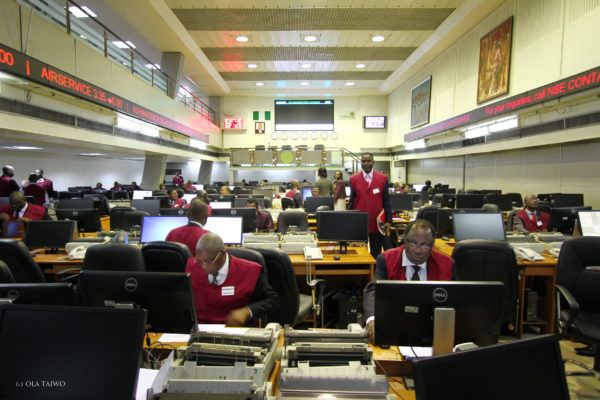
Following bargain hunting across bellwether stocks – GUARANTY (+5.28% w/w), NESTLE (+2.94% w/w), NB (+5.00% w/w) – the Nigerian equities market halted its three-week losing streak, as the benchmark index increased by 0.39% w/w to settle at 29,966.87 points. Thus, the MtD and YtD losses moderated to 3.55% and 4.66% respectively. Analysing by sector, gains in the Banking (+2.45%), Consumer Goods (+1.74%) and Insurance (+0.53%) indices masked losses in Industrial Goods (-0.44%) and Oil & Gas (-0.04%) indices.
Our outlook for equities in the short to medium term remains conservative, amidst the absence of a positive catalyst.
Fixed income and money market
Money market
The overnight lending rate fell to 4.64% – a 457 bps w/w contraction – as the CBN refrained from liquidity mopping activities. As a result, inflows from matured OMO bills (NGN210.22 billion) boosted system liquidity, leading to a decline in money market rate.
Next week, inflows totaling NGN394.98 billion — maturing OMO bills (NGN43.68 billion) and bond maturity (NGN351.30 billion) will offer support to system liquidity. However, liquidity mop-up and forex intervention by the CBN are likely to exert upward pressure on the overnight lending rate.
Treasury bills
Activities in the treasury bills market were bullish, driven by relatively buoyant system liquidity, in the absence of any OMO activity. As a result, average yield declined by 32 bps w/w, to close at 12.14%. Demand was spread across the mid (-38 bps) and long (-42 bps) segments, with respective yields on the 97DTM (-121 bps) and 307DTM (-94 bps) bills recording significant contractions. Conversely, a selloff of the 76DTM (+48 bps) bills led to yield expansion at the short (+11 bps) end of the curve.
Yields are expected to be pressured next week, as the CBN is expected to resume its liquidity mop-ups. At the NTB auction scheduled for next week, the CBN will offer NGN88.86 billion– NGN10.00 billion of the 91-day, NGN20.00 billion of the 182-day, and NGN58.86 billion of the 364-day – worth of bills to the market.
Bond
Trading in the bond market was also bullish on the back of demand from local investors ahead of the JUN-2019 (NGN351 billion) bond maturity expected to hit the market on Monday, as well as the slight over subscription at this week’s PMA. As a result, average yield moderated by 31 bps, w/w, to close at 13.97%. Investor interest was spread across the short (-45 bps), mid (-23 bps) and long (-20 bps) segments, with respective yields on the JUL-2021 (-74 bps), MAR-2027 (-44 bps) and APR-2037 (-29 bps) bonds contracting.
At this week’s primary auction, the DMO allotted NGN96.84 billion – NGN28.99 billion of the APR-2023 (re-opening), NGN36.63 billion of the APR-2029 (re-opening) and NGN31.49 billion of the APR-2049 (re-opening) – in bonds to investors, at respective stop rates of 14.30% (vs. 14.11% at the previous auction), 14.50% (vs. 14.24% at the previous auction) and 14.68% (vs. 14.49% at the previous auction). Stop rates rose by 21 bps on average, amidst weaker, but still relatively strong demand, compared to the previous auction — the auction recorded a NGN60.13 billion oversubscription and bid cover of 1.65x (vs NGN171.11 billion and 2.44x, respectively, at the previous auction). In addition, NGN13.50 billion of the APR-2029 was allotted on non-competitive basis.
Our theme on the bond market favours modestly lower yields in the medium term, anchored on our expectations for (1) a moderation in inflation, (2) currency stability, (3) relatively high oil prices and stable oil inflows, and (4) sustained FPI inflows amidst stalled monetary policy normalization in DMs.
Foreign exchange
FX reserves declined by USD12 million to USD45.07 billion this week. Meanwhile, the CBN continued its FX interventions, selling USD210 million across its different windows — USD100 million to the wholesale, USD55 million to the SMEs, and USD55 million to the invisible segments. Consequently, the naira appreciated by 0.28% w/w to NGN360/USD at the parallel market but depreciated by 0.07% w/w to USD360.74 at the I&E window. Elsewhere, total turnover at the I&E window appreciated by 8.93% w/w to USD815.36 million with trades executed within the NGN359-361.60/USD band. At the forwards market, 6-month (-0.22% to NGN380.75/USD) and 1-year (-0.72% to NGN401.65/USD) depreciated, while the 1-month (+0.01% to NGN363.60/USD) and 3-month (+0.05% to NGN369.98/USD) contracts appreciated.
Looking ahead, we expect the naira to remain firm in the short-to-medium term, as the still elevated crude price continues to underpin higher oil receipts, thereby supporting the CBN’s continued intervention
Click here to read full PDF copy of report

