



August 2, 2019/Cordros Report
The US Fed, for the first time since 2008, elected to cut interest rate by 25 bps, to a range of 2.00%-2.25%, a move supported by 8 of the 10 Fed officials. Whist the Fed expressed satisfaction with improving domestic consumption and employment levels, the decision to cut rate was necessitated by the need to cushion and offset shocks stemming from (1) weakening global growth, (2) below target inflation, and (3) persisting Sino-US trade war. The trade story remains critical to the outlook for US monetary policy. Escalation in trade tensions and higher tariffs will likely lead to economic weakness spreading, resulting in more stimulus from the Fed, given the benign inflation backdrop.
Japan’s factory output suffered its second-largest drop in the last five years in June as trade tensions and a slowdown in the global economy dragged exports lower for a seventh straight month. According to the Japanese Ministry of Economy, Trade, and Industry, industrial production declined 3.6% m/m (-4.1% y/y), weighed by lower manufacturing output (-2.4% y/y vs +0.1% y/y in June) and mining activities (-6.7% y/y vs -1.5% y/y in June). The latest figures strengthen the likelihood that Japan’s economy contracted in the second quarter. Looking ahead, we expect output to be more or less unchanged in Q3. Inventory accumulation for last-minute household purchases ahead of a sales-tax hike slated for October is likely to support production. Pulling the other way, weak external demand will likely weigh on production.
Global markets
Performances in global equity markets across our coverage universe were negative, as positive sentiments buoyed by the U.S Fed rate cut were short-lived, dampened by President Trump’s announcement of a 10% tariff on an additional USD300 billion worth of Chinese imports. Consequently, the US (DJIA: -2.2%, S&P: -2.4%), Euro Area (FTSE: -1.4%, Euro Stoxx: -3.5%), and Asian (CSI 300: -2.9%, Nikkei: -2.6%) markets were set to close in the negative, as at the time of writing. Furthermore, sell-offs in South Korea (-3.3%) and Taiwan (-3.1%) dampened sentiments across emerging markets (MSCI EM: -2.3%). Conversely, gains in Kuwait (+0.7%), and Argentina (+0.7%) buoyed sentiments across frontier markets (MSCI FM: +0.2%).
Nigeria
Economy
In the face of negative news surrounding the Nigerian macroeconomic landscape, ranging across (1) unrelenting security challenges especially in the North, (2) lack of policy actions due to the delayed cabinet formation, and (3) weak consumer spending, Nigeria’s manufacturing PMI sustained its expansionary trend. Although the PMI reading only grew marginally, there were a few pockets of weaknesses which signaled activities might struggle in the near term. For evidence, the employment index (-0.2 points to 57.3) expanded at a slower pace, with negative passthrough to production level (-0.4 points to 58.2) and supply delivery time (-0.2 points to 57.5). However, the robust inventory level (+1.2 points to 56.2) gave room for manufacturers to fill new orders (+1.3 points to 57.2) without ramping up production. For the next few months, there are no sufficient reasons for the composite PMI index to nosedive into contractionary terrain, especially in the light of the still stable FX market and moderating input prices, both of which should continue to drive positive business sentiments.
According to the Monthly Financial and Operations Report by NNPC, the total crude oil production for April declined by 4.38% m/m to average 1.94 mb/d. The decline in production was due to the shutdown of Trans Ramos pipeline, and maintenance of Egina, Brass and Bonny terminals. Notably, the number of pipeline vanadalisations declined by 52% m/m to 60 points as the NNPC in collaboration with the local communities, continues to make concerted efforts to reduce and eventually eliminate the issue. We expect production, together with condensates to average 1.96 m/bd (+6.52% y/y) in Q2-19, on our expectation of a reduction in pipeline disruptions and vandalism. Overall, we expect a stout rebound in the oil GDP for Q2 after 4 consecutive contractions. We see oil GDP printing 7.03%y/y.
Capital markets
Equities
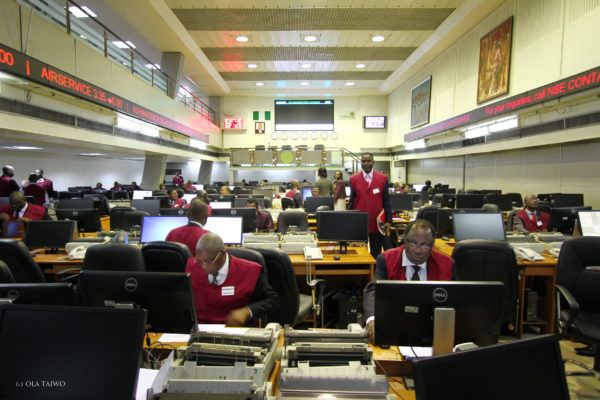
As an unimpressive earnings season came to a close, the Nigerian equities market extended losses, with the All-Share index declining 1.0% w/w to 27,630.64 points — lowest since 16th May 2017. Thus, the MtD and YTD losses worsened to 7.8% and 12.1% respectively. Analysing by sectors, the Consumer Goods (-4.4%), Insurance (-2.5%), Banking (-1.9%) and Oil & Gas (-1.2%) indices closed in the red, while the Industrial Goods index was the sole gainer, rising by 2.8% w/w.
Our outlook for equities in the short to medium term remains conservative, amidst the absence of any catalyst to drive positive market returns.
Money market
In line with our expectation, the overnight lending rate crashed to 6.43% – a 1,679 bps w/w contraction – as the CBN again refrained from any OMO activity, thus leaving excess liquidity in the system. Mid-week inflows from (1) matured OMO bills (NGN88.68 billion), (2) bond coupon payment (NGN49.61 billion), and (3) FAAC disbursements to state and local governments (c. NGN360 billion) outweighed outflows for FX auctions at both ends of the week, leading to a decline in interbank offered rates.
Next week, inflows from maturing OMO bills (NGN109.80 billion) will boost system liquidity. However, forex interventions by the CBN are likely to exert upward pressure on the overnight lending rate.
Treasury bills
Bearish trading at the start of the week, following a squeeze in system liquidity, was enough to offset gains across the rest of the week as the average rose by 14 bps w/w to 11.21%. Investors sold off at the short (+19 bps) and mid (+11 bps) segments. Investor interest was, however, concentrated at the long (-4 bps) end of the curve. At this week’s primary market auction, the CBN fully allotted NGN223.23 billion worth of instruments – NGN28.02 billion of the 91DTM, NGN33.68 billion of the 182DTM, and NGN161.52 billion of the 364DTM – at respective stop rates of 9.75% (previously 9.74%), 10.60% (previously 10.75%) and 11.18% (previously 11.14%).
Yields are expected to fall next week, as system liquidity is expected to remain relatively buoyant.
Bonds
Trading in the bond market was mixed, with a bearish tilt, following a slowdown in interest from market players. Consequently, average yield across instruments rose by 1 bp w/w to 13.42%. Investors sold off at the mid (+14 bps) segment with yield on the MAR-2024 (+92 bps) recording the largest expansion. Conversely, demand was concentrated at the short (-5 bps) and long (-9 bps) ends of the curve, with yields on the JAN-2022 (-90 bps) and APR-2037 (-29 bps) bonds declining the most.
We expect yields pare over the short to medium term. This is anchored on our outlook for (1) a sustained moderation in inflation, (2) continued currency stability, (3) relatively high crude oil prices and stable crude oil receipts, and (4) sustained FPI inflows amidst stalled monetary policy normalization in developed markets.
Foreign exchange
Nigeria’s FX reserves declined by USD70 million WTD to USD44.92 billion. Meanwhile, the CBN sustained its FX interventions, selling USD210 million across the different segments of the FX market — USD100million to the wholesale, USD55 million to SMEs, and USD55 million to the Invisibles segments. Consequently, the naira was flat at NGN360.00/USD at the parallel market but weakened by 0.07% w/w to USD362.23 – highest since 4th February 2019 – at the I&E window. Elsewhere, total turnover at the I&E window decreased by 31.5% WTD to USD734.94 million with trades executed within the NGN357.50-362.25/USD band. In the forwards market, the naira depreciated in the 1-month (-0.1% to NGN364.71/USD) contract, while it appreciated in the 3-month (+0.1% to NGN370.31/USD), 6-month (+0.1% to NGN380.21/USD) and 1-year (+0.6% to NGN399.88/USD) contracts.
Looking ahead, we expect the naira to remain resilient in the short to medium term, as the still elevated crude oil price continues to underpin higher crude oil receipts, thereby supporting the reserves and potential interventions by the CBN.

