



August 23, 2019/Cordros Report
According to Eurostat’s CPI report, Euro Area inflation for July dipped by 30 bps to 1.0% y/y, which was below the consensus estimate of 1.1%, and represented the lowest reading since November 2016. The moderation stemmed from slower growth in the prices of Energy +0.5% y/y (June: +1.7%) and Services +1.2% y/y (June:1.6%y/y), which masked upticks in prices of Food, Alcohol & Tobacco +2.0% y/y (+1.9% y/y), Unprocessed food +1.7% y/y (+0.7%y/y) and Non-energy Industrial Goods +0.4% y/y (June: +0.3% y/y). Amidst concerns about the increased probability of a global downturn, coupled with the inflation reading below target (2.0%), the ECB will, in our opinion, consider (1) relaunching its economic stimulus – Bond Purchase Programme, and (2) a rate cut at its next policy meeting to be held on September 12, 2019.
Manufacturing activities in Japan weakened for the fourth consecutive month, as the PMI reading for August rose marginally by 0.1 to 49.5 index points from the prior month. With the manufacturing indicator still below 50 points benchmark, the reading reflected declines in factories outputs and export orders, owing to a slowdown in global demand instigated by the US-China trade war. However, we highlight that strong domestic demand continues to partially offset the strong external pressure, with business activities expanding at the fastest pace in nearly two years –Services PMI rose by 1.6 points to 53.4 index points. Despite the strong external headwinds, we still expect solid growth in Services sector to absorb economic shocks in the near term.
Global Market
This week, global sentiments turned positive with gains witnessed across our coverage universe – U.S (DJIA: +1.4%, S&P: +1.2%), Euro Area (FTSE: +0.8%, Euro Stoxx: +1.7%), and Asian (CSI 300: +3.0%, Nikkei: +1.4%). We believe the possibility of rate cut rate in the US, given heightening global risks, further supported the accumulation of risky assets. Furthermore, both the (MSCI EM: +0.6%) and (MSCI FM: +0.3%) markets followed the positive sentiments across the globe, with China (+2.94%) and Nigeria (+3.25%) driving activities in the respective regions.
Nigeria
Economy
Against the persistent clamour for power sector reform, given that tariffs charged by the distribution companies in Nigeria are not cost-reflective, the FG through the Nigeria Electricity Regulatory Commission (NERC) has proposed upward adjustments to electricity tariffs payable by consumers by an average of c.35.0%, taking effect from July 2020. In terms of immediate impact, we believe the move will put upward pressure on inflation, especially on the Housing, Water, Energy, Gas & Other Fuels (HWEGF) and Energy baskets, which both constitute c.17.0% of Headline inflation. Historically, we highlight that the 2016 hike in electricity price corresponded to month-on-month expansions of HWEGF and Energy inflation of 607 bps and 697 bps, respectively.
While the new tariff is positive, we highlight that it does not entirely address the myriad of challenges faced by the industry. In our view, raising electricity prices is just one element of a myriad that will allow the sector to thrive. For clarity, high technical & commercial losses exacerbated by energy theft, and consumers’ apprehension towards payments under the dominant practice of estimated billing will continue to hinder the Discos cash collection efficiency, and thus, remittances to NBET. In fact, NERC, in its latest report revealed that collection efficiency of Discos ranges from c.40.0% for Jos Disco to c.80% for Ikeja Disco. Until metering has been concluded to a high degree, we see expect the collection inefficiency to persist.
Capital markets
Equities
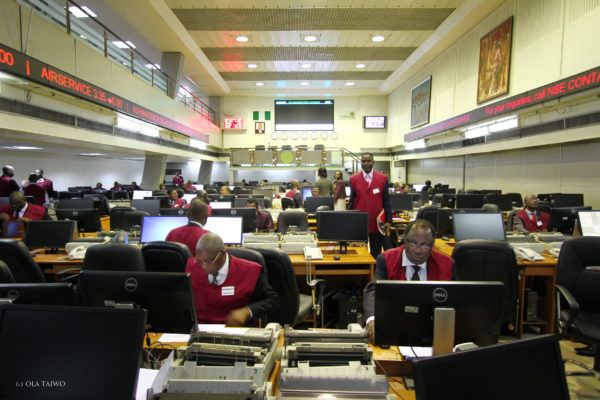
Following bargain hunting across bellwether stocks –NESTLE (+7.6% w/w), MTNN (+2.2% w/w) and DANGCEM (+1.5% w/w) the Nigeria equities market traded positive throughout this week, save for Tuesday. Thus, the market recorded the first w/w gain in eight weeks, which resulted in a 3.3%w/w gain to settle the index level at 27,800.17 points – the largest advancement since May 24th 2019. Consequently, the MtD gain increased to 0.3%, while the YtD loss moderated to -11.6%. Analysing by sectors, we note that positive returns recorded across the Banking (+9.2%), Consumer Goods (+4.0%), Oil & Gas (+1.6%) and Industrial (+1.2%) indices offset the loss in the Insurance (-1.4%) index.
Our view continues to favour cautious trading owing to the fact the gains recorded this week were not broad-based. However, compelling valuations support recovery in the medium to long term.
Money market
The overnight lending rate undulated throughout the week before settling lower at 18.89%. On the first trading day, the OVN rate declined by 10.25% from 30.29%, before paring on the next day by 9.93% as liquidity levels improved. However, the rate increased by 5.00% on the next trading day as liquidity levels one again became strained, before then again paring by 0.50% on the penultimate trading day of the week
Given the level of liquidity in the market, we expect the OVN rate will remain elevated for the start of the week. However, by the tail end of the week, inflows from OMO maturities worth NGN639.64 billion – 28th (NGN75.82 billion) and 29th (NGN563.82 billion) – should boost system liquidity and support a downtrend.
Treasury bills
Yields maintained the unrelenting trend upwards, settling 129bps higher w/w at 15.2%. This follows persistent sell-offs in the market as capital flow reversals intensify in the face of increasing global risk. The CBN announced an OMO auction on the 22nd of August 2019, however, there was no sale given the weak subscription level due to strained system liquidity (c. NGN 350.00 billion short). Also, the CBN will be holding a T-Bills PMA next week on the 29th of August when instruments worth NGN208.60 billion will be offered to investors – 91DAY (24.37 billion), 182DAY (NGN38.75 billion), and 364DAY (NGN145.48 billion).
Given the ‘no sale’ at the OMO auction in the week, yields didn’t come under pressure as expected. However, the PMA auction should see yields pare at the end of the week. Thus, we expect the average yield to close higher week-on-week as sell-offs at the start of the week are expected to exert upward pressure.
Bonds
Similarly, trading in the Treasury bonds market was seemingly bearish, although the intensity of sell-offs was moderate relative to the Treasury bills market, as the average yield across instruments increased by 14bps to close the week at 14.3%. Also, the DMO held a PMA auction during the week for instruments worth NGN145.00 billion. The auction ended with under-subscription recorded on the three instruments on offer – 12.75% FGN APR-2023 (Bid-to-offer: 0.26x; Total allotment: NGN14.05 billion; Marginal rate: 14.29%), 14.55% FGN APR-2029 (Bid-to-offer: 0.74x; Total allotment: NGN17.68 billion; Marginal rate: 14.39%), 14.80% FGN APR-2049 (Bid-to-offer: 0.86x; Total allotment: NGN27.80 billion, Marginal rate: 14.59%).
We expect the trend in market yields to persist over the short-term in line with the intensity of global risk-off sentiments; which will likely be maintained for as long as the US-China trade war continues to intensify. Hence, we posit that yields will rise in the coming week.
Foreign exchange
Nigeria’s FX reserves declined by USD32.62 million WTD to USD44.13 billion (August 21, 2019). Meanwhile, the CBN resumed its FX interventions, selling USD210.00 million across the different segments of the FX market – USD100.00 million to the Wholesale segment, USD55.00 million to SMEs segment, and USD55.00 million to the Invisibles segment. The naira appreciated by 0.11% w/w to NGN363.01/USD at the I&E window, but closed flat at NGN360.00/USD at the parallel market. Elsewhere, total turnover at the I&E window decreased by 18.80% WTD to USD1.30 billion with trades executed within the NGN350.00-364.10/USD band. In the Forwards market, the FX rate on the 3-month (-0.4% to NGN375.16/USD), 6-month (-0.4% to NGN388.66/USD) and 1-year (-2.4% to NGN414.10/USD) contracts declined, while the rate on the 1-month (+0.1% to NGN366.97/USD) contract expanded.
Looking ahead, while we acknowledge there might be continuous depletion of reserves amidst sell-offs from foreign investors and the softer crude oil price (USD58.78/barrel), we still expect the naira to remain resilient in the short to medium term.

