



October 4, 2019/Cordros Report
Global economy
China’s manufacturing sector improved in September given an uptick in new orders and infrastructure spending. However, with the data showing factories output still contracting and other indicators pointing to economic weakness, it is not completely positive news for policymakers. According to data released by the National Bureau of Statistics, the manufacturing purchasing managers’ index (PMI) rose to 49.8 from 49.5 in August. The data came in higher than the consensus’ forecast but was still below the benchmark 50.0 points mark for the fifth consecutive month. The gauge for output rose to 52.3, while new orders (50.5) returned to expansion and new export orders (48.2) improved. In our view, the unexpected rebound does not reflect any genuine improvement, and its sustainability is doubtful. China’s growth is likely to continue to slow, pressured by both external and domestic headwinds.
According to Eurostat, Eurozone unemployment fell to an 11-year low in August. Despite Europe’s economic slowdown, its 19 euro-using countries reported unemployment of 7.4% in August, down from 7.5% in July, providing some relief to the short-term outlook for the eurozone economy. Italy reported an unexpected drop to 9.5% and Germany saw the number of people out of work decline for the first time since April. However, Germany also saw a decline in vacancies – a sign of caution among companies about hiring. The jobs data bodes well, especially since this drop happened before the ECB decided to implement stimulus measures. If unemployment continues to come down at a decent pace, this will boost household incomes and in turn fuel domestic demand. This should give time to the Services sector to continue to grow even though the decline in manufacturing production is worsening.
Global markets
Sentiments turned negative across the globe in the week, as sentiments regarding the possibility of a trade deal between the US and China have been dashed, with negotiations taking a backseat to impeachment proceedings in the US. Consequently, the US (DJIA: -2.3%; S&P: -1.7%) and Asian (CSI 300: -1.0%; Nikkei: -2.1%) equities markets were on track to close the week in the negative territory, as at the time of writing. Similarly, markets across the UK and Euro area were negative (FTSE: -4.4%, Euro Stoxx: -3.4%), as consternation heightens ahead of continued jousting in the UK, and between the EU and UK, as the deadline for the country’s exit from the trade-bloc nears. Also, sentiments in Emerging Markets (MSCI EM: -0.9%) remained weak, following losses across Brazil (-3.4%) and India (-3.0%). Also, the Frontier Markets (MSCI FM: -1.0%) index returned to the negative territory after the positive weekly return in the prior week, following losses in Nigeria (-2.5%) and Kuwait (-1.7%).
Nigeria
Economy
During the week, the Nigerian Senate rejected the proposed Value Added Tax (VAT) increment citing the negative impact on the poor as the reason for the repudiation. However, the legislature has re-introduced – it was proposed earlier in 2016 – a bill to impose a 9.0% tax on communications services. The Senate stated that this would be less likely to materially affect ordinary people. The Communications Services Tax (CST) is a 9.0% levy on Voice Calls; SMS; MMS; Data usage, to be collected by Telecoms, Internet and Pay TV providers. Using recent annual voice, data and pay-tv revenues from major industry players, we estimate that the government could rake in roughly c.NGN180 billion annually from the levy – 28.0% of 2019 annualised VAT (c.NGN623 billion), and less than half of what the government could earn from increasing the VAT rate. Whilst we recognize the strategy to boost government revenues, the expected earnings will not significantly impact the government’s revenue shortfall.
According to data from the National Bureau of Statistics’ (NBS) Selected Banking Sector Data report for Q2-19, gross loans reported in the Nigerian banking sector declined by 0.4% q/q to NGN15.48 trillion. Elsewhere, the non-performing portion of total loans (NPL) dipped by 14.1% q/q, thereby setting the stage for a 148 bps decline in the sector’s NPL ratio to 9.3% (Q1-19: 10.8%). Notably, this is the first time sector NPLs have settled in the single-digit territory since Q4-2015. While the recent positive trend for the sector may be maintained through the rest of 2019, we are cautious about our outlook for NPLs given the expectation of increased risk asset creation in the face of the LDR policy action which will induce continuous credit extension. In our view, given the weak macroeconomic environment and the risk of economic pressure over the short-term, there might be an uptick in NPLs in 2020.
Capital markets
Equities
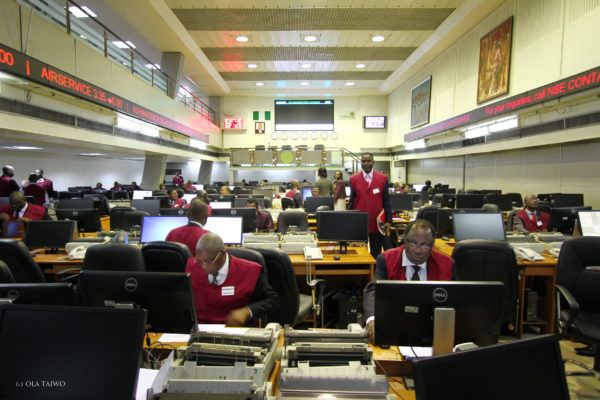
The Nigerian equities market suffered its worst week since April, as the impact of the CBN’s punitive measures on 12 banks for failing to meet the new LDR floor (previously 60.0%, recently revised to 65.0%), weighed down on Banking stocks. Consequently, the All-Share Index declined by 2.5% to 26,987.45 points, and settled the YTD return at -14.1%. Analysing by sectors, Banking (-3.9%) index recorded its largest decline since the week ended August 9, with the Consumer Goods (-4.9%), and Oil & Gas (-2.3%) indices following suit. Conversely, the Insurance (+5.7%) and Industrial Goods (+0.1%) were the only indices to post positive performances.
In our view, the trend witnessed through the year is likely to persist through the final quarter of the year, although we expect pockets of gains over the final months of the year as fund and portfolio managers realign portfolios prior to the start of 2020. Nonetheless, we note that valuations remain attractive driven by price deterioration throughout the year. Hence, we advise that long-term investors consider appropriately timed investments.
Money market
In line with our expectations, the overnight (OVN) rate moderated during the week, settling 5.86ppts lower week-on-week at 3.4% as the liquidity in the system improved. On the first trading day, the rate settled 0.50ppts lower at 8.8% given the open position of the market as liquidity from the prior week was sufficient for market players. However, by the second trading day after the public holiday, the rate increased by 4.36ppts at 13.1%. On the penultimate trading day, the rate pared by 3.50% as PMA and OMO maturities worth NGN596.34 billion hit the system.
In the coming week, OMO maturities worth NGN443.54 billion are expected to hit the system on the 10th of October. Given that we do not expect the CBN to intervene in the market with the same frequency over the coming week, we expect the OVN rate to settle lower week on week.
Treasury bills
Activities in the Treasury bills market were seemingly bullish as the average yield declined by 4bps to settle at 13.3%, as investors took position in the secondary market given the significant level of oversubscription at the CBNs OMO auction. Also, the CBN held a PMA during the week, on the 2nd, for instruments worth NGN302.42 billion – 91DTM bill (NGN10.00 billion), 182DTM bill (NGN17.60 billion), and 364DTM bill (NGN106.37 billion) –, which were sold at respective stop rates of 11.0845% (previously 11.1000%), 11.7500% (previously 11.7500%) and 13.2000% (previously 13.3000%).
Given the significant level of oversubscription at the OMO auction, we expect activities in the secondary market to be bullish as investors try to cover lost bids and re-invest maturities. Consequently, we expect yields to settle lower week-on-week.
Bond
Similarly, trading in the Treasury bonds secondary market was seemingly bullish as the average yield across instruments pared declined by 2bps to settle at 14.2%. There were yield declines recorded across the market, save for on eight instruments, which recorded yield increases. The 16.00% JUN-2019 instrument recorded the largest increase (+24bps), while the 12.50% JAN-2026 bond recorded the largest decline (-19bps).
We maintain our view that trading in the market will be bearish, especially if OMO auction frequency declines. However, we expect investors to take positions in the market as yields in the TBs market soften.
Foreign exchange
Off the back of a “bloody September” wherein reserves declined by USD1.88 billion (largest monthly loss since October 2018), Nigeria’s FX reserves sustained its downward trend, declining by USD227.45 million WTD to USD41.77 billion (2 Oct 2019) – the lowest level since 23 Nov 2018. Meanwhile, in the absence of CBN’s weekly FX interventions, the naira depreciated by 0.1% w/w to NGN362.77/USD at the I&E window but closed flat at NGN360.00/USD at the parallel market. Elsewhere, total turnover at the I&E window declined by 55.8% WTD to USD346.68 million, with trades executed within the NGN350.00-363.35/USD band. In the Forwards market, the naira weakened across all contracts – 1-month (-0.2% to NGN365.99/USD); 3-month (-0.3% to NGN373.23/USD); 6- month (-0.4% to 384.59/USD); 1-year (-0.7% to NGN412.45/USD).
Despite the continuous depletion of reserves amidst sell-offs by off-shore investors, our estimates suggest that there will be no need for a devaluation of the naira in 2019, as we believe the CBN has more than enough ammunition to sustain its naira defense. Hence, we expect the naira to remain resilient in the short to medium-term.
Click here to read full PDF copy of report

