



October 18, 2019/Cordros Report
With the Oct. 31st “Brexit” deadline in sight, UK Prime Minister Boris Johnson announced that he has secured a draft deal with the EU, following intense negotiations between both sides. While we view the news as positive for the economic growth outlook, the PM is far from being out of the woods as he faces the hurdle of persuading MPs to support the draft. Compared to Theresa May’s deal rejected earlier in the year, Northern Ireland is now expected to be part of UK’s customs territory, rather than the European customs region. For us, even as the parliamentary arithmetic looks unnerving for the PM, there is a slight chance of securing a majority vote, given the fact that rebellion among the conservative party is expected to be subdued. While markets appear to have cheered progress made thus far, we believe doubt about growth prospects will resurface should parliament fail to support the deal.
Sustaining the disappointing trend since the second quarter of 2018, China’s economic growth deteriorated further, as GDP grew by 6.0% y/y, the lowest reading in 27 years. Clearly, a year-long trade dispute with the US has significantly weighed on the external sector, and by extension, the overall economy. Adding to this is still relatively tight credit conditions which continue to hurt domestic demand. While the breakdown provided revealed that factory output improved, slowing business investment owing to weak export demand dragged economic growth in the period. For the next few quarters, growth is expected to remain subdued barring a surprise Sino-US trade resolution. We highlight slowing export demand as the major bane to long-term growth prospects.
Global markets
The European Union (EU) backed a new Brexit deal with Britain, prompting an uptick in the global equity markets. Adding to this is the impressive earnings releases, with major companies reporting better-than-expected results. However, gains were capped by disappointing economic data from China and the US, with the former reporting its slowest economic growth in 27 years. Relative to the prior week, the US markets (DJIA: +0.8%, S&P: +0.9%) were on track to end the week in the green at the time writing. Elsewhere, despite clinching a new “Brexit” deal which is set to be voted on by the UK MPs, European (FTSE: -0.7%, Euro Stoxx: +0.6%) stocks were mixed. Even as the disappointing growth outturn weighed on sentiments in China (CSI 300: -1.1%), Japan’s market looked set to outperform (Nikkei: +3.2%). Positive performance in India (+3.1%) and Brazil (+1.1%) drove the gains in Emerging Markets (MSCI EM: +1.7%), while losses in Nigeria (-0.4%) and Vietnam (-0.3%) weighed down Frontier Markets (MSCI FM: -0.7%).
Nigeria
Economy
After three consecutive months of deceleration, headline inflation widened by 22bps to 11.24% — the highest reading since May 2019. Amidst the sustained border closure, food inflation for September rose by 34bps to 13.51% y/y (August: 13.17% y/y), the second consecutive month of an uptick. After 10-consecutive months of descent, core inflation edged-up by 27bps to 8.94% y/y in the period under review. This week, the federal government announced complete closure of all land borders against earlier partial closure, thus, we expect the food inflation to inch higher in October. Elsewhere, we see no major pressure point in the core inflation. Overall, given the low base from the corresponding period of the prior year, we expect headline inflation to sustain its upward trajectory, expanding to 11.32% y/y in October.
Economic activities weakened in Q1-19, with the recently released GDP (expenditure approach) data showing that the economy grew slower by +2.1% y/y (+2.4% y/y in Q4-18). Dissecting the components, we note that household consumption which constitutes 60% of the total GDP weakened by 890bps to 1.4% y/y, the slowest since Q3 2018. Similarly, government expenditure collapsed to a record low of 2.7% y/y. On the positive, faster growth was recorded in fixed capital investment (+159bps to 13.8% y/y). We are less optimistic about growth over the rest of 2019, as consumer spending is likely to remain weak; real wage growth is likely to move further into negative territory in the absence of the new minimum wage implementation and amidst high inflationary pressures.
Capital markets
Equities
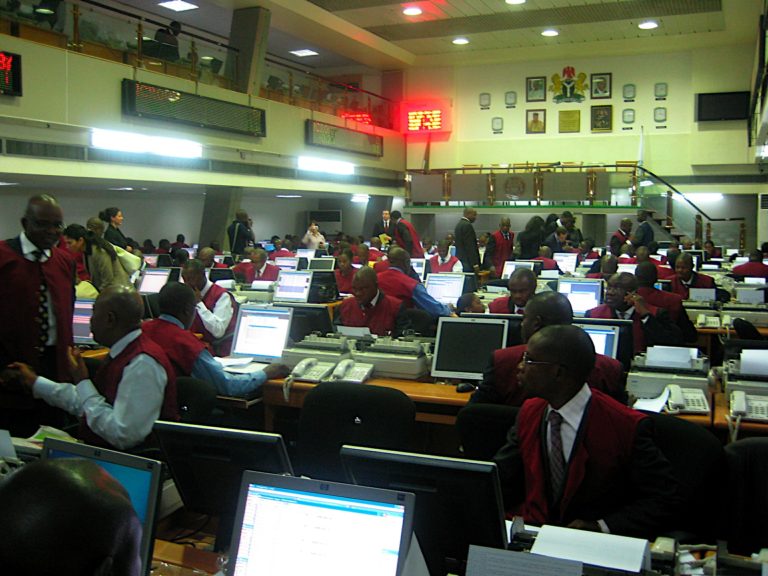
Amidst continued investor apathy and a lack of positive catalysts, the Nigerian equities market continued to plummet, with the All-Share Index declining by 0.4% w/w to 26,448.62 points – a 52-week low. Consequently, the MTD and YTD returns worsened to -4.3% and -15.9%, respectively. Analysing by sectors, sustained selloffs across Tier I Banks dragged the Banking index to a 2.0% loss; the Industrial Goods (-0.3%) and Oil & Gas (-0.2%) indices also recorded declines. Conversely, the Insurance (+2.4%) index resumed its upward trend, following a break in its 3-week gaining streak in the previous week, while the Consumer Goods (+0.1%) index followed suit, recording a marginal gain.
In our view, the trend witnessed through the year is likely to persist through the final quarter of the year, although we expect pockets of gains over the final months of the year as fund and portfolio managers realign portfolios prior to the start of 2020. Nonetheless, we note that valuations remain attractive driven by price deterioration throughout the year. Hence, we advise that long-term investors consider appropriately timed investments.
Money market
The overnight (OVN) rate undulated during the week, before settling lower by 6.57 ppts at 5.86%. On the first trading day, the rate settled 4.36ppts higher at 16.8% as system liquidity thinned out. However, by the second trading day, the rate moderated by 7.65ppts, before then further paring by 12.00ppts on the following trading day to 4.8%, following CRR refunds to banks by the CBN. On the penultimate trading of the week, the rate increased by 8.36ppts to 13.14%, despite inflows of NGN463.98 billion from OMO maturities, as investors looked to re-invest in an OMO auction called by the CBN on the same day.
In the coming week, OMO (NGN282.88 billion) and Treasury bond (NGN233.90 billion) maturities, as well as bond coupons (NGN48.74 billion) – 12.75 27-APR-2023 (NGN18.91 billion), 14.55 26-APR-2029 (NGN12.87 billion), and 14.80 26-APR-2049 (NGN16.97 billion) – are expected, and should keep the rate moderated by the end of the week.
Treasury bills
Trading in the Treasury bills market was seemingly bullish as the average yield across instruments pared by 17 bps to 12.4%, as investors took positions in the market amidst relatively buoyant liquidity. Also, the CBN held an OMO auction during the week, on the 17th of October for instruments worth NGN430.00 billion – 91DTM (Offered: NGN30.00 billion; Allotted: NGN14.31 billion), 182DTM (Offered: NGN50.00 billion; Allotted: NGN36.29 billion) and 364DTM (Offered: NGN350.00 billion; Allotted: NGN370.00 billion), at respective stop rates of 11.59% (previously 11.59% auction), 11.79% (previously 11.79% auction) and 13.35% (previously 13.39%). Similar to the auction last week, the level of bids on the long tenor instrument was significant, with total subscriptions settling at NGN1.07 trillion.
During the week, the CBN gave banks a directive to cease sales to clients with outstanding loans with any bank, as well as corporates which were benefitting from CBN intervention funds. While we don’t expect to see an immediate impact in the market over the short-term as banks will need to work out the methodology for identifying debtors across institutions, the long-term implication should be weaker demand, which will keep yields elevated.
Bond
Similarly, trading in the Treasury bonds secondary market was bullish as the average yields pared by 13bps to settle at 13.9%. There were yield declines recorded across the market, save for on five instruments. The OCT-2019 (-62bps) and FEB-2028 (-35bps) instruments recorded the largest declines in yields, while the JUL-2021 bond recorded the largest increase (+4bps). Also, the DMO will be holding a PMA Treasury bonds auction on Wednesday the 23rd of October for three instruments – 12.75% FGN APR 2023, 14.55% FGN APR 2029, and 14.80% FGN APR 2049 –, which will all be offered through re-openings.
We expect sell-offs in the secondary market, as investors look to take positions in the PMA auction. However, yields should still close the week lower as investors look to invest maturity proceeds and bond coupons expected during the week.
Foreign exchange
Amidst weakened foreign inflows and increased dollar sales by the CBN, Nigeria’s FX reserves dipped by USD35.38 million WTD to USD41.04 billion (16 Oct 2019), the lowest level since 7th Feb 2018. The CBN sustained its weekly FX intervention, selling USD210.00 million across the different segments of the FX market – USD100.00 million to the Wholesale segment, USD55.00 million to the SMEs segment, and USD55.00 million to the Invisibles segment. Despite the intervention, the naira depreciated by 0.02% w/w to NGN362.21/USD at the I&E window but closed flat at NGN360.00/USD at the parallel market. Elsewhere, total turnover at the I&E window declined by 19.84% WTD to USD744.43 million, with trades executed within the NGN357.00-364.20/USD band. In the Forwards market, the naira weakened across all contracts, save for the 6-month (+0.1% to 382.50/USD) contract, with the 1-month (-0.1% to NGN365.40 /USD), 3-month (-0.1% to NGN372.06 /USD), and 1-year (-0.4% to NGN408.79/USD) contract declining.
Whilst we acknowledge the continuous depletion of reserves amidst sell-offs by off-shore investors, our estimates suggest that there will be no need for a devaluation of the naira in 2019, as we believe the CBN has more than enough ammunition to sustain its naira defense. Hence, we expect the naira to remain resilient in the short to medium-term.

